
'A mano libera', the Apulian social co-op where prisoners and ex-prisoners make (successfully) oil and taralli
The social cooperative wanted by the diocese of Andria, which is at the heart of a story of food and solidarity that has become a business, and will grow to reach a turnover of €500,000 in 2025, rising in 2026
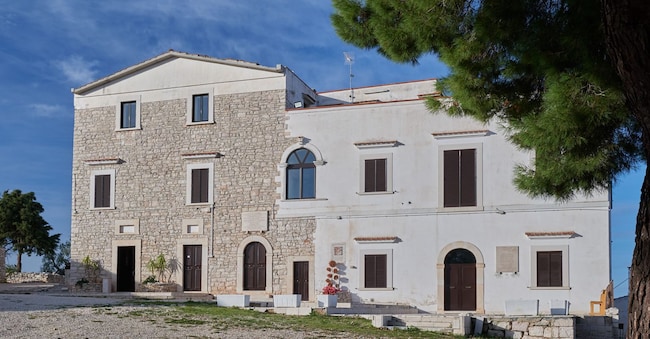
A priest, a former magistrate involved in social work, an old farmhouse in the countryside of Andria, in the province of Bat, with Castel del Monte in the background, and ten inmates and ex-convicts, average age 35, who produce taralli with a trademark that is also a manifesto: "A mano libera". Which is also the name of the social cooperative for the rehabilitation of convicts and ex-convicts, wanted by the diocese of Andria, which is the heart of a story of food and solidarity that has become a business, and has grown to reach a turnover of 500 thousand euro in 2025, estimated to rise to 600 thousand this year.
The taralli - produced at a rate of 11-12 thousand kilos per month - have for the last four years had a not insignificant large-scale distribution network, the 120 sales outlets in the five southern regions of the Dok, Famila and A&O brands of the Megamark group in Trani, reaching over 700 thousand packs sold. And for the past few months they have also been on the shelves ofPam, under the brand name of an Apulian company. Over time, the number of taralli variants has grown to 21, the latest with garlic, after fig vincotto, turmeric, curry, Bari-style calzone, finoccjhio seeds, seedless, cereals, cereals with dried tomatoes, etc.
The cooperative is led by Don Riccardo Agresti, who is many things at once: priest, worker and entrepreneur, because these bakery products - typical of many municipalities in the Bari area (above all Andria, Canosa, Corato, Palo del Colle) - are the driving force behind this story of the Church becoming an 'entrepreneur' to give a second chance to 10 inmates and ex-convicts, admitted to alternative measures to prison, on the San Vittore farm in the Andria countryside. A difficult undertaking: not everyone adapts, they have deep scars, getting used to work after years in prison is not easy, and some have given up. The cooperative now has 4 employees on payroll and provides residents and semi-residents with expense reimbursements, as well as room and board.
The masseria also has a complicated history: first a community for recovering drug addicts at the behest of the bishop at the time, Giuseppe Lanave, then abandonment, renovation and new life thanks to another bishop, Luigi Mansi, who encouraged the cooperative and its economic activity. Activities that have expanded further in recent weeks.
Together with 'A Mano Libera' taralli in fact, 'A Mano Libera' organic Evo oil was also born, the result of an agreement with Olio Levante, a group active in Andria since 1902, turnover 2025 at 240 million euro, exports to 70 countries and the doubling of the production site underway. It is a wide-ranging agreement: from the scheduled supply of organic Evo oil to the milling of the olive production obtained from the almost 50 hectares around the masseria where the laboratory is located, and owned by the Andria diocese. And to guarantee other outlets on the market, Olio Levante, led by Riccardo Cassetta, national vice president of Federalimentare, will also supply the cooperative with the expertise of its technicians.

