

Algiers has severed ties with Abu Dhabi because it fears Israeli defence systems
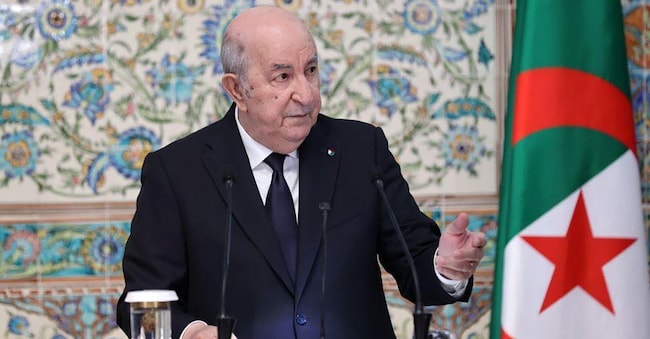
The country led by Tebboune has severed diplomatic relations with the United Arab Emirates and accused them of meddling in the Sahel and in the internal affairs of the Kabylie region. At the same time, Algeria fears that the axis between Rabat and Tel Aviv – often facilitated by Abu Dhabi – will strengthen the borders of Western Sahara through technological means.

Key points
The diplomatic break declared by Algeria on 10 September 2026 with the United Arab Emirates marks a turning point that goes beyond the deterioration of bilateral relations. Algiers ordered the Emirati ambassador to leave the country within 48 hours and, from midnight on the following day, closed its airspace to aircraft registered in the Emirates, whilst maintaining a temporary exemption for commercial flights to the capital. Behind this decision lies a conviction now deeply rooted within the Algerian leadership: Abu Dhabi, Rabat and Tel Aviv are no longer separate issues, because their interests intersect in the Western Sahara, in military cooperation, in the corridors leading to the Sahel and, increasingly, in the way Algiers interprets the Kabyle issue. The result is a regional rivalry that combines diplomacy, infrastructure and security and also directly affects Europe.
The crisis with Abu Dhabi has been a long time coming
The deterioration had already become public knowledge back in July, when President Abdelmadjid Tebboune had referred, without naming it, to a Gulf state active in Libya, Sudan and Yemen, using a blunt phrase: ‘wherever they set foot, blood is shed’. Two months later, the rift became a formal break. What makes the Algerian case more serious is the sequence of events leading up to it. On 30 December, a coalition led by Saudi Arabia struck weapons and vehicles in Mukalla that had arrived on two ships from Fujairah, accusing Abu Dhabi of supporting the Southern Transitional Council in the regions of Hadhramaut and Al-Mahra; the UAE denied that the cargo contained weapons. A few days later, the Somali federal government cancelled agreements with Abu Dhabi relating to ports, security and defence – including those concerning Berbera, Bosaso and Kismayo – justifying the decision on the grounds of safeguarding national sovereignty.
Morocco turns normalisation with Israel into military strength
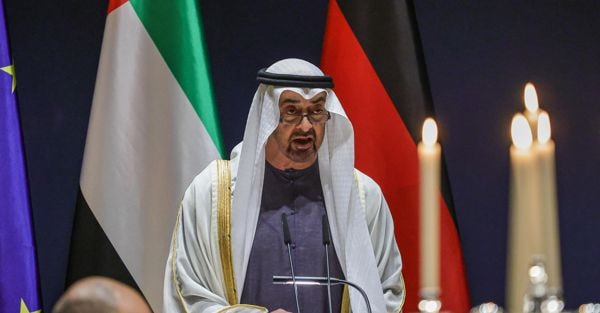
In November 2020, the UAE became the first Arab country to open a consulate in Laayoune, in Western Sahara; a month later, Rabat re-established relations with Israel. Since then, normalisation has taken on a military and industrial dimension. In January 2026, the third session of the Morocco–Israel Joint Military Committee was held in Tel Aviv. Rabat is equipped with the Barak MX air defence system from Israel Aerospace Industries, ATMOS howitzers from Elbit Systems and Hermes 900 drones. In November 2025, BlueBird Aero Systems, a company 50 per cent owned by IAI, opened a factory in Benslimane, near Casablanca, to produce SpyX loitering munitions. It is this qualitative leap that worries Algiers. A system purchased abroad may remain a mere transaction; a relationship that includes local production, maintenance, training, software and ammunition supply, on the other hand, becomes part of the national defence structure. According to rumours, Israeli surveillance and attack drones have been deployed to Mahbes, in Western Sahara, near the Algerian border. This information has not been independently verified, but if confirmed, it would place Israeli platforms near Tindouf, home to the Sahrawi camps and the Polisario leadership.
Kabylia brings the dispute within Algerian borders
It is in Kabylia that external rivalry directly impacts Algeria’s internal security. The Movement for the Self-Determination of Kabylia, MAK, operates from Paris and has been classified by Algiers as a terrorist organisation since 2021. Algerian state media have accused Emirati diplomats of having links with the movement, but no public evidence has emerged of direct operational or financial support from Abu Dhabi. There is, however, a political reality that is harder to ignore. On 14 December 2025, the MAK’s government-in-exile proclaimed a ‘Federal Republic of Kabylia’ in Paris; on 14 January 2026, Dan Illouz, a Likud MP of Jewish-Moroccan origin, tabled an urgent motion in the Knesset to consider recognising Kabylia and described Algeria as part of an ‘Iranian axis of evil’. The Jerusalem Institute for Strategy and Security had already advocated political support intended, over time, to evolve towards recognition. For Algiers, the problem is clear: Western Sahara is the territorial issue it defends externally, whilst Kabylia is the one it considers sacrosanct internally. If Israel arms Morocco and Israeli political circles discuss the future of Kabylia, the line between diplomacy and national security becomes increasingly blurred.
Ports are changing the political landscape
The case of Somaliland illustrates how commercial infrastructure can acquire political significance beyond its original function. Israel recognised Somaliland in December 2025; within the same territory, DP World holds a 30-year concession for the port of Berbera. There is no need to speculate about a single coordinating force between Abu Dhabi and Tel Aviv to grasp the significance of this phenomenon. A disputed entity becomes more difficult to isolate when it possesses a combination of ports, investments, logistics corridors, security ties and diplomatic recognition. It is the same principle that makes Dakhla central to Morocco’s strategy. The Atlantic port of Dakhla is worth $1.6 billion and was reported to be 70 per cent complete in November 2025. Morocco’s Atlantic Initiative aims to use it to provide Mali, Niger, Burkina Faso and Chad with access to the sea. On 24 July 2026, Bamako confirmed its commitment to the corridor just thirteen days after re-establishing relations with Algiers. It is a telling development: a Sahelian government can maintain good relations with Algeria whilst, at the same time, participating in an infrastructure project that strengthens Morocco’s position in Western Sahara. Rabat is thus transforming a territorial dispute into a network of economic interests: the more Dakhla proves useful to the governments of the Sahel, the greater the political cost of challenging the Moroccan project.

