

Strained relations with Turkey. Azerbaijan wants to consolidate its autonomy
Azerbaijani President Ilham Aliyev has set out a programme to protect the country’s territorial integrity and sovereignty. The alliance with Ankara remains in the background, but is becoming increasingly disintermediated. European interests are being put to the test by these contracts

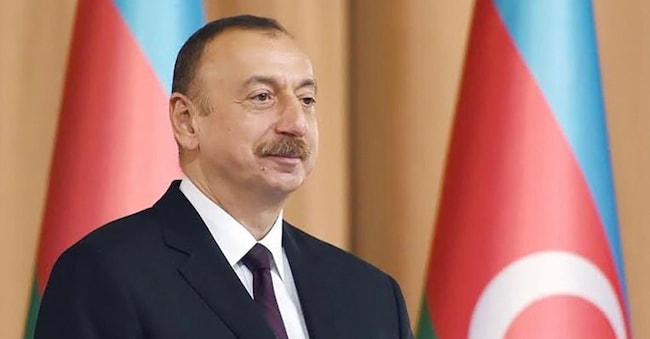
On 2 October, the Azerbaijani President Ilham Aliyev delivered a speech at the congress of the New Party of Azerbaijan (YAP), in which he outlined, in policy terms, how the country intends to protect its territorial integrity and sovereignty, which were secured on the battlefield between 2020 and 2023. His message can be summarised in three words: peace through strength. In recent years, particularly following the Second Nagorno-Karabakh War (2020), Azerbaijan has pursued a prolific foreign policy, aimed at expanding its network of diplomatic partners, whilst always paying particular attention to its relations with Turkey.
Since the mid-19th century, the country has been well aware that its strength depends on the oil and gas fields in the Caspian region. In Azerbaijan, modern oil extraction using mechanical wells began in 1846 at Bibi-Heybat, near Baku, long before the emergence of the modern oil industry in the United States. And politicians know full well what matters: gas and the money it brings in through contracts, investments and infrastructure.
Aliyev’s political intentions
“We are shaping our foreign policy and must continue to do so in order to prevent anyone from interfering in our affairs,” said Aliyev. “We do not need anyone’s help or protection.” He also reflected on events in Azerbaijan’s recent history: “When we needed help, nobody helped us. When we found ourselves with a million refugees, nobody lent us a hand. Everything we have received, we have bought with our own money, weapons included, right down to the very last bullet’. “Our advantage is that, unlike some countries, we do not need to create myths. In some countries, certain leaders try to take credit for past successes or exaggerate their own role by distorting history. We have no need for that,” said Aliyev.
Any personal or direct reference is very carefully omitted, but it is by no means lost on anyone that the addressee of these words is the Turkish President Recep Tayyip Erdoğan. From a political perspective – and not only that – Aliyev’s words appear to downplay any role played by Turkey or other external actors in Azerbaijan’s military success during the Second Karabakh War. And this may seem all the more unusual when one considers the outcome of the 2021 Shusha Declaration.
This is a strategic agreement and alliance signed by the two countries: both undertake to provide mutual aid and military assistance in the event of a threat or aggression against their independence and sovereignty by third parties; it provides for the strengthening of the joint defence industry, the modernisation of the armed forces and the coordinated production of military equipment, including drones; it emphasises the importance of opening the Zangezur Corridor to link Azerbaijan to Turkey via the Nakhchivan exclave; it promotes the development of the Southern Gas Corridor; it encourages cooperation in sectors such as education, culture and sport, to cement the idea of ‘two states, one nation’.

