

The Architecture of Shadow: Intelligence as a Geopolitical and Industrial Driving Force
The transformation of the secret services into autonomous apparatuses for funding and coercion is becoming a further destabilising factor for NATO. From Turkish exports to Iranian manoeuvres, and from the use of Israeli spyware to illicit North Korean flows, European democracies find themselves footing the industrial and diplomatic bill for rapidly expanding extraterritorial actions. War, espionage and technological relations are increasingly intertwined

Key points
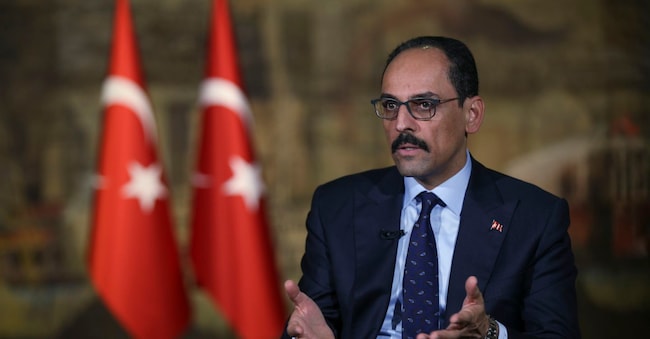
National intelligence services have never been mere advisory bodies; today, however, against a backdrop of fragmentation and a crisis in multilateralism, they are taking on the role of primary drivers of fiscal survival and kinetic escalation. Intelligence budgets are no longer discretionary administrative expenditure, but subsidised industrial priorities or, in some cases, self-financing enterprises. In Turkey, the Milli İstihbarat Teşkilatı, headed by Ibrahim Kalin, has seen its budget rise steadily for at least three years: a financial expansion that underpins an aggressive transnational projection. The North Korean Reconnaissance General Bureau, by contrast, completely circumvents traditional fiscal constraints. According to the March 2023 report by the United Nations Panel of Experts, its affiliated cyber units generated approximately $3 billion between 2017 and 2023 through the theft of cryptocurrencies, and this illicit capital directly funds an estimated 40 per cent of the regime’s armament programmes. This illustrates how cyber-espionage has evolved into a mechanism of systemic extortion.
Industrial addictions
The pursuit of autonomous intelligence operations inevitably clashes with the industrial sectors of other countries. One example is the change in stance following 7 October 2023. The strategic shift following the intelligence failure of October 2023 illustrates this friction, as the IDF abandoned the ‘single wars’ doctrine, codified in 2015, in favour of continuous degradation operations. Such a pivot necessitated the expansion of Aman’s Unit 504, whose personnel and field missions doubled in the early months of 2025 to rebuild human intelligence networks. However, this expansion relies heavily on US military funding and precision-guided missiles, whilst sabotage operations abroad entail a shift in diplomatic and industrial relations throughout the Middle East and beyond. This is making relations between the US and Israel increasingly complex to manage.
Statutory immunity
In many cases, domestic legal frameworks have been rewritten to shield intelligence operatives from judicial oversight, thereby shifting the legal risk to host countries. The Turkish legislative framework, based on Law 6461 and subsequent presidential decrees, grants staff of the Milli İstihbarat Teşkilatı extensive statutory immunity for actions undertaken in the course of their duties, explicitly extending this to extraterritorial operations. The Iranian security apparatus, by contrast, operates on the basis of a deliberate institutional duplication: the Intelligence Organisation of the Islamic Revolutionary Guard Corps, established in 2009 to complement the civilian Ministry of Intelligence, has now supplanted its civilian counterpart in regional theatres. For example, when this proxy network was weakened, Tehran launched two massive air strikes directed against Israeli territory in April and October 2024. The US State Department documented in October 2023 that Iran was providing $100 million a year to Palestinian militant groups, whilst Under-Secretary John Hurley confirmed in November 2025 the transfer of approximately one billion dollars to Hezbollah. War, espionage and industrial relations are increasingly intertwined.
Counter-espionage, spyware and technological dependencies in the EU
The impact of this fragmentation also affects European governments, which are forced to deal with the legal and industrial consequences of extraterritorial action. In Germany, the 2024 report by the Federal Office for the Protection of the Constitution accused the Turkish intelligence services of threatening German political decision-making processes through networks of informants, forcing Berlin to strengthen its counter-espionage prosecution services. In the United Kingdom, the National Cyber Security Centre has repeatedly attributed disruptive information campaigns against British critical infrastructure to Iranian state actors, triggering coordinated sanctions with allies to dismantle the Revolutionary Guards’ financial networks. In France and Germany, criminal investigations into the use of commercial spyware developed by the Israeli private sector have forced governments to navigate complex export controls, balancing national security with strategic partnerships. For Italia, the exposure of the defence supply chain within the NATO perimeter requires strict alignment with US secondary sanctions mechanisms and multilateral controls on dual-use goods, since any operational deviation by allies risks triggering technology embargoes capable of paralysing aeronautical and naval modernisation programmes.
The Complexity of the New World
The structural realities of these intelligence architectures will force a costly realignment of Western defence postures. The immediate fiscal and legal burden falls on the European members of NATO, who are called upon to absorb the costs of prosecuting extraterritorial agents whilst managing the industrial fallout from restrictions on technology transfers to other countries, including Ankara. In the Middle East, the collapse of the 2015 doctrine and the operational decentralisation of the Revolutionary Guards’ command structure will force the United States to bear the ongoing financial cost of supplying precision munitions, or to impose strict limits on allied operational freedom in Jerusalem. For Western democracies, it will become increasingly complicated to manage hybrid wars and the constant shifting of alliances. For this reason, technological sovereignty is no longer merely a political concept, but a concrete objective to be pursued.

