

A clash between Israel and Turkey is looming ever closer
Gone are the days when companies from Tel Aviv and Ankara worked together to build aqueducts and curb nuclear proliferation. Tensions in the Aegean and Turkey’s desire to dominate Syria and Iraq are seen as an attempt to encircle Jerusalem. The response is the ‘Shield of Achilles’ offered to Greece

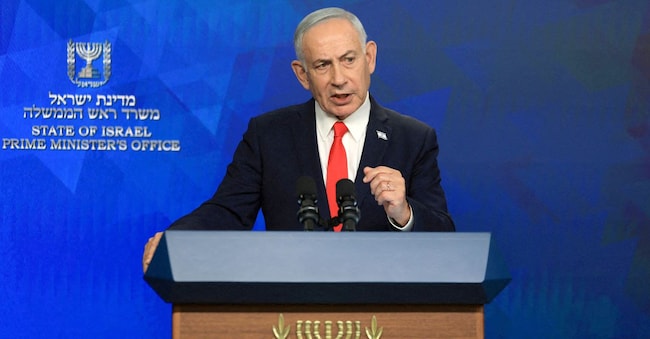
What is happening in the Mediterranean-Middle East-Persian Gulf region has some temporary aspects and others that are structural, and is set to change the political and geographical landscape of the area over the coming decades. Certainly, the impact of the conflict with Iran is currently dominating attention, not least because of the conflict’s economic consequences, which will be felt all the more keenly in the coming months, following the closure of the Strait of Bab el-Mandeb and the severe damage to the East-West oil pipeline in Saudi Arabia. But one of the most important areas of concern is already the increasingly overt clash between Israel and Turkey, which carries far greater long-term geopolitical implications. Gone are the days of industrial and military collaboration, when the convergence of interests brokered by the United States had led the two countries to launch mammoth cooperation projects. The most famous of these bore the grand-sounding name ‘Waterpipe for Peace’, a massive aqueduct that was intended to carry water from the Tigris-Euphrates basin to the Negev desert in Israel. The Israeli aerospace industry, IAI, concluded more than thirty cooperation agreements with Turkish companies between 1999 and 2015. The common aim, for Tel Aviv and Ankara, was to contain Iran’s expansionist ambitions in the region, prevent its nuclear threat and curb the aggression of the dictators then scattered throughout the region. The two democracies in the region which, together, upheld common values and interests. That was an age ago.
The Showdown
Israel and Turkey are now adversaries and are likely headed for an inevitable showdown in the near future. Erdogan has adopted the Palestinian cause as a powerful political and ideological banner, finding support and solidarity amongst the Turkish public, which is becoming increasingly less secular. Israel is desperately seeking a reliable geopolitical ally, now that its global diplomatic capital has been severely eroded. The return of Turkey to Syria, where it acts as guarantor of the new government and of post-Assad reconstruction, and in Iraq, where the Kurdish question has been definitively buried and abandoned, casts Israel into the shadow of a physical encirclement, even before a strategic one. The Israeli response was not long in coming and is based on the classic premise that ‘the enemy of my enemy is my friend’. The governments of Israel and Greece, in fact, have finalised a powerful military agreement known as ‘Achilles’ Shield’ which provides for Israel to supply a multi-layered missile defence system, capable of following in the footsteps of the more famous Iron Dome, which has long been operational in Israel, guaranteeing Greece comprehensive defence against any possible missile threat. Tensions between Greece and Turkey had, in fact, merely subsided in recent years, ready to flare up again over sensitive and crucial issues such as immigration, the status of Northern Cyprus and the rights to explore for and extract natural gas in the Eastern Mediterranean.
The agreement between Israel and Greece
Israel will transfer ‘off-the-shelf’ military equipment to Greece, that is, equipment already manufactured and stockpiled by IAI; it will subcontract the production of some components to Greek firms, but above all it will help Athens to develop a fully-fledged, multi-layered defence shield, including anti-drone defences. Paradoxically, this is a form of protection that European NATO members do not possess, except in part. Protection that comes from a country outside the EU and outside NATO. The agreement also extends to Cyprus, at a time when Greece is investing heavily in its own defence. In April 2025, the Mitsotakis government presented a plan to Parliament for the most significant reform of the Armed Forces in the country’s modern history. Estimates now predict an increase in military spending of around 28 billion by 2035, which will also be used to purchase 40 F-35 fighter jets from the United States and frigates from France and Italia.
Clearly, like any complex project, it will take years before the shield is finalised and fully operational. In the meantime, everything may change and evolve, in line with the constant and systemic fluidity of geopolitics in this region. But this move is a genuine exercise in geopolitical engineering, capable, if successful, of significantly curbing Turkish ambitions, thereby considerably reducing Ankara’s reach in the Eastern Mediterranean. Israel is establishing itself as the guarantor of this operation, whilst it should not be forgotten that during the tense days of the Flotilla’s voyage to Gaza, it was Greece itself that arranged for the activists to disembark and be repatriated. Power politics is often conducted by other means. And in the Middle East, all means are fair game.

