
Climate: global average temperature above 1.5 degrees for the first time in three years
The alarm of the European climate service Copernicus: 2025 will be the second hottest year in history, climate change accelerates: 'Reduce greenhouse gas emissions quickly'

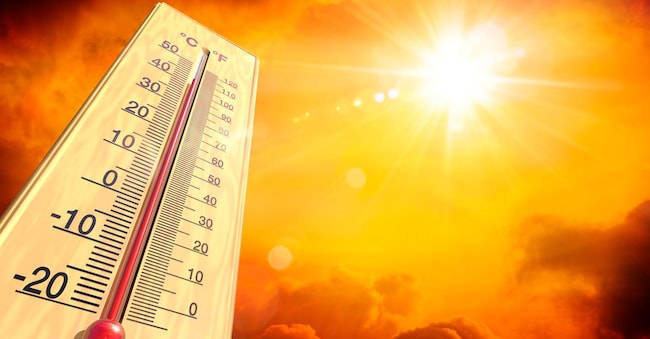
For the first time, the average increase in global temperatures over three years, compared to pre-industrial levels, will exceed 1.5 degrees. This is the alarm issued by the European Climate Change Centre Copernicus (C3S), in its report published on 9 December. While UN conferences fail and action against global warming retreats, climate change accelerates. 'But the only way to mitigate it is to rapidly reduce greenhouse gas emissions,' says Samantha Burgess, Copernicus' strategic climate manager. And that means abandoning oil, gas and coal. By 2024, however, carbon dioxide emissions have risen again.
One record after another
From January to November, the temperature increase was 1.48 degrees, a trend that will make 2025 the second warmest year on record, on par with 2023. In the lead remains 2024, when the climate-altering effects of greenhouse gases were added to those of El Niño, pushing the thermometer 1.6 degrees above the pre-industrial average (1850-1900).
In 2025, the average temperature is expected to remain just a whisker below the 1.5 degree ceiling, the red line indicated by science and the Paris Agreement as the safest margin of safety against climate disasters by the end of the century, but which was even hard to defend at the recent UN climate conference, the Cop30 in Belem last month. Where steps backward were taken from the albeit vague commitments to reduce dependence on fossil fuels made so far, under pressure from the petro-states and Russia. And under the smug gaze of Donald Trump's United States.
Overall, the three-year period 2023-2025 will still exceed the 1.5 degree threshold, and this is the first time this has happened. technically, the ceiling specified by the Paris Agreement is understood to be exceeded when the overshoot is confirmed over the long term and not as a result of fluctuations of a few years. For the UN, however, there is now a trend that makes it impossible to avoid this outcome. The quantity of carbon dioxide that can be emitted into the atmosphere before this happens is in fact set to run out in just over three years. The United Nations Environment Programme (UNEP) recently calculated that a 55% cut in annual emissions compared to 2019 levels would be needed by 2035: a target that is completely out of reach compared to current rates.
Irreversible effects
Even a temporary overshoot of the Paris Agreement ceiling, for less than two decades, would lead to more serious and widespread effects, some of them irreversible. With consequences for agriculture, and thus food, water, rising seas, receding ice and biodiversity. And driving populations to leave their homelands and migrate, with social and political consequences that would lead to increased regional conflicts for control of increasingly scarce resources.


