

Damage to an undersea cable in Oman: Internet connection in Pakistan goes down
The Telecommunications Authority has reported a fault in the SMW5 international system, which connects the two sides of the Gulf. Traffic is being diverted via alternative routes. The causes of the problem have yet to be established. In the background lies the possibility of calculated damage: Islamabad, together with Turkey and Saudi Arabia, is part of the Mecca Pact, a defensive alliance between Sunni countries established to counter Iran.


A fault in an international submarine cable linking Oman and Pakistan has caused a significant slowdown in internet connections in Pakistan, with intermittent service disruptions and a deterioration in browsing quality. This was announced by the Pakistan Telecommunication Authority, the national telecommunications regulator, which on Wednesday 18 November reported a fault in the SMW5 system (South East Asia-Middle East-Western Europe 5), one of the infrastructure networks carrying the country’s international data traffic.
“One of the international submarine cable systems, the SMW5, has reported a fault approximately 11 kilometres off the coast of Pakistan, which could cause intermittent connectivity issues and a deterioration in service quality for some internet users,” the authority explained. The statement did not specify the cause of the fault, nor did it provide an estimate of how long it would take to complete the repairs.
The consequences have also been noted by organisations that monitor the operation of digital networks. NetBlocks, an international observatory specialising in monitoring connectivity and digital governance, has confirmed that the trend in Pakistani connections is consistent with a fault in the SMW5 system. Confirmation also came from Cloudflare Radar, a platform that analyses Internet traffic on a global scale. According to its data, the number of HTTP bytes transmitted in the country fell by up to 36 per cent following reports of a deterioration in connectivity attributable to damage to a major submarine cable.
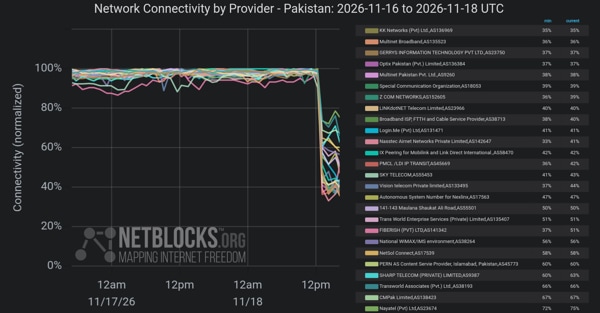
To minimise the impact of the disruption, internet traffic is currently being rerouted via alternative international links. This is a contingency measure that enables connections to remain operational even when the infrastructure is damaged.
Transworld Associates, a Pakistani operator involved in the management of international communications infrastructure, is working with the SMW5 consortium to identify the cause of the fault and estimate the time required for restoration. At present, however, no technical explanation for the incident has been provided. It is therefore not possible to determine whether the problem is attributable to accidental damage, maritime activity or other circumstances.


