
Healthcare

Primary care reform: family doctors between convention and community house recruitment

The Schillaci decree introduces a dual model for family doctors, with new working and remuneration rules to ensure the operation of community homes.


by Marzio Bartoloni

Compilazione di un certificato medico, foto generica d’archivio - ANSA/FRANCO SILVI/GID ANSA

4' min read

Translated by AI
Versione italiana

4' min read

Translated by AI
Versione italiana

Family doctors will be able to remain affiliated with the SSN, although no longer paid according to the number of patients they care for but according to objectives, including that of compulsorily working a certain number of hours in Community Homes.

Or they will be able to 'voluntarily' become employees of the health service so that they can be deployed on the ground according to need, starting with the Community homes that are the 'centrepiece of the reform' that Health Minister Orazio Schillaci has just presented to the Governors at an extraordinary meeting of the Regions, who have asked to see a draft, but do not say they are against it.

Loading...

The idea is to arrive already in the next few days at a decree law, there is even the title ( "Urgent provisions for the reorganisation of territorial primary care and general medicine, in order to guarantee the full operativeness of community houses") because there is no more time to lose: in just over two months the Community houses financed with 2 billion from the NRP will open, but they risk opening empty.

The reform is nothing new: the government of Mario Draghi tried it, unsuccessfully, at the tail end of the pandemic, with the then Health Minister Roberto Speranza, but the attempt ended up in the drawers on the very eve of the fall of that executive. The reform was not a new idea

The objective is to ensure the viability of the Community Houses

The opening of more than a thousand Case di comunità (Community Centres) throughout Italia, maxi clinics where first examinations and examinations as well as vaccinations, telemedicine and assistance to the chronically ill are just a few days away (the European deadline is 30 June).
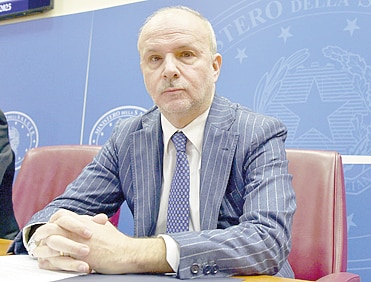
But besides the risk of not opening them all, the real big fear is opening them without the staff inside, starting with the doctors.

Orazio Schillaci

Ministro della salute

orazio schillaci

That is why Minister Schillaci - after two agonising years of discussions with the regions on a possible reform - decided he did not want to wait any longer.

'The decree,' reads the outline of the guidelines of the possible decree-law, 'was created to ensure that the Community Homes are fully operational. The urgency is linked to the need to make the new model of territorial assistance concrete and functional.

The objective is not only organisational, but systemic: strengthening primary care, caretaking and territorial continuity'.

For the Ministry of Health, the Community Centres are the 'core of the reform', becoming the 'structural place of the new territorial organisation' and the decree will in fact have to clarify that the activity within them 'is no longer only incentivised but becomes a stable component of the organisational model'

The dual channel: convention or selected dependency

As mentioned, the decree constructs a dual-channel structure: the ordinary channel with the current but 'reformed' convention and then the possibility of hiring doctors as employees, a second channel with a 'selective dependency' for structured territorial functions.

This dual channel, according to the ministry's technicians, should make it possible to maintain the capillarity of general medicine by introducing 'a stable garrison where more organised and continuous functions are needed': that is, in the Case di comunità (community centres).

The convention will still remain the ordinary model so as "not to abolish the relationship of trust", but the contracted doctor will be redefined, introducing minimum obligations and also changing the method of remuneration, which today is by per capita share, that is, the number of patients the family doctor looks after, but in future will have to be by "objective" (from taking care of chronic patients to the hours spent in the community home).

There will be a national minimum organisational debt that can be modulated territorially, therefore not rigidly in a uniform manner that includes at least the work in the territorial network, the presence in the Community Houses, the use of information systems, the adherence to indicators and audits also to monitor the prescriptive appropriateness is multi-professional integration.

This debt - the Ministry's guidelines write - is 'one of the main tools for making the system enforceable and measurable'.

Transition and regional planning

The decree does not, in the first stage, transform all general medicine into dependency, but introduces a 'selective dependency', planned and not generalised, which is necessary to 'cover the most organisationally intensive functions'.

In the transitional phase, the local health authorities may 'employ on a permanent basis doctors already working in general medicine who also have a specialisation'.

Access will be on a 'voluntary basis', within the limits of the planned quotas for structured territorial functions. The choice is therefore 'gradual, selective and planned'.

With the regions assuming a central role in planning. It will be up to them to define the needs for activities in the Community Homes, the territorial priorities, garrisons and functions to be covered, the minimum organisational and information standards, and the contingents and locations of the dependent channel.

In short, the decree aims to enhance 'strong territorial governance within a common national framework'.

The aim in fact is to move towards an ordinary transition phase and without affecting the accounts of the Enpam, the social security body that collects the contributions of family doctors. For this reason, the decree will also have to provide transitional regulations to clarify various aspects: from access qualifications to equivalences, and the coordination between the old conventional relationship and the new employee relationship

Copyright reserved ©
Loading...

Brand connect

Loading...

Newsletter

Notizie e approfondimenti sugli avvenimenti politici, economici e finanziari.

Iscriviti