

Egypt is diversifying its tourism sector. Less Red Sea and more Mediterranean, starting with New Alamein
Cairo aims to move beyond the model of seasonal seaside resorts and build new tourist cities that are open all year round. Following years of announcements, UAE capital firms, international operators and local property groups have now started construction work on the northern coast. The first hotels, residential developments, marinas and amenities will be operational from early 2027.

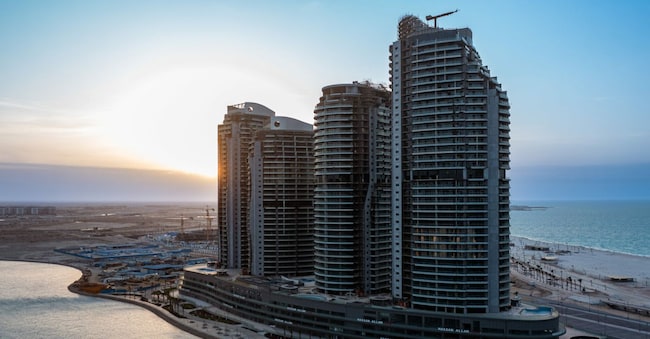
Key points
- Egypt Vision 2030
- New Alamein
- Italian investments
- [Enter the keyword]
For most people, ‘Egypt’ means ‘tourism’. And if the reason for the trip isn’t Egyptology and the fascination aroused by mummies, pyramids and hieroglyphs, that leaves only the seaside resorts, mostly concentrated along the Red Sea coast, such as Sharm el-Sheikh, Hurghada or Marsa Alam. For some time now, however, these resorts – whilst retaining their appeal – have not been amongst the most sought-after destinations for tourists. The reason is, of course, regional instability, which does not directly affect Egypt, but for which the country is paying the price. The domino effect begins at the Strait of Hormuz, spreads across the southern part of the Arabian Peninsula and flows into the Red Sea via Bab el-Mandeb, the narrow strait separating Yemen to the east from Eritrea and Djibouti to the west.
This is why Cairo aims to move beyond the model of seasonal seaside resorts and build new tourist cities open all year round: the key to this plan is the country’s northern coast, which is set to become one of the Mediterranean’s main hubs for tourism and property development. From New Alamein to Ras El Hekma, via the Marsa Matrouh area, the Egyptian government is promoting a large-scale urban and economic transformation, with the aim of complementing the traditional destinations of the Red Sea with a new range of tourist attractions aimed at international markets.
Egypt Vision 2030
In fact, the Land of the Nile has been considering these options for several years now. The strategy forms part of Egypt Vision 2030, the national programme through which Egypt aims to diversify its economy, strengthen the tourism sector and attract foreign capital. The Mediterranean coast is one of the key areas of this initiative, particularly due to its geographical location: being around a three-hour flight from Italia, it is well-placed to meet European demand for seaside holidays, extended breaks and second homes.
The project has already taken on an international dimension thanks to the involvement of investors from the Gulf. The most significant example is that of Ras El Hekma, a resort situated 200 kilometres west of Alexandria, set to become one of the region’s largest tourist and residential developments. It has been conceived as a city of the future, divided into eleven districts, featuring luxury hotels, marinas for superyachts, international schools and a dedicated airport. A ten-year investment estimated at over 150 billion dollars, led by the ADQ fund from Abu Dhabi.
Another example is the agreement between the Emirati holding company Modon and Nammos Hotels & Resorts: on 17 July, Nammos Ras El Hekma – the brand’s first Egyptian destination – was unveiled. The complex is situated within Wadi Yemm and comprises apartments, a resort, retail spaces and leisure facilities. The project comprises 72 apartments, ranging from one to four bedrooms, a penthouse and a 79-room hotel, as well as a retail area known as Nammos Village. Plans also include a wellness and fitness centre, swimming pools, spa facilities, restaurants and a beach club with direct access to the beach.


