
In China

First pig liver transplanted into a living patient: survives 171 days

A 71-year-old man lives for almost six months with a genetically modified pig organ. From China to the US, xenotransplantation enters a new era
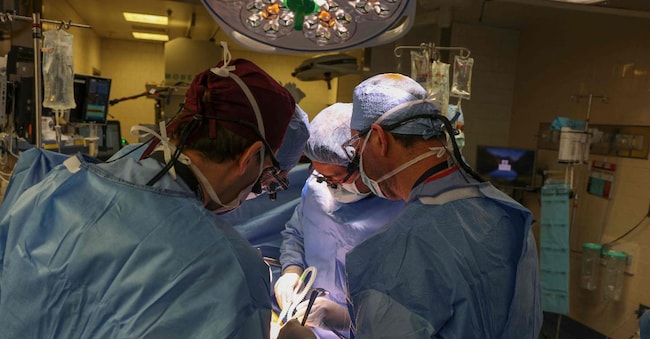
by Francesca Cerati

3' min read

Translated by AI
Versione italiana

3' min read

Translated by AI
Versione italiana

A 71-year-old man with cirrhosis from hepatitis B and hepatocellular carcinoma survived 171 days after receiving a genetically modified pig liver. It is the world's first case of liver xenotransplantation on a living patient, announced in the pages of the Journal of Hepatology by the team of the First Affiliated Hospital of Anhui Medical University, China.

A 'hybrid' transplant that worked for weeks

The surgeons, led by Beicheng Sun, chairman of the hospital and director of the Department of Hepatobiliary Surgery, implanted an auxiliary graft, i.e. a second liver working alongside the original compromised organ. The organ came from a Diannan dwarf pig with ten genetic modifications aimed at reducing the risk of rejection and improving coagulative and immune compatibility.

Loading...

For about a month after the operation, the pig liver functioned effectively: it produced bile, synthesised coagulation factors and maintained the patient's metabolic parameters without any signs of acute rejection. After 38 days, a serious complication forced the removal of the graft. The man died on the 171st day due to recurrent bleeding.

"This case demonstrates that a pig liver can function in a human being for a prolonged period of time," explains Beicheng Sun. "This is a major step forward, showing both the potential and the remaining obstacles, such as dysregulation of coagulation and immune complications that we still have to overcome.

A New Era for Hepatology

The result was received with great interest by the scientific community.

"This study represents a milestone in hepatology," wrote Heiner Wedemeyer, co-editor of the Journal of Hepatology and of the Department of Gastroenterology and Hepatology at the Medical Faculty of Hanover, in an editorial, "It demonstrates that a genetically modified porcine liver can graft and provide key liver functions in a human recipient. At the same time, it highlights the biological and ethical challenges that remain before such approaches can be translated into wider clinical use. Xenotransplantation could open up completely new avenues for patients with liver failure and carcinoma. A new era for transplant hepatology has begun.

From 'bridge' trials to live patients

Until now, pig livers had only been used on brain-dead patients to test biological feasibility. In 2023, a genetically modified pig liver was implanted in a 50-year-old brain-dead patient in China for the first time, demonstrating that the organ could be perfused and maintained for several days.

The following year, the US Food and drug administration (Fda) approved a safety clinical trial to connect patients with severe liver failure to an extracorporeal pig liver, which filters blood as a temporary 'bridge' pending recovery or a human transplant.

The next step - today's Chinese one - marked the most ambitious leap: the use of animal liver in a living, conscious patient, paving the way for direct clinical application of xenotransplantation.

A global problem: organs that are not enough

According to the World Health Organisation, thousands of people die each year while waiting for an organ transplant due to the shortage of human donors. In the United States alone, over 100,000 patients are on the waiting list for a transplant, over 8,000 in Italy.

Genetically modified pig organs, very similar to human organs in size and physiology, represent a potential answer to the donation crisis. However, the risks of immune rejection and zoonotic infections remain the main challenges to overcome.

Advances in other xenotransplants: heart, kidney and even lung

The liver case comes amid rapid progress in interspecies research. In March 2024, surgeons at Massachusetts General Hospital in Boston successfully performed the first pig kidney transplant on a living patient, a 62-year-old man with terminal kidney failure: the organ functioned for weeks, confirming the clinical feasibility of the approach.

Shortly afterwards, in New York, 53-year-old Towana Looney became the longest surviving person with a pig kidney, 130 days, before organ rejection. United Therapeutics, which developed the kidney with ten genetic modifications, received the go-ahead from the FDA for a clinical trial on six patients with terminal kidney failure, which is expected to start by the end of 2025.

Also on the heart front, two transplants on live patients were performed in the US between 2022 and 2023, with survivals of up to two months.

And in 2025, the first pig lung transplant in a brain-dead patient was documented in China, confirming that anatomical and physiological compatibility can also extend to other vital organs.

Brand connect

Loading...

Newsletter

Notizie e approfondimenti sugli avvenimenti politici, economici e finanziari.

Iscriviti