
From Annurca apple waste cosmetics and nutraceuticals
Valmegrea project, carried out by Enea researchers in collaboration with the Terra Nostra farm, for the recovery of peels, seeds and cores

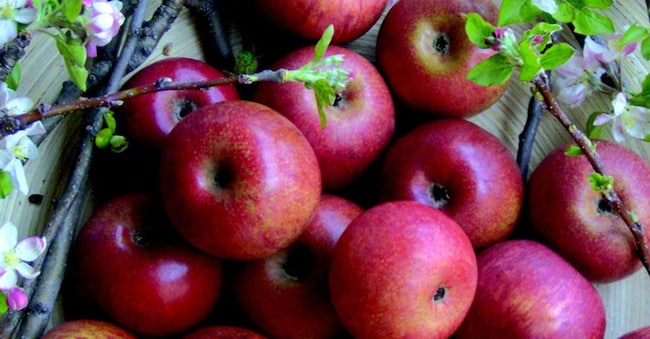
From the waste of fine apples new resources for food, nutraceutical and cosmetic applications. This is the aim of the Valmegrea project, carried out by ENEA researchers in collaboration with the agricultural company Terra Nostra, "in line with the principles of the circular bio-economy" that have taken into considerationthe waste of the Annurca Campana IGP apple.
The starting point of the project is the fact that in the agri-food sector, between 10% and 35% of apple production is destined for industrial processing, 'generating often neglected by-products such as peels, seeds and cores'. An issue that also affects the Annurca apple, 'a variety known since Roman times and traditionally cultivated in the Phlegraean and Vesuvian areas'.
The Valmegrea project aims to reduce waste and open the way to new economic opportunities through the application of two main techniques. One is freeze-drying, an activity that, as pointed out by ENEA, 'makes it possible to obtain concentrated powders while preserving the nutritional and functional properties of the by-products'. The other is supercritical CO2 extraction, a process that 'allows obtaining oils and lipophilic molecules without solvent residues in the final product'.
'Through these processes,' they add from the research agency, 'it is possible to recover polyphenols and polyunsaturated fatty acids that can then be used to make functional foods, or for use in nutraceuticals, cosmetics, and, more generally, in the burgeoning market of high-end natural iingredients'. The project envisages the development of an integrated process that considers the supply basins, energy and plant costs, systematising the commercial value of the different extracts to verify the application of the technological solutions in the field in real contexts.
"This approach,' says Antonio Molino of the Circular Regenerative Bioeconomy Laboratory of ENEA's Sustainability Department and creator of the project, 'makes it possible to move from an initial proof-of-concept phase to real industrial scalability, making the technologies applicable to the reference markets. All this with one goal in mind: to transform agrifood by-products into concrete and valuable resources, reduce waste and maximise the nutritional and functional properties of bioactive compounds, while creating new sustainable economic opportunities.

