
The Teramo area of Abruzzo: unspoilt nature, tales of hospitality and fine food
From Civitella del Tronto to Campli: an open-air history book

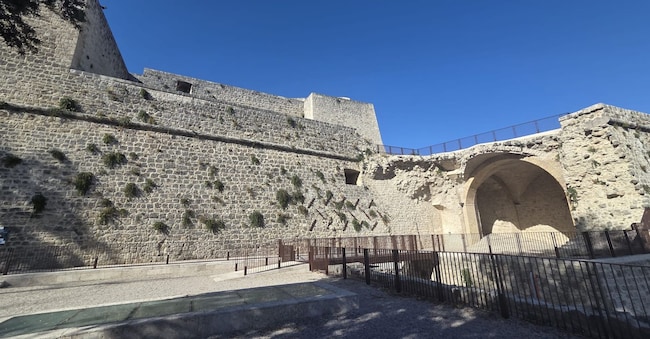
Continuing along this geographical route, one comes to Civitella del Tronto, a veritable open-air history book. Its imposing fortress, the last stronghold of the Kingdom of the Two Sicilies to surrender to the Savoy army on 20 March 1861, overlooks a village of narrow alleyways and palaces. Here, one breathes an air of nobility and rebellion, linked to families such as the Zunica, whose ancestors arrived here as mercenaries in the wake of the War of the Flanders in the sixteenth century. Walking through the village, you’ll discover unique treasures such as the Church of San Francesco, which houses a fine 15th-century choir and plaster statues from the Canova school, as well as a local stone curiously dyed bright red during the twenty years of Fascist rule. Don’t miss the Nina Museum, established to celebrate the town’s history with a collection of over 3,000 items spanning all the decorative arts, and home to one of Italy’s most important collections on the history of textiles and fashion from the 18th century to the post-Second World War period. Civitella was the scene of epic events, such as the famous battle of 1557, in which just a thousand inhabitants heroically held out against ten thousand soldiers from the French army of the Duke of Guise. It experienced a period of intense economic prosperity thanks to no fewer than thirteen annual tax-free fairs, which for centuries made the town a remarkable commercial crossroads, connected even to Venice, Bruges and Paris. Right in the heart of Civitella, a must-visit is Palazzo Zunica 1880, a historic landmark of local hospitality (now closed and undergoing renovation), which has relocated its restaurant to Villa Corallo. Just a few kilometres away, Campli surprises visitors with its Scala Santa and its examples of Farnese art, such as the monumental Palazzo Farnese, which dominates the main square with its stone façade and historic rooms, and the evocative Collegiate Church of Santa Maria in Platea, famous for its exquisite fresco cycles and painted crypt. Just outside the town centre lies the famous Campovalano Necropolis, an archaeological site of international importance housing tombs and grave goods from ancient times, though it is currently closed to the public.

