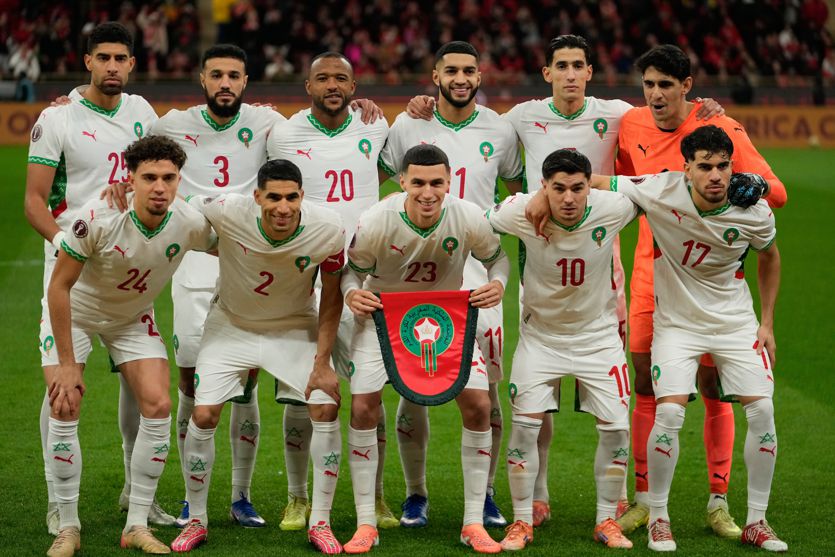
From football to the ballot box: Fouzi Lekjaa makes a strong entry into the Moroccan elections
In the middle of summer, the president of the Moroccan Football Federation and Minister of State for the Budget declared his support for the Authenticity and Modernity Party. Rumours suggest he is in the running for the post of Prime Minister, even though he is not a candidate. This development shifts the balance of power within the majority coalition. His popularity stems from the national team’s victories
by Sergio Rochi
 Aggiungi Il Sole 24 Ore
ai preferiti su Google
Key points
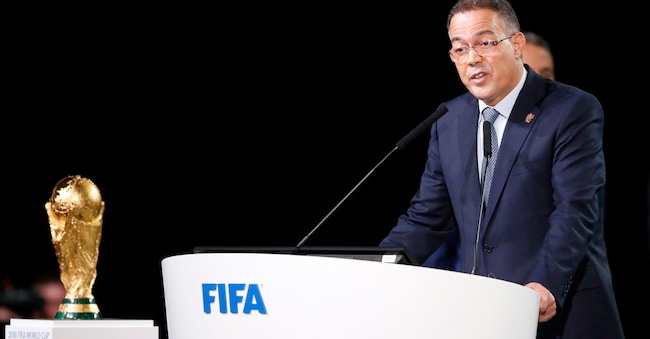
Having joined the Authenticity and Modernity Party (PAM) on 25 July, the president of the Moroccan Football Federation and Minister Delegate for the Budget has become the undisputed star of the election campaign. Although not a candidate, Fouzi Lekjaa is drawing crowds, encouraging new members to join, provoking a direct reaction from the National Rally of Independents and fuelling speculation about his possible rise to the helm of the government. ‘A tireless leader, a hard worker’: this is how he is described in the corridors of the African Football Confederation (CAF).
On 23 September, Moroccans will elect the 395 members of the House of Representatives, with around 16.5 million voters. The fiercest contest is not between the ruling majority and the opposition, but rather between the three parties that have governed together since 2021: the National Rally of Independents (RNI), the PAM and the Istiqlal. On the eve of the candidate nominations, there was a dramatic twist: Lekjaa withdrew from the race in Berkane, his hometown, where the party selected Mohamed Ibrahimi. However, the minister did not abandon the campaign; on the contrary, he became its linchpin. He travelled the length and breadth of the country, defending the PAM’s programme — on which his influence appears to have been decisive —, mobilising the crowds, capturing everyone’s attention and delivering direct speeches. His rhetoric did not even spare his government allies. In Fès, Séfrou and Berkane, he is greeted with cries of ‘Sir, Sir, Sir’ — ‘Come on, come on, come on’ — the slogan made popular by the national football team’s exploits. The tour of the Eastern region continues towards Guercif, Oujda and Bouarfa, featuring close encounters with citizens and party activists, with an average of four rallies a day. The proposed programme was quantified in Rabat on 1 September by the party’s political bureau: approximately 350 billion dirhams in additional expenditure over the 2027–2031 parliamentary term, equivalent to around 70 billion per year.
In four weeks, it tops the media charts
Between 17 August and 12 September, his weekly share of media mentions rose from 2.5 per cent to 13.1 per cent, propelling him from tenth to first place amongst the most frequently mentioned figures, ahead of the head of government Aziz Akhannouch. Among PAM representatives alone, he accounts for 39.9 per cent of mentions, compared with 13 per cent in August; on social media, this figure rises to 72.1 per cent. All this is thanks to the popularity he has built up through football.
Since the summer, his name has been circulating persistently as a possible head of government. The PAM, which came second in 2016 and 2021, is now aiming for first place: the minister speaks of a ‘logical evolution’ for the only major party that has never led the government. When asked about his personal ambitions, he dismisses the matter with just a few words: ‘I’ve never given it any thought.’ Fatima Ezzahra El Mansouri denies any suggestion that she might be replaced, whilst Mehdi Bensaïd dismisses rumours of rivalry but refuses to narrow the race for the leadership of the government down to just two names.
August 2026: all-out war with the RNI
On 25 August, the RNI’s political bureau, chaired by Mohamed Chouki, accused the PAM of poaching its administrators and elected representatives and openly condemned its methods. On the same day, Marouane Chbaatou, the outgoing MP for Midelt and a member of the same bureau, left the RNI to join the ‘Tractor Party’, the nickname by which the PAM is known. This episode marked the definitive split between two parties that had sat side by side in government for five years.