The analysis

From Mecca to Tehran: deterrence diplomacy seeks to defuse the crisis in the Middle East

The visit by the Saudi, Turkish and Pakistani delegation to Iran opens up the prospect of a new regional security architecture, against a backdrop of tensions between Washington and Tehran, Gulf security, the future of Yemen and freedom of navigation

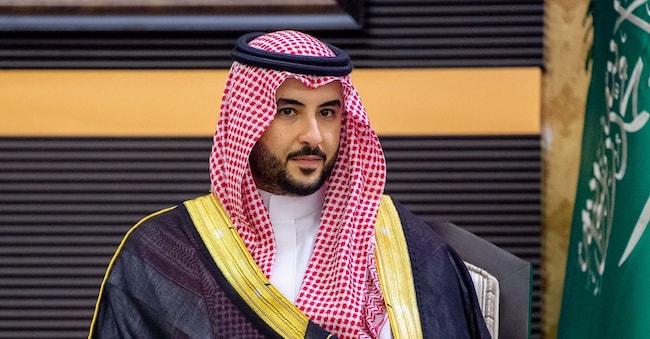
Il principe Khalid bin Salman,  ministro della Difesa dell’Arabia Saudita REUTERS

7' min read

Translated by AI
Versione italiana

7' min read

Translated by AI
Versione italiana

The crisis currently unfolding in the Middle East can no longer be interpreted merely as a clash between the United States and Iran, nor as a simple extension of the war in Yemen or the competition for influence in the Gulf. The region is facing an increasingly interconnected security crisis, in which an escalation on one front can have immediate consequences on others, from the Strait of Hormuz to Bab el-Mandeb, from the Gulf’s oil infrastructure to civilian ports and airports.

In this context, the visit to Tehran by the delegation from the signatory states to the Mecca Agreement on collective defence takes on a significance that goes beyond traditional diplomacy. The presence of the Saudi Defence Minister, Prince Khalid bin Salman, the Chief of the Pakistani Army, Field Marshal Asim Munir, and the head of Turkish intelligence, Ibrahim Kalın, sitting at the table with the Iranian leadership, reflects a growing realisation: military means alone are no longer sufficient to contain the risks of a wider regional conflict. But the significance of the visit lies not only in the calibre of the participants. It is above all the political message that deserves attention: countries that have strengthened their defence cooperation to tackle regional threats are now seeking to use that same strategic clout to open a diplomatic path capable of preventing the war from spreading.

Loading...

A new approach: deterrence in the service of negotiation

Traditionally, defensive alliances are formed to strengthen the capacity to respond to military threats. The visit to Tehran, however, suggests a different possibility: transforming the weight of military cooperation into a tool for diplomatic initiative. Saudi Arabia, Turkey and Pakistan do not share identical interests nor the same international relations. Riyadh has a direct interest in the security of its own territory, its economic infrastructure and the future of Yemen. Ankara wishes to avoid further regional destabilisation that could jeopardise trade, energy and the security balance. Islamabad, for its part, maintains important relations with both Saudi Arabia and Iran and has channels of communication with various key players in the crisis between Washington and Tehran.

These differences could represent a diplomatic advantage, enabling the delegation to engage with Iran from complementary perspectives, rather than presenting a rigid and unilateral position. The success of this approach, however, requires a fundamental distinction between deterrence and threats. Deterrence can foster a conducive environment for negotiations when accompanied by credible assurances. Direct threats, on the other hand, risk hardening the other party’s stance, particularly when a concession might be interpreted as a sign of weakness.

What can be agreed?

It would be unrealistic to think that a single meeting could resolve differences that have built up over the years and been exacerbated by wars, sanctions and regional rivalries. Diplomacy, however, does not necessarily have to begin by resolving all the problems. It can start with concrete measures that prevent the situation from deteriorating further whilst negotiations continue. An agreement on specific security commitments could prove more effective than a general political declaration that is difficult to translate into verifiable results. The first commitment should concern the cessation of attacks on civilian and economic infrastructure, including airports, ports, energy facilities and oil pipelines. These facilities are no longer of merely national importance: they form part of economic networks on which millions of people and numerous countries depend.

The second concerns the establishment of direct channels of communication between the military and security authorities, capable of swiftly managing any incidents before they escalate into wider clashes. Not all escalations, in fact, stem from a deliberate decision to go to war. Some may arise from errors of judgement, hasty attributions of blame or the lack of reliable means of communication.

The third commitment should focus on the safety of shipping in the Strait of Hormuz and the Red Sea. The countries concerned could discuss operational mechanisms to protect commercial shipping and share information on threats, thereby preventing maritime routes from becoming permanent instruments of political pressure.

Negotiations between the United States and Iran

Tehran is calling for an easing of restrictions on its oil exports and an end to the naval blockade, whilst Washington is focusing its demands on the safety of shipping, the nuclear issue and security guarantees. It will be difficult to reach a lasting agreement if one of the parties is asked to make full commitments without addressing the issues it considers essential.

Yemen: the toughest test

The Yemeni issue may be the most pressing for Saudi Arabia, but it is also one of the most complex. The attacks carried out by the Houthis against Saudi targets demonstrate just how closely the Yemeni crisis is now intertwined with regional tensions. At the same time, the continuation of military operations within Yemen undermines any cross-border truce that is not accompanied by a political process capable of addressing the root causes of the conflict. Iran maintains political and military ties with the Houthis, but to reduce the movement to a mere tool of Tehran would be to ignore the nature and internal complexity of the Yemeni war. Similarly, assuming that Iran could, through a direct order, ensure the cessation of all Houthi operations would risk basing any agreements on unrealistic assessments. For this reason, securing a generic Iranian commitment is not enough. Verifiable agreements on the ground are required.

A possible starting point would be the cessation of cross-border attacks, accompanied by reciprocal measures to de-escalate the military situation. This should be followed by a Yemeni negotiation process, supported at regional and international level, with the participation of the relevant Yemeni parties. The negotiations should address the reconstruction of unified state institutions, security arrangements, the reintegration or demobilisation of armed groups within the framework of a political agreement, border protection, the reopening and operation of ports and airports and the improvement of economic and humanitarian conditions. Regional détente should not turn into an agreement between external powers to manage the Yemeni crisis without resolving it.

Loading...

In the long term, the security of Saudi Arabia and the Red Sea cannot be separated from the existence of a Yemeni state capable of exercising its sovereignty and guaranteeing the security of its territory. If the talks in Tehran were to result merely in a reduction in military pressure on Saudi Arabia, without opening up any concrete political prospects for the Yemenis, they might temporarily halt some manifestations of the crisis, but would not eliminate its root causes.

Can Iran offer guarantees without feeling besieged?

One of the main challenges facing this initiative is the differing perceptions of security held by Iran and its neighbours. Whilst Saudi Arabia focuses on bringing the attacks to an end and protecting its territory and infrastructure, Tehran regards US and Israeli military pressure, sanctions and trade restrictions as direct threats to its security and economy. This difference does not absolve those who carry out attacks against civilians or infrastructure of responsibility, but it helps to explain why a solution based on unilateral demands is unlikely to be sustainable. Any sustainable agreement should be based on the principle of reciprocity: no state should use the territory of neighbouring countries or maritime routes to threaten others, whilst diplomatic mechanisms must be in place to prevent disagreements from escalating into open military campaigns.

A non-aggression pact, respect for sovereignty and the establishment of permanent channels of communication could constitute the first step towards a broader regional security framework.

Such a framework, however, would not be credible merely by signing a declaration. The real issue concerns the arrangements for implementation, the allocation of responsibilities, the management of non-state armed groups, and the procedures to be followed in the event of a breach of commitments.

Turkey and Pakistan: the value of broader mediation

The participation of Turkey and Pakistan is particularly significant because it broadens the dialogue beyond the bilateral dimension between Saudi Arabia and Iran. Pakistan, thanks to its geographical position and its political and military relations, can help convey messages between parties whose direct contacts remain limited or politically sensitive. Turkey, on the other hand, has a network of regional and international relations that could enable it to contribute to the formulation of political and security agreements, whilst maintaining interests that differ from those of other key players on various issues. The most significant contribution these two countries could make might be to help Riyadh and Tehran move from exchanging demands to formulating mutual commitments, whilst at the same time building on the mediation efforts already initiated by Qatar.

It would, however, be important to ensure that the proliferation of mediators does not lead to a fragmentation of the negotiations. The more diplomatic channels there are without clear coordination, the greater the risk of contradictory messages and incompatible commitments.

A coordinated approach should distinguish between what can be agreed at regional level, what requires direct negotiations between Washington and Tehran, and what must remain part of a specifically Yemeni political process.

Three possible outcomes of the new diplomatic initiative

Following the visit to Tehran , three scenarios can be outlined , although it is not yet possible to determine which one will materialise. The first is that of a limited security agreement, focused on the cessation of cross-border attacks, the protection of strategic infrastructure and the opening of military and intelligence communication channels. Such an agreement would not necessarily put an end to the confrontation between the United States and Iran, but it could reduce the risk of it spreading to neighbouring countries.

The second scenario is that of a broader, gradual agreement, capable of linking regional security measures to the resumption of negotiations between Washington and Tehran, through reciprocal steps on shipping, sanctions and security guarantees. This approach would require verifiable commitments and political will, including from those not directly present at the meeting.

The third scenario is that of a diplomatic deadlock accompanied by a continued escalation, should the parties’ demands remain irreconcilable or should it prove impossible to contain the military operations and attacks carried out by groups allied with or linked to the various key players in the crisis.

It is not possible to predict with certainty which of these developments will prevail. The mere fact that the meeting has taken place is not enough to assess its outcome, particularly in the face of persistent military threats and still deep differences over the terms of an agreement.

A fundamental question therefore remains: will the countries of the Mecca Agreement succeed in transforming their defensive strength into diplomatic influence capable of contributing to the establishment of this new balance, or will the visit to Tehran remain yet another attempt to manage a crisis that is spreading faster than the efforts to contain it?

Sign up to the NextMed newsletter so you don’t miss out on previews and in-depth articles 

Copyright reserved ©
Loading...

Brand connect

Loading...

Newsletter

Notizie e approfondimenti sugli avvenimenti politici, economici e finanziari.

Iscriviti