
Between Hungary and Saxony: a late-summer journey through beautiful Europe
From the thermal baths to the beaches on the Danube: experience Budapest from the water

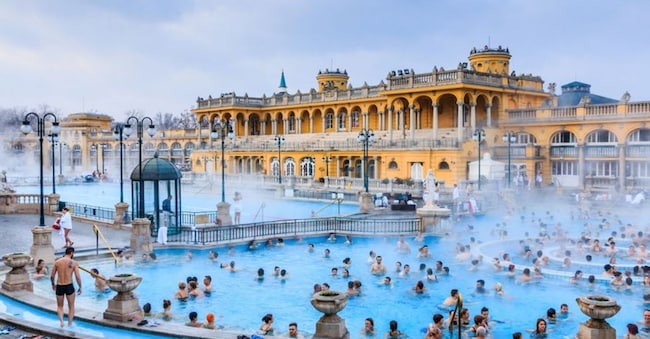
Hungary’s capital has a relationship with water that goes far beyond the great river that flows through it; water forms an integral part of its history and everyday life. In fact, there are over a hundred thermal springs that have been feeding Budapest’s baths for centuries; whilst they vary greatly in architectural style, they are united by a bathing culture that has its roots in Roman times. Wellness is therefore one of the city’s most recognisable features, and the Széchenyi Baths, set amongst the greenery of the Városliget, are perhaps the best-known symbol of this culture: a veritable palace with 21 pools, three of which are outdoor, and the unique feature of the famous chess matches played whilst immersed in hot water. The Rudas Baths, built in the 16th century, retain their Ottoman-style structure with a large dome and feature a panoramic rooftop pool overlooking the Danube, whilst the Gellért, at the foot of the hill of the same name, is an Art Nouveau masterpiece with its Zsolnay tiles and stained-glass windows. For those seeking a more local atmosphere, there is the Lukács, the capital’s historic spa and social hub, whilst in the warmer months the ritual of bathing also takes over the open-air spaces: one example is the Palatinus on Margaret Island, which has been in operation since 1919 and now boasts 14 swimming pools and slides (Aquaworld, meanwhile, with its 15 pools and 11 slides, is one of Europe’s largest indoor water parks). And finally, the Danube, which in summer, at Római Part and Lupa Beach, becomes a seaside-style playground where you can go kayaking and paddleboarding, relax on its banks or experience the thrill of sunset cruises.
https://visithungary.com/it/scopri

