
A higher-than-average price doesn’t stop bestsellers from ending up in the shopping trolley
From coffee capsules to yellow kiwis, from Greek yoghurt to tinned tuna: according to a NielsenIQ analysis, many products show that when a product range meets genuine needs and simplifies the choice on the shelf, it is appreciated to such an extent that the relative cost becomes a secondary consideration

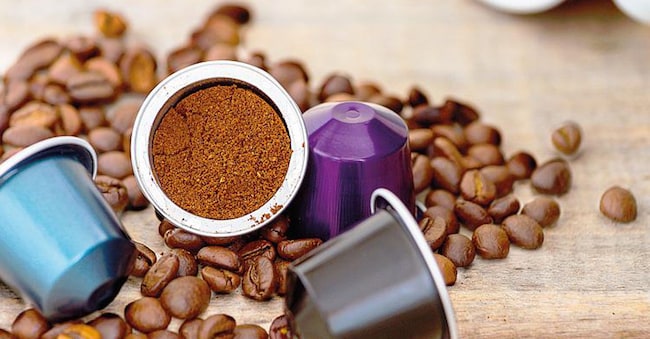
What do coffee capsules, Greek yoghurt, yellow kiwis, nut butters and tinned tuna in oil have in common? They all saw double-digit growth in sales volumes in 2025 within the large-scale retail sector, despite their decidedly high prices.
Let’s take coffee capsules, on which Italians have spent more than 30% of their coffee budget and for which they have increased their purchases by 11.2%. In this case, convenience comes at a price, as the capsules cost 131% more than the average price of coffee. Even more significant is the price differential for another top-selling product such as Greek yoghurt: the fact that it costs 92% more than the market average does not deter sales, which continue to rise (+24% in volume last year). The surge in recent years has taken Greek yoghurt sales to over €500 million, or around a quarter of total yoghurt sales.
The same applies to yellow kiwis, which cost on average 66% more than the market average and are seeing strong sales growth (+23.3% by volume in 2025), and for nut butters, which have grown by 18% in volume despite prices being 50% higher. Whilst the novelty factor, combined with health and hedonistic value, works in favour of almond or peanut spreads, in the case of the 11.3% increase in the quantity of tinned tuna in oil purchased, despite it costing 61% more than the product average, the explanation lies in the assurance of quality provided by the ability to see what is inside the jar.
“These products show that when the range meets genuine needs and simplifies the choice on the shelf, it is appreciated to such an extent that price becomes a secondary consideration,” explains Alessandra Cuomo of NielsenIQ. This marks a significant shift in Italians’ approach to food shopping. Over the course of a year, the proportion of those forced to switch to lower-cost products has fallen (31%), of those buying only promotional products regardless of brand (30%) and of those who have cut out all non-essential spending, limiting themselves to the bare essentials (30%). The turning point came at the end of 2025, when Italian consumer confidence began to rise again, helping to stabilise inflation: price sensitivity eased, returning to levels in line with the average of recent years (69% compared to the peak of 83% at the end of 2023).
Having moved beyond the defensive phase, Italians are therefore still keeping a close eye on their receipts, but have also started buying based on the value they attribute to food products, a factor that is now decisive for 26% of shoppers, compared with 20% in 2024. But what determines the value of a food product in consumers’ minds? “Our research has shown that it is dictated by various factors, notably freshness, quality (also ‘certified’ by the brand), health benefits, sustainability, high service standards and the product’s origin or provenance,” adds Cuomo.

