

The Houthis’ rampage is taking a heavy toll on children. Since August, over 110 civilians have been killed and 350 injured. Essential services are on the verge of collapse
The suspension of healthcare services, affecting over 147,000 women, the closure of 120 healthcare facilities and the halt to waste management have led to the spread of disease. Cases of dengue fever and cholera have been reported.

Key points
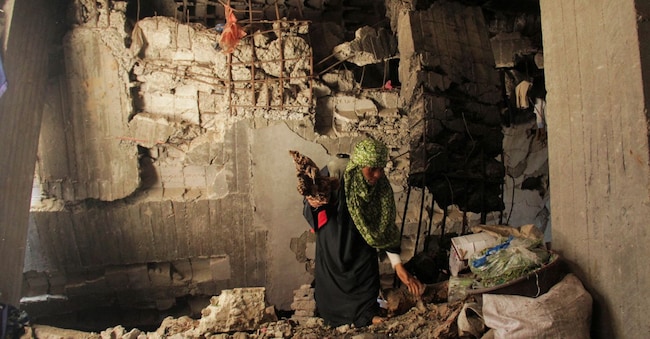
The governorate of Taiz, in south-western Yemen, has been facing an humanitarian and human rights crisis that has grown increasingly severe since the military escalation led by the Houthi group in August 2026. According to findings by our organisation, SAM for Rights and Freedoms, over 110 civilians have been killed, more than 350 have been injured and over 70 homes have been hit. All this is taking place against the backdrop of the siege that the group has been imposing since 2015 on a city with over a million inhabitants, including hundreds of thousands of women and children. Blocked roads and shortages of food, water and fuel have become a constant threat to the lives of the population.
The attack on civilians
The SAM report, covering the period from 1 August to 4 November, shows how bombardments of homes, markets and escape routes are intertwined with restrictions on the movement of civilians and the transit of supplies, exacerbating the disruption to essential services. We hold the Houthis responsible for violations that have been definitively attributed to their forces and for the unlawful restrictions imposed in areas under their control. For incidents where responsibility is disputed, we call for immediate and independent investigations.
According to figures from the United Nations High Commissioner for Human Rights, as reported by the United Nations Office for the Coordination of Humanitarian Affairs, as at 27 October, 263 civilian casualties had been documented across 103 incidents: 67 dead and 196 injured. Among the casualties were 97 children. In a separate set of statistics, the health coordination group led by the World Health Organisation had recorded, as of 30 October, approximately 9,730 people killed or injured in connection with the conflict: 1,771 deaths and 7,959 injured. These latest figures do not relate exclusively to civilians and do not allow all casualties to be attributed to a single party.
Children killed by bombs
The documented incidents illustrate the scale of the tragedy. In October, three members of the same family, including a six-year-old girl with a disability, were killed when Houthi forces bombed a house in the village of al-Sarm, in the al-Aqroud area. On 27 October, SAM reported that Houthi forces had fired over two hundred rockets and artillery shells at the villages of Kahlan within the space of a few hours. On 1 November, Layan Shaif Ali Abdu, an eight-year-old girl, was killed in a Houthi drone strike on her family’s home in the Old Airport neighbourhood.
On 2 November, a Houthi airstrike on the al-Najd market in the village of al-Makhaf left nine people dead, including eight children, according to an initial local list of victims. Four days later, an attack on the popular al-Hadara market in the al-Wazi‘iyah district claimed dozens of lives. Local authorities blamed the Houthis, stating that no air operations had been carried out in the district on the day of the attack. The group, however, attributed the bombing to the Saudi air force.

