The comment

It is in Iran’s interests to negotiate with ‘Lame Duck’ Donald before the new Congress takes office

The mid-term elections are reshaping the balance of power. Economic pressures and energy instability are posing new challenges for the White House. A diplomatic phase may be on the horizon for the Middle East. It may be in Tehran’s interests to strike a deal before the new Senate and House of Representatives take office. When further internal tensions arise in Washington

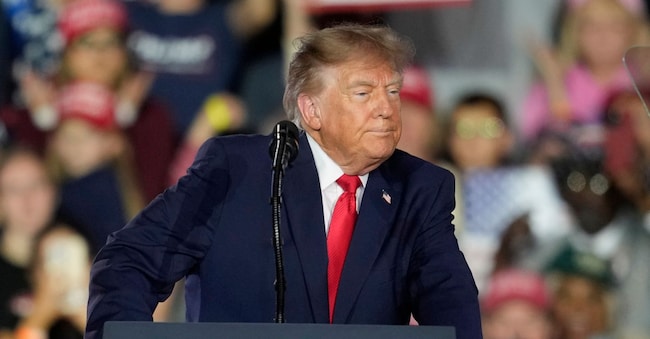
Il presidente degli Stati Uniti Donald Trump  Foto AP/Charlie Neibergall

4' min read

Translated by AI
Versione italiana

4' min read

Translated by AI
Versione italiana

The US mid-term elections were not merely a contest for control of Congress. Against the backdrop of the war with Iran, rising living costs and turbulence in the energy markets, they turned into a major political test for Donald Trump, two years after his return to the White House. The Democrats have won control of the House of Representatives and the Senate, returning the United States to a situation of divided government: the presidency remains with the Republicans, whilst legislative power passes to the Democratic opposition.

But the question that concerns the world above all is whether this new political balance might alter the calculations of war and peace, given that Trump remains Commander-in-Chief of the armed forces and retains extensive powers in foreign policy. However, his ability to manage a protracted military conflict will be increasingly constrained by a Congress that is no longer controlled by his party.

Loading...

Trump loses his majority, but not his military powers

It is essential to distinguish between the loss of control of Congress and the loss of the ability to make military decisions. The US President retains significant powers in commanding the armed forces and managing international relations. Congress, on the other hand, has legislative, financial and oversight powers over the actions of the executive.

The Democratic majority in both Houses could therefore usher in a new phase of parliamentary inquiries into the objectives of the war with Iran, its costs, its legal basis and the existence of a credible strategy for bringing it to an end.

Any measure contrary to the President’s wishes could be met with a White House veto. Furthermore, funding that has already been approved and executive powers remain in place; these do not disappear simply because of a change in the parliamentary majority.

Another key factor is that the Democrats themselves do not necessarily share a unified stance on Iran. Within the party, there are factions in favour of reducing military intervention and others who advocate maintaining strong strategic pressure on Tehran, whilst criticising the way in which Trump has handled the conflict.

Iran faced with a new American equation

From the perspective of Tehran, the election result introduces a political factor that warrants careful consideration. The US administration, which entered the conflict with the support of the Republican majority in Congress, will have to contend with two chambers controlled by the Democrats from January onwards.

This change could affect Iran’s negotiating strategy, particularly if Tehran were to conclude that it would be more difficult for the White House to secure further funding or parliamentary support for long-term military operations. Such an assessment, however, carries risks.

There is also a decisive time-related factor: the new Congress will not take office until January 2027. During the transition period, the administration and the current Congress will continue to exercise their respective powers. Tehran may find itself faced with two different options: to use the new US political landscape to seek more favourable negotiating terms, or, more likely, to view it as an incentive to speed up an agreement before the internal political situation in Washington becomes even more complex.

The Middle East: uncertainty and diplomatic opportunities

For Middle Eastern countries, the shift in the balance of power in Washington is not merely a matter of US domestic politics. The Gulf States, Israel, Iran, Turkey, Pakistan and other regional players will have to deal with a US administration that retains control of the executive branch but faces new political and legislative constraints. This could affect security guarantees, military supplies, aid, decisions regarding the presence of US forces and diplomatic agreements.

Loading...

It would, however, be wrong to assume that the Democrats will automatically adopt a more conciliatory stance towards Iran. The differences between the two main American parties sometimes concern the means of addressing threats rather than the definition of the threats themselves. Politicians from both parties may share objectives such as nuclear non-proliferation, the security of Israel and the protection of international shipping, whilst disagreeing on the effectiveness of a protracted war, sanctions or negotiation.

The countries in the region cannot, therefore, base their strategies on the assumption that a change in the congressional majority will lead to a complete transformation of US policy. Rather, this new phase could provide an opportunity to broaden regional diplomatic channels and reduce their exclusive reliance on Washington’s military decisions.

From the US polls to the Tehran negotiations

Recent regional diplomatic initiatives, including the visit to Tehran by the Saudi, Turkish and Pakistani delegation, take on added significance in the light of the US election results.

The current political landscape could open up scope for security arrangements that do not necessarily have to await a comprehensive agreement between the United States and Iran. Such agreements could include a cessation of attacks on civilian infrastructure, the protection of maritime routes, the establishment of direct channels of communication between security agencies, and restrictions on cross-border operations. Regional diplomacy can help to limit the spread of such operations to neighbouring countries.

Yemen: Will the strategic balance in the Red Sea shift?

For Yemen, the outcome of the US elections cannot be separated from the future of security in the Red Sea and the Bab el-Mandeb Strait. The war with Iran and tensions linked to the Houthis have drawn Yemen into a wider web of regional confrontations, which goes beyond the internal conflict for control of power.

If the new political balance in the US were to lead to greater pressure to ease tensions, there might be scope to discuss security agreements relating to shipping and cross-border attacks. But this does not mean that a resolution to the Yemeni crisis will automatically result from any agreement between Washington and Tehran.

The war in Yemen has internal causes – institutional, political and economic – which cannot be reduced to the relationship between the United States and Iran. A regional agreement focused exclusively on ending maritime attacks, without addressing the future of the Yemeni state, could bring about a temporary truce without eliminating the root causes of instability.

For this reason, any broader diplomatic approach should include a clear vision for supporting a Yemeni political solution, rebuilding state institutions, reviving economic activity and ensuring Yemen’s sovereignty over its territory, territorial waters and ports. Protecting Bab el-Mandeb should not become an alternative to safeguarding the future of Yemen itself.

Sign up to the NextMed newsletter so you don’t miss out on previews and in-depth articles

Copyright reserved ©
Loading...

Brand connect

Loading...

Newsletter

Notizie e approfondimenti sugli avvenimenti politici, economici e finanziari.

Iscriviti