

Italy rejects changes to WHO emergency regulations, like the US: 'Too binding'
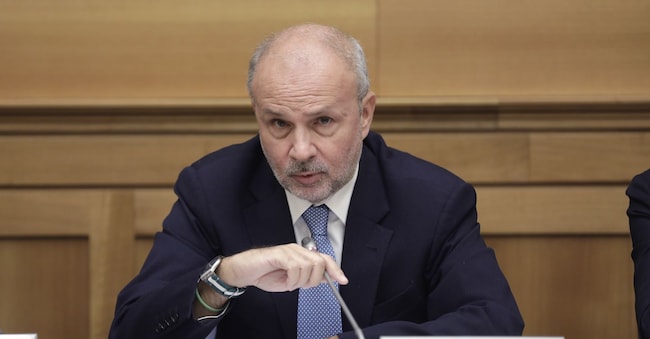
The Minister of Health, Orazio Schillaci, informed the Director of the Organisation of Italy's refusal

3' min read
Key points
3' min read
In a letter dated 18 July to the WHO director-general, Tedros Ghebreyesus, Health Minister Orazio Schillaci announced Italy's rejection of the 2024 amendments to the International Health Regulations, adopted at the 77th World Health Assembly. The amendments go in the direction of a legally binding framework to respond to public health emergencies. "Pursuant to Article 61 of the International Health Regulations (2005), by this letter I hereby notify you of the rejection by the Italian side of all the amendments adopted," it reads. Italy thus aligns itself with the US position: the Trump administration also rejected the amendments, pointing out that the changes risk interfering in an 'unjustified' way with the sovereign national right to develop health policies.
Minister Schillaci's letter to WHO
"I am writing to you," reads the letter sent by Minister Schillaci to the Director-General of the World Health Organisation, Tedros Adhanom Ghebreyesus, "with reference to your communication of 19 September 2024 on the amendments to the International Health Regulations (2025) adopted by the 77th World Health Assembly by resolution No.WHA77.17. As stated in Paragraph 3 of Article 55 and Paragraph 2 of Article 59 of the International Health Regulations (2005), these amendments will enter into force 12 months after the aforementioned communication, i.e. on 19 September 2025, except for those Parties that have notified the Director-General of the World Health Organisation of their decision to reject or make reservations to the aforementioned amendments." Therefore, it reads, 'Pursuant to Article 61 of the International Health Regulations (2005), I hereby notify you by this letter of the rejection by the Italian side of all amendments adopted by the 77th World Health Assembly in Resolution WHA77.17'. At the 77th World Health Assembly, held from 27 May to 1 June 2024 in Geneva, member countries adopted amendments to the International Health Regulations, a legally binding framework for responding to public health emergencies, to introduce the concept of 'pandemic emergencies' and 'greater solidarity and equity'.
Reactions to the Italian government's initiative
."We had long raised questions and concerns about these changes to the 2005 health regulation. Changes that would have entailed a reduction of national sovereignty in health policies, including the possibility of the WHO exercising control over health information. Moreover, these changes would have been introduced without any parliamentary debate. This choice, which is also shared by other countries such as the USA, does not determine any change with regard to health security, which will always be guaranteed with the highest level of rigour, as well as coordination with other nations. The Meloni government has once again confirmed that it is the national interest and that of the Italians that guides our political action,' commented Fratelli d'Italia deputies' group leader, Galeazzo Bignami. Schillaci's initiative was opposed by the Pd deputy Ilenia Malavasi: "With the rejection of the amendments to the WHO's International Health Regulations, officially communicated by Minister Schillaci, the Meloni government is taking an irresponsible and dangerous step in pursuit of the wicked Trump administration. This is a serious gesture; a short-sighted and ideological act of closure that distances us from our European partners and aligns us with denialist and populist positions that have nothing to do with protecting public health. We are putting ourselves outside the international forum, renouncing a shared legal framework to deal with global health emergencies. It is like saying that Italy alone knows and can do better than the WHO and the international scientific community. It is a glaring error'.
Even the US says no: "Attack on sovereignty"
.As mentioned, the US also formally rejected a series of amendments adopted by the World Health Organisation (WHO) aimed at strengthening global pandemic preparedness. The amendments, unanimously approved last year, aim to improve international coordination following the chaotic response to Covid-19. US officials have argued, however, that the new rules give the WHO too much power in shaping global responses and rely on vague language. These changes, according to Washington, favour political issues such as solidarity over quick and effective action. The approved amendments introduce a new category of 'pandemic emergency' for the most significant and dangerous global health crises, in an attempt to strengthen global defences against new pathogens. They also call for greater equity in access to vaccines, drugs and medical tools.


