Consumption

Low-carb diets? Yes, but Italians aren’t giving up bread (which is changing)

World Bread Day is celebrated on 16 October: in Italia, 41 kg of bread is consumed per person each year, with sales totalling 14 billion

 Stock.adobe.com

5' min read

Translated by AI
Versione italiana

5' min read

Translated by AI
Versione italiana

Combining the quality and sensory appeal of artisan bread with the variety and atmosphere of bakeries, whilst maintaining the convenience, time-saving benefits and affordability of retail. And continuing to make a profit. Bread presents a considerable challenge to modern retail chains in Italia. Firstly, because it is a deeply rooted product, with 41 kg of annual per capita consumption and a sell-out value of 14 billion euros, making it one of the top five in the world, according to research by IndexBox. It is a market that is still growing (+6 per cent in the retail sector) and which, according to Euromonitor, is set to reach 6 million tonnes by 2030.

A daily ritual open to innovation

In Italia, bread is more than just a food: it is a daily ritual that consumers do not seem willing to give up, despite the growing focus on reducing carbohydrate intake. According to Puratos’ Taste Tomorrow study, conducted amongst 23,000 consumers across 56 countries, 81 out of every 100 Italians do not intend to reduce their consumption, but rather to opt for ‘healthier’ versions. This figure is well above the European average of 53 per cent and confirms the ‘ritual’ role of this globally popular product, celebrated today with World Bread Day, during which some companies from the Assitol bakery sector, in line with the objectives of the Bread Alliance of which it is a member, will open their factories to young children for the first time.

Loading...

A food that is both ancient and modern, bread has undergone a significant evolution in recent years. The rise in popularity of long proving times, alternative flours, varieties enriched with seeds or grains, health-conscious recipes (high-protein or low-glycaemic breads) and foreign specialities (such as Japanese shokopan, which is very much in vogue today), together with changing consumption patterns and shifting tastes, have brought about a renewal and a buzz of activity in the bakery sector unlike anything seen before. This has also raised the bar in terms of consumer expectations.

Combining taste, convenience and value for money

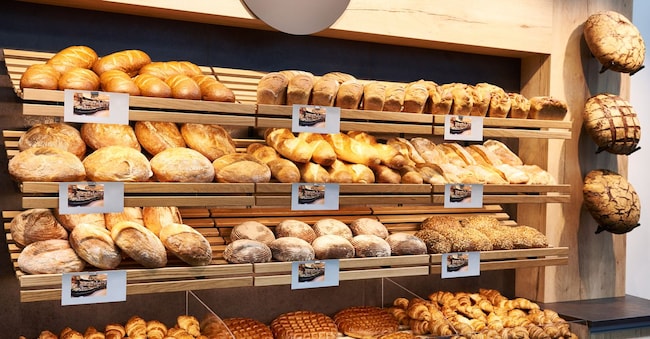
57 per cent of Italians buy their bread mainly from large-scale retailers, spending 3.8 billion euros, and choosing it with an eye on freshness and taste but also paying close attention to the price. Convenience and time-saving factors mean that pre-packaged bread is preferred over bread sold by weight, even though the bakery counter – so rich and tempting – increasingly resembles that of bakery-café chains, which are taking Italia by storm. This is a rapidly growing sector, driven by many bakeries that combine production and retail with on-site serving; whilst customers appreciate the variety and convenience this offers, there is still a risk that such establishments may be perceived as ‘industrial’.

When it comes to bread, however, for Italians quality goes hand in hand with artisan production. According to Taste Tomorrow, almost one in two Italians associate it with the aroma and texture, but for 38 per cent, the appearance of the bread is also indicative of how it was made. Given these criteria, price takes a back seat. 35 per cent of consumers are willing to pay more for bread made with natural ingredients and guaranteed to be fresh, and 22 per cent for bread made with ingredients that are good for their health.

‘Special’ recipes are growing in popularity

According to an analysis by Niq for Vandemoortele, another major European player in the sector, traditional bread recorded a 5 per cent increase by volume and a 6 per cent increase by value, whilst speciality bread showed even stronger growth, with an 11 per cent increase by volume and a 7 per cent increase by value. This is therefore not a case of speciality bread replacing traditional bread – which retains significantly greater market share and penetration – but rather the expansion of a category capable of meeting different needs.
“Bread remains a staple purchase, but it is increasingly seen as a cultural choice as well. In Italia, there are over 200 recognised bread recipes – as Vandemoortele points out – and just as many that are part of local traditions. An enormous cultural heritage that only in Italia takes on such proportions. That is why viewing it as a low-price commodity is a mistake. A ‘commodity’ is an undifferentiated product, the origin of which is irrelevant. Bread is the exact opposite: it is a symbol of regional identity.”
It is no coincidence that there are three PDO (Pane di Altamura, Pane Toscano and Pagnotta del Dittaino) and five PGI (Coppia Ferrarese, Piadina Romagnola, Pane casareccio di Genzano, Pane di Matera and Südtiroler Schüttelbrot).
The variety of shapes also reflects a complex category. Among standard breads purchased in modern retail outlets, baguettes account for 56 per cent of the market, followed by small crusty rolls at 55 per cent, ciabatta at 50 per cent and loaves at 49 per cent. In the value-added segment, loaves and small crispy rolls both account for 26 per cent, followed by baguettes at 22 per cent.

From sourdough to Japanese shokupan

“Just as has happened in the yoghurt sector over recent decades, we will also see the rise in the bakery sector of recipes that provide valuable nutrients, such as protein and fibre, and offer benefits particularly for gut health – an issue of concern to 81 per cent of Italians, compared with the European average of 61 per cent” says Valentina Bianchi, marketing director at Puratos Italia, a subsidiary of the Belgian group of the same name, which sells innovative ingredients, solutions and services for the bakery, patisserie and chocolate industries in over 100 countries.

Taking a look at the new products on offer to industry professionals makes it easy to predict which breads will be appearing on the shelves of artisan bakeries, large-scale retailers and fast-food outlets in the coming months: sourdough loaves, rolls made with sprouted durum wheat, sesame buns, rye focaccia (including sweet varieties), and shokupan, the Japanese sandwich bread that is taking Europe by storm, including Italia. All these recipes are created using primarily ‘made in Italia’ yeasts, additives, mixes and seeds, developed in collaboration with renowned bakers and pastry chefs, and produced in the three factories acquired in Lombardy and Liguria. They are then ‘explained’ to users at the nine Innovation Centres opened across Italia.

Having invested in production, Puratos has been acquiring local distributors since 2023 in order to be ever closer to its customers. So far, it has acquired an 80 per cent stake in three companies, leaving the remaining 20 per cent in the hands of the founding families and continuing, on their behalf, to consolidate other smaller local wholesalers. The acquisition drive is not yet over and will serve to create distribution hubs in other parts of Italia and to increase turnover from €150 million in 2026 to €250 million by 2030.

Research into flours is crucial

Finally, Italmopa (the Association of Italian Industrial Millers, a member of FederPrima-Confindustria) points out that ‘if Italia can boast such a rich and varied heritage of breads, the credit is also due to the variety and versatility of the flours produced in our country. Soft wheat flours, durum wheat semolina and flours from other cereals enable the milling industry to cater for every form of bread-making, from small artisan bakeries to large-scale production’.
Flour is, in fact, not merely an ingredient, but ‘the backbone and very soul of bread’. The Italian milling industry supplies around 2.5 million tonnes of flours and semolina each year for bread-making alone. The sector’s strength lies in its ability to offer bespoke solutions: ‘from flours suitable for long proving times, the use of sourdough and manual processing, right through to flours with consistent and calibrated rheological properties, capable of guaranteeing the very highest standards of quality and safety even in large volumes’, concludes Italmopa.

Copyright reserved ©

Brand connect

Loading...

Newsletter

Notizie e approfondimenti sugli avvenimenti politici, economici e finanziari.

Iscriviti