The reportage / Pulse

Madrid and the suburbs: the hidden price of the property boom

The Spanish capital sees significant property increases in the suburbs, but economic growth accentuates inequalities in access to services, transport and quality of life

by Ana Somavilla (El Confidencial, Spain)

La periferia di Madrid

3' min read

Translated by AI
Versione italiana

3' min read

Translated by AI
Versione italiana

Big European cities tell stories of prosperity and growth, but also of deep inequalities. Milan, Paris, Athens and Madrid show how economic and cultural centres can coexist with suburbs marked by precarious housing, difficult access to services and social marginalisation. From the Parisian banlieues to the Milanese working-class neighbourhoods, from the Athenian suburbs to the Madrid suburbs, a common thread emerges: urban development often advances faster than the social fabric, generating 'two-speed' cities where opportunities are not distributed equally. Analysing incomes, access to housing, transport and public spaces, these reports offer a comparative look at how the suburbs of European metropolises experience a double reality, between wealth and fragility. Following the episodes on Milan, Paris and Athens, here is the report on Madrid.

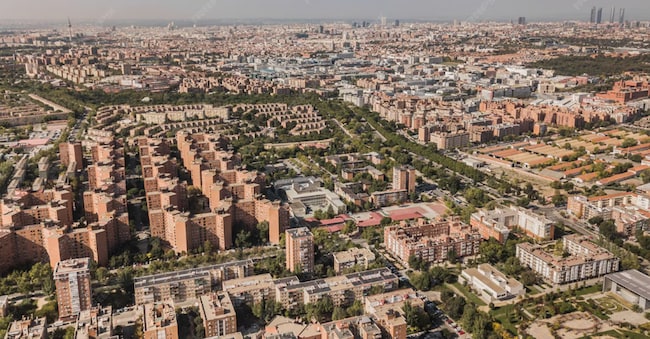
Madrid is the economic and cultural capital of Spain, an ever-expanding city that mixes history, art and modern urban life. Its image of prosperity and liveability, however, risks being biased when looking at the suburbs, where economic and social inequalities grow, transport is more complex and access to public services more limited.

Loading...

Over the last ten years, the city has experienced strong pressure on the real estate market. The economic recovery after the crisis of 2008, the boom in urban tourism and the expansion of tourist rentals have increased property prices, not only in central districts such as Centro, Chamberí, Salamanca and Arganzuela, but also in the southern and eastern suburbs. According to January 2026 data from Idealista, the average price of real estate in Madrid reached 5,861 euros per square metre, an increase of 14.8 per cent compared to the previous year.

Southern neighbourhoods such as Villaverde and Puente de Vallecas recorded annual increases close to 30%, a sign that the tension in the market has spread beyond the centre and the northern axis of the city. Up-and-coming neighbourhoods such as Los Berrocales, El Cañaveral, Los Ahijones and Valdecarros, in the Vicálvaro and Vallecas districts, show average increases of 10% over the last year, turning into increasingly expensive areas.

This phenomenon does not translate into uniform luxury. In the southern suburbs, rising prices often mean precariousness: low-income families find themselves forced to move to municipalities in the metropolitan area such as Fuenlabrada, Getafe, Parla or Móstoles, where the rent is more affordable but commuting times to the centre easily exceed an hour a day.

Mobility and access to services

The problem of precariousness is also reflected in transport. Madrid's underground network, with over 300 stations, forms the backbone of the city's mobility, while the Cercanías system connects the centre to the municipalities of the metropolitan area. However, the density of stations and frequency of connections are much greater in the central and northern districts, leaving the southern districts more isolated. Those living in Villaverde, Puente de Vallecas or Getafe often face long and crowded journeys, with recurring delays that make everyday life an exhausting journey.

The difference between the centre and the periphery also manifests itself in the quality of public services. It is not the lack of health infrastructure, as in rural settings, but the saturation of centres and the difficulty in accessing timely care. For peripheral households, this means a lower quality of life and greater vulnerability to health problems.

Public spaces and quality of life

The difference between centre and periphery is also evident in public spaces. In the central and northern districts, such as Retiro, Salamanca and Chamartín, large parks such as El Retiro, La Casa de Campo and Madrid Río offer well-kept gardens, sports facilities and leisure areas. In the southern suburbs, on the other hand, green areas are smaller, often overcrowded and poorly maintained: the high population density and lack of public investment make them less usable and contribute to a sense of neglect.

Migration and social composition

The southern and south-eastern suburbs of Madrid, such as Villaverde, Puente de Vallecas, Usera and Carabanchel, are home to a large migrant population. Coming from Latin America, Morocco, Romania, China and other regions, these communities often experience precarious living and working conditions. The combination of low wages, rising rents and limited access to services creates a cycle of vulnerability that affects young people in particular.

These neighbourhoods thus reflect a fragmented city: a patchwork of enhanced centres, transforming intermediate districts and suburbs absorbing demographic pressure without receiving commensurate resources.

The urban growth dilemma

Madrid's real estate and social dynamics raise crucial questions: are these phenomena inevitable or can they be corrected through targeted public policies? For experts and associations in the field, the solution is clear: regulating rents, increasing public housing, investing in metropolitan transport, protecting green spaces and rebalancing the territory are fundamental tools to prevent the city from becoming increasingly divided between rich centres and abandoned suburbs.

*This article is part of the European collaborative journalism "Pulse" project

Copyright reserved ©
Loading...

Brand connect

Loading...

Newsletter

Notizie e approfondimenti sugli avvenimenti politici, economici e finanziari.

Iscriviti