

Ports: Morocco puts Nador West Med and Tanger Med 3 on the table: 62 billion dirhams and a capacity of around 20 million containers
In Rabat, King Mohammed VI provided an update on the launch of the new eastern terminal and on the Maersk concession for the Tangier extension. The aim is capacity, energy and jobs, not just traffic

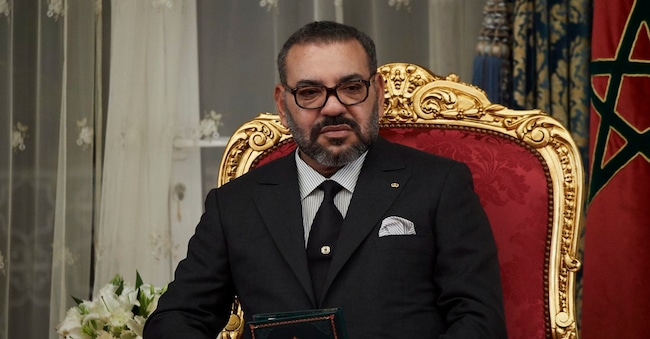
Morocco is stepping up its efforts on the port front with two projects which, combined, are worth 62 billion dirhams in terms of investments already mobilised and new commitments. On Wednesday 28 October, Mohammed VI chaired a meeting at the Royal Palace in Rabat on the status of Nador West Med – whose first container terminal is due to come into operation in the coming days – and on the launch of Tanger Med 3. The situation was outlined by Fouad Brini, chairman of the supervisory board of Tanger Med Special Agency and of the board of directors of Nador West Med.
Nador West Med has already attracted 54 billion dirhams in public and private investment. The first container terminal will have a capacity of 3.5 million TEUs when fully operational. The second terminal, with a capacity of 1.8 million TEUs, is scheduled for April 2027. Private investment totalling 8 billion dirhams has been channelled into the two terminals. The complex is not just a container terminal: it includes a hydrocarbons terminal linked to a storage facility with a potential capacity of 4 million cubic metres and an LNG terminal with a capacity of up to 5 billion cubic metres per year, as well as facilities for solid bulk and general cargo.
The industrial phase is already underway. One plant is already operational in the area and three more are under construction. Official estimates suggest that, in the short term, 14,000 direct jobs and 20,000 indirect jobs will be created. However, the region’s economic benefits depend on transport links: the Selouane–Nador West Med railway, the Guercif–Nador West Med motorway and upgrades to the road network. Without these connections, the port will remain merely a facility, rather than a hub of economic activity for the Oriental region.
At Tanger Med, the project is on a different scale and has a more commercial focus. Tanger Med 3, to the west of Tanger Med 2, will have 1,200 metres of quays and handle an additional 4.5 million containers a year, representing an investment of 8 billion dirhams. The concession for the new terminal has been signed with Maersk-A.P. Moller, which already operates within the complex. At the same time, work is continuing on the extension of the passenger and ro-ro port and the eastward expansion of Tanger Med 2. Once the works are complete, according to the Royal Cabinet, the total capacity could reach 20 million containers, with the aim of becoming one of the world’s top ten ports.
The economic strategy is one of complementarity, not duplication. Tanger Med remains the hub already integrated into global shipping routes and the export industry. Nador West Med is intended to expand the range of services on the east coast, add an energy component and shift part of the investment away from the Tangier hub. The same logic applies on the Atlantic side, as seen in the Dakhla Atlantique project, designed to open up corridors to African and Sahel markets.

