

Morocco: €1 billion for the defence industry. Over 65 per cent of revenue is expected to come from exports
The roadmap presented to Mohammed VI aims to create nearly 50,000 direct and indirect jobs by 2035 and to meet 40 per cent of the requirements of the armed forces and security services. Plans include a strategic agency, an industrial holding company and two new production hubs

Key points
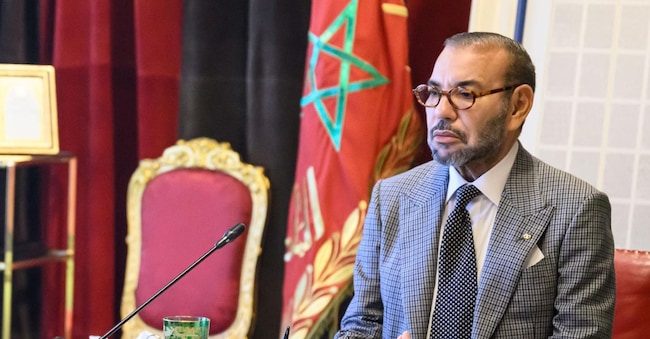
Morocco aims to turn defence into a new export-oriented industrial sector, building on the expertise it has already developed in the aeronautics, automotive and electronics sectors. King Mohammed VI presided over the meeting at the Royal Palace in Rabat, in the presence of Crown Prince Moulay El Hassan, to present the ‘Offre Maroc’, the plan for the development of the national defence and security industry. The King has allocated a contribution of 4 billion dirhams (almost 1 billion euros) from the Hassan II Fund for economic and social development. This sum is intended to support the implementation of the roadmap and does not represent the total cost of the programme: drawing up the financing plan is one of the first measures to be adopted.
The domestic market and exports: the two objectives for 2035
The roadmap sets out three targets for 2035: nearly 50,000 direct and indirect jobs, a production capacity capable of meeting approximately 40 per cent of the requirements of the Royal Armed Forces and security agencies, and more than 65 per cent of revenue generated from foreign markets, according to the Royal Cabinet’s press release. The two percentage targets measure distinct aspects: the first concerns the proportion of domestic demand that the supply chain should be able to meet; the second, the proportion of turnover expected from exports. The aim is to use domestic demand to develop a production base that finds the majority of its market abroad.
The aim is to gradually build a supply chain encompassing research and design, production and integration, maintenance, testing and storage. Priority sectors include drones and autonomous systems, land and naval systems, defence electronics, cyber defence and artificial intelligence. The plan also prioritises dual-use technologies – for both civilian and military applications – to facilitate the transfer of expertise and the integration of Moroccan suppliers into international production chains.
An agency for investors and a holding company for capital
The plan provides for two new bodies with distinct roles. The strategic agency will be responsible for coordinating the implementation of industrial policy and supporting investors. The holding company, on the other hand, will be tasked with structuring supply chains and partnerships, mobilising public and private capital, and fostering the growth of national industrial operators. Mohammed VI has called for priority to be given to establishing the two bodies and finalising the financial plan, whilst simplifying investment procedures and involving Moroccan private companies.
Within the region, the roadmap provides for two new industrial zones in Benguérir and Benslimane, which will join those already under development in Sidi Yahya and Nouaceur. The programme builds on the regulatory framework introduced in 2020 by Law 10-20 on defence and security materials and equipment, and on an initial portfolio of industrial initiatives. Among the projects outlined in the documentation are the production of armoured vehicles in Berrechid and the manufacture and maintenance of drones in Benslimane.

