A look at North Africa

Morocco: the El Mansouri government is focusing on public finances and state reform

The structure of the executive concentrates economic powers and introduces delegated responsibilities for public performance and artificial intelligence. Social protection and regional equity are among the priorities. The real test will be the ability to translate the ministerial mergers into measurable results

by 24Ore NextMed

Aggiungi Il Sole 24 Ore
ai preferiti su Google
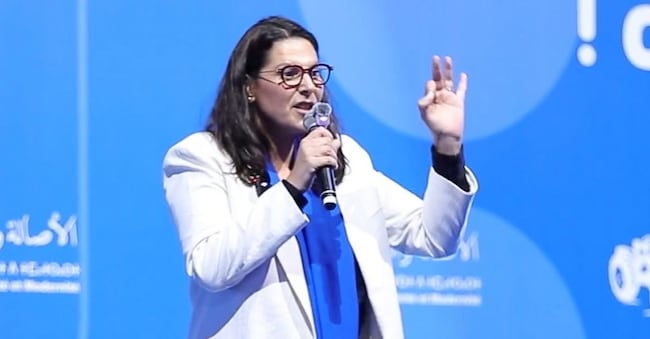
Il primo ministro marocchino, Fatima Ezzahra El Mansouri Imagoeconomica

4' min read

Translated by AI
Versione italiana

4' min read

Translated by AI
Versione italiana

Greater integration between fiscal policy, investment and the quality of public administration. This is one of the key priorities of the Moroccan government led by Fatima Ezzahra El Mansouri, according to the composition set out in the document provided. The new structure combines a change in personnel with a redistribution of responsibilities, with the stated aim of speeding up decision-making and clarifying accountability for results.

King Mohammed VI presided over the ceremony to appoint the government yesterday at the Royal Palace in Rabat, during which its members were sworn in before the monarch.

Loading...

The key development on the economic front concerns the portfolio assigned to Fouzi Lekjaa: Economy, Finance and Public Performance. This title links the management of resources to the assessment of their effectiveness. Performance thus becomes one of the criteria on which the government states it wishes to base its actions: not merely managing expenditure, but assessing its capacity to improve services and living conditions.

However, the policy document does not set out any quantitative targets, deadlines or evaluation tools. These elements will need to be defined in order to distinguish the policy direction from the results actually achieved.

Investment and industry under a single remit

Ryad Mezzour has been appointed Minister for Industry, Trade, Investment and Economic Inclusion. This merger brings together policy levers that influence business activity and the expansion of economic opportunities. Omar Hejira has been appointed Minister of State for Foreign Trade.

This decision stems from a desire to bridge the gap between sectoral policies and policy instruments. The expected benefit is greater coherence between attracting investment, industrial development and social inclusion. However, its successful implementation will depend on administrative coordination and the operational allocation of responsibilities.

A similar logic is evident in the appointment of Nizar Baraka as Minister for Infrastructure, Water and Forests and in the appointment of Khalid Hatimy as Minister for Agriculture, Maritime Fisheries and Food Sovereignty. The latter is explicitly included in the ministry’s name, signifying its status as a political priority.

Energy, Mining and Sustainable Development have been entrusted to Charafat Afailal, whilst Abdessamad Kayouh has been appointed to Transport and Logistics. Taken together, these portfolios cover areas that are significant for production conditions, the movement of goods and access to services.

Digital technology and public administration: the challenge of integration

Another new development concerns the Ministry of Artificial Intelligence, Digital Transformation and Administrative Reform, headed by Ahmed Rahhou. Aïcha Guellaa has been appointed Minister of State for Administrative Reform.

This approach links technological innovation with the functioning of the public sector. Digital technology is therefore presented not only as an area of development, but also as a tool for influencing administrative processes.

Loading...

The text does not specify which services will be affected first, nor the resources allocated to the transformation. It therefore remains to be seen how the new scope of the Ministry’s remit will translate into simpler procedures, shorter processing times and greater accessibility for citizens and businesses.

Education, employment and social protection

In the area of human capital, Nabil Benabdallah is responsible for National Education, Early Years Education, Vocational Training and Qualifications. Two deputy ministers assist the minister: Kamal Hachoumi for Early Years Education and the Fight against Early School Leaving, and Madiha Khayr for Vocational Training and Qualifications.

The consolidation of responsibilities aims to bring the various stages of the education and training pathway under a single political authority. The link with employment remains a cross-cutting issue: the relevant ministry, together with Social Dialogue, has been assigned to Abderrahim Chahid.

Youns Bjijou has been appointed Minister for Health and Social Protection, whilst Najwa Koukouss has taken on the role of Minister for Family, Social Development and Equality, with Rachid Hamouni appointed Minister for Social Inclusion.

The policy framework identifies the dignity of citizens and the reduction of inequalities as the aims of public action. Administrative efficiency is therefore subordinated to a broader objective: to improve protection against vulnerability and make access to opportunities more equitable.

Institutional continuity and political accountability

This reshuffle is accompanied by the retention of familiar faces in key ministries. The list includes Abdelouafi Laftit at the Interior, Nasser Bourita at Foreign Affairs, African Cooperation and Moroccans Abroad, Abdellatif Ouahbi at the Ministry of Justice and Ahmed Toufiq at the Ministry of Habous and Islamic Affairs. Abdeltif Loudyi is listed as Deputy Minister responsible for the Administration of National Defence.

The accompanying material emphasises the political nature of the team and the promotion of women and young people. The significance attributed to this change is the ability to take decisions, support reforms and take responsibility for their implementation. However, the list provided, which lacks personal details and a systematic comparison with the previous government, does not allow for a quantification of the generational renewal.

The organisational structure is also recognisable: broad-based ministries, supported by deputy ministers, with no secretaries of state on the list provided. This model aims to combine unified leadership with specialisation of responsibilities, but will require clear operational boundaries to avoid overlaps.

The criterion of territorial equity

The most challenging task will be to assess how the benefits of the reforms are distributed. The document identifies territorial equity as a structural commitment: to narrow the gaps between regions and broaden access to services and opportunities.

For the government, this means linking budgetary decisions and sector-specific measures to tangible outcomes across different regions. The consolidation of portfolios will only help to achieve this objective if it is accompanied by clearly defined priorities, adequate resources and monitoring mechanisms.

It is on these elements – which have not yet been set out in detail in the policy documents – that the gap between the new structure of the executive and its capacity for implementation will be gauged.

Copyright reserved ©
Loading...

Brand connect

Loading...

Newsletter

Notizie e approfondimenti sugli avvenimenti politici, economici e finanziari.

Iscriviti