
The vote in Rabat

Morocco’s first female Prime Minister

King Mohammed VI has appointed Fatima Ezzahra El Mansouri as head of government. The decision marks an unprecedented institutional shift

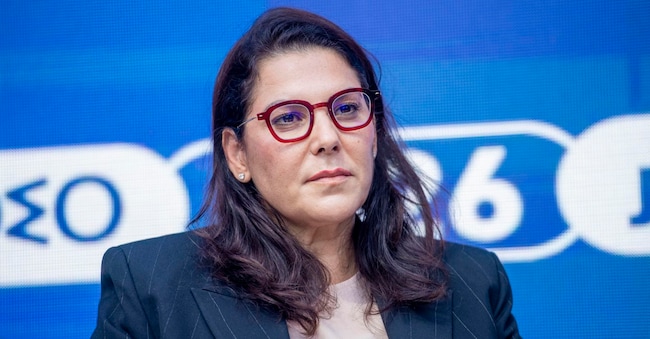
Fatima Ezzahra El Mansouri, la prima premier donna del Marocco (EPA)

4' min read

Translated by AI
Versione italiana

4' min read

Translated by AI
Versione italiana

King Mohammed VI has appointed Fatima Ezzahra El Mansouri as head of the Moroccan government, entrusting her with the task of forming the new cabinet. The decision, announced today by the Ministry of the Royal Household, Protocol and the Chancellery, marks an unprecedented institutional milestone: El Mansouri is the first woman to be appointed to lead a government in Morocco.

The appointment took place at the Royal Palace in Rabat, in accordance with Article 47 of the Moroccan Constitution. El Mansouri, aged 50, is the coordinator of the collective leadership of the Authenticity and Modernity Party (PAM), one of the country’s leading political parties.

Loading...

In her first statement following the royal audience, the new Prime Minister said she would work to form ‘a government that lives up to the expectations of His Majesty the King and the citizens’. She added that she would immediately begin consultations both within the Pam and with other political parties, with the aim of drawing up a programme based on “realistic and concrete solutions”, geared in particular towards the expectations of the younger generations.

From being a guide in Marrakech to a national role

Born in Marrakech on 3 January 1976, Fatima Ezzahra El Mansouri combines a legal background with extensive administrative and political experience. She holds a degree in private law fromMohammed V University in Rabat, a postgraduate diploma in corporate contract law fromthe University of Montpellier and a certificate in Anglo-Saxon law fromPace University in the United States.

A lawyer admitted to the Bar of Marrakech since 2005, she began her political career in 2007 by joining the Movement of All Democrats and, the following year, in the founding of the Authenticity and Modernity Party.

Her national prominence is linked above all to the city of Marrakech. Between 2009 and 2015, she chaired the city’s City Council, becoming one of the most prominent figures in Morocco’s new local leadership. She then returned to lead the City Council in 2021, a role she is set to hold until 2027.

In the parliamentary sphere, she served as a Member of Parliament from 2011 to 2016 and again from 2016 to 2021. Within the PAM, she held the presidency of the National Council from 2015 to 2024; since 2024, she has been coordinating the collective management of training.

Between 2021 and 2026, he also headed the Ministry of National Territorial Planning, Urban Planning, Housing and Urban Policy, a key ministry responsible for urban planning, property investment, local infrastructure and the country’s housing policies.

The political significance of the appointment

The choice of El Mansouri is significant in at least three respects: institutional, political and symbolic.

At an institutional level, this appointment places a woman at the helm of the Moroccan government for the first time. In a system in which the monarch retains decisive powers and the government plays an essential role in implementing public policies, the position entrusted to El Mansouri places her at the heart of the coordination of executive action and the future parliamentary majority.

Loading...

On a political level, the appointment marks the start of a phase of consultations to determine the composition of the government, the balance of power between the parties and the policy priorities. The new Prime Minister will have to translate the mandate received from the sovereign into a government team capable of meeting the social, economic and regional expectations of the country.

The explicit reference to young people, to citizens’ ‘high expectations’ and to the need for concrete solutions suggests an agenda focused on the issues of employment, access to services, housing, urban development and territorial cohesion: areas in which El Mansouri has gained direct experience both as a mayor and as a minister.

The journey towards women’s emancipation

This appointment forms part of the wider process of transforming the status of women in Morocco during the reign of Mohammed VI, who ascended to the throne in 1999. These changes have encompassed family law, political representation, access to administrative roles and the presence of women in diplomacy.

One of the most significant developments was the reform of the Moudawana, the Family Code, which was approved in 2004. The reform introduced the principle of joint responsibility of spouses in family affairs, set the legal age for marriage at 18 for both women and men, and strengthened the restrictions on polygamy through stricter conditions and judicial oversight.

The new legislative framework has also broadened the grounds for divorce and granted adult women the right to enter into marriage of their own accord. The revision of the Moudawana is once again at the centre of public debate, with particular focus on equality, child protection and legal certainty for families.

Women in institutions and diplomacy

The advancement of women has also extended to Morocco’s state institutions and international representation. In recent years, Moroccan women have taken up prominent diplomatic and leadership roles.

Mounia Boucetta was appointed ambassador and secretary-general of the Ministry of Foreign Affairs in 2020. In the same year, Nabila Freidji was appointed ambassador to Norway, Bouchra Kadiri Boudchich as ambassador to Panama and Wissane Zailachi as ambassador to Australia. In 2025 Nezha Alaoui M’Hamdi was appointed ambassador to Rwanda.

Women’s presence in the highest echelons of government had already been exemplified by Zoulikha Nasri, the first woman to hold the post of royal adviser. Her career, spanning administration, economics and social policy, had demonstrated that it was possible for a woman to reach a top-level position within the Moroccan institutional system.

The appointment of Fatima Ezzahra El Mansouri as head of government now reinforces this trajectory. Her significance, however, goes beyond the symbolic milestone: the decisive test will be her ability to form a politically stable executive, set operational priorities and translate the progress made in women’s representation into policies capable of making a difference in employment, education, social protection, regional development and equal opportunities.

Copyright reserved ©
Loading...

Brand connect

Loading...

Newsletter

Notizie e approfondimenti sugli avvenimenti politici, economici e finanziari.

Iscriviti