
New sweets are on the rise: less sugar and mint, more probiotics and PDO ingredients
One of the few sectors where sales volumes are higher than pre-Covid levels: Circana estimates growth of 6.5% (to 60,000 tonnes) in the retail sector alone, generating a turnover of €615 million

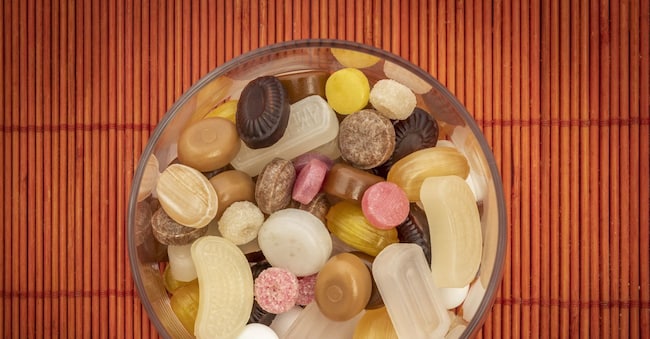
Whilst the fast-moving consumer goods sector is yet to recover from the decline in the volume of food purchased by Italians, toffee and fudge, jellies and gummy sweets – both hard and soft – are among the few products selling better today than in 2019, even in terms of volume. Compared to 2019, Circana estimates growth of 6.5% to a total of around 60,000 tonnes in the retail sector alone, generating a turnover of close to €615 million.
After all, 95 out of 100 Italians regularly eat sweets and 31% do so at least 3–4 times a week, according to Unione Italiana Food. There are even chains that dedicate a section to sweets within their stores, such as Vertigo Candy by Conad Adriatico, which stands out for its pop style, featuring bright colours and engaging music.
And there is probably no other food that is celebrated for a whole month, as happens every June when, since 1974, Candy Month has been celebrated, dedicated to sweets in all their forms and flavours. The choice is truly vast: it ranges from 35 varieties in a discount store to over 200 in a hypermarket, with numbers rising between April and October when high temperatures lead to a reduction in the chocolate range and its replacement with sweets-
After all, variety is one of the key strengths of these products and one of the factors that encourages impulse buying – the most important type of purchase for these products, which are perfect for treating oneself to a small, immediate moment of indulgence. That is why it is one of the areas on which manufacturers focus most in order to renew their product range, capitalise on new market trends and attract consumers, particularly younger ones.
As revealed by a survey carried out by Unione Italiana Food among its members, 35–40 recipes are developed each year and an average of 10 to 15 new sweets are launched. These new products are characterised above all by the absence of sugar (a commitment shared by 100% of the companies surveyed) but also by their reduced calorie content and nutraceutical value, offering additional benefits for the body, such as the provision of vitamins, fibre, plant extracts and probiotics. For 83% of companies, innovation is also moving towards greater use of plant-based ingredients, and for 50% towards the use of natural colouring agents (50%), such as spirulina, beetroot juice and black carrot.

