
The 2026 Nobel Peace Prize goes to South African legal scholar Navi Pillay
Former UN High Commissioner, she defended Mandela during the apartheid era. Through the Commission on the Occupied Palestinian Territories, she accused Israel of genocide

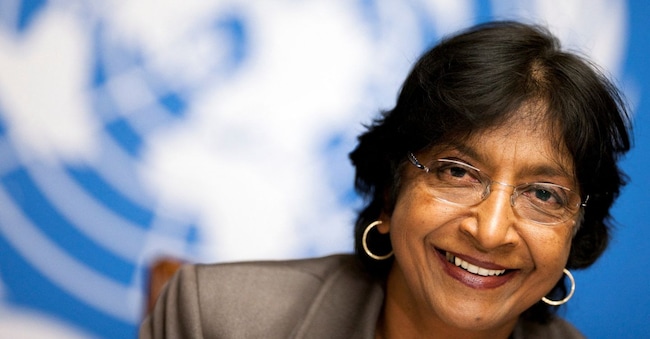
Key points
The 2026 Nobel Peace Prize goes to the South African legal scholar and former United Nations High Commissioner for Human Rights Novanathem ‘Navi’ Pillay. The announcement comes from Oslo, home to the Norwegian Nobel Committee, which announced its decision after reviewing 287 nominations – a significantly lower number than last year. The nominees included 208 individuals and 79 organisations. Pillay, it was explained during the announcement, has demonstrated ‘exceptional courage and integrity’ in her work combating ‘war crimes’. The verdict represents a clear stance on the part of the Committee, as it is a prize that indirectly recognises the role of the UN, at a time when the institution is constantly being discredited by US President Donald Trump, who would like the award for himself, and because Pillay has explicitly condemned Israel’s conduct in Gaza and the occupied territories.
The South African lawyer and diplomat is, in fact, one of the most influential, determined and, at times, divisive figures in contemporary international justice. From the segregated classrooms of apartheid to the highest benches of the UN courts, her life story embodies fifty years of struggle against impunity, gender discrimination and war crimes.
Having also recently been awarded the Sydney Peace Prize (2025) and the Olof Palme Prize (2026) for her extraordinary moral integrity, Pillay has brought yet another chapter of her tireless career to a close by stepping down, under pressure from Israel, as chair of the United Nations Independent Commission of Inquiry on the Occupied Palestinian Territories and Israel: ‘The Commission finds that Israel is responsible for genocide in Gaza’, Pillay had stated on that occasion. “It is clear that there is an intent to destroy the Palestinians of Gaza through acts that meet the criteria set out in the Genocide Convention.”
The Origins of the Tamil People
Born in Durban in 1941 into a family of Tamil origin living in modest circumstances, Pillay experienced the institutionalised brutality of apartheid from childhood. Thanks to financial support from her community, she managed to enrol at the University of Natal and subsequently became the first non-white woman to set up a law practice in the province of Natal in 1967.
When he defended Mandela
During that period, she defended anti-apartheid activists, denounced the systematic use of torture by the police and fought for the rights of political prisoners held on Robben Island (including Nelson Mandela himself). She subsequently travelled to the United States to further her studies, becoming the first South African woman to obtain a doctorate in law from Harvard Law School. In 1995, with the advent of democratic South Africa, she was appointed by Mandela as the first non-white female judge of the Supreme Court.

