The case

Russian fleet in front of Sardinia, here's how Italia can keep watch

This is not the first time that Russian ships - present in force in the Mediterranean - have bordered Italian waters. So far they have never violated territorial limits

by Rome Editorial Staff

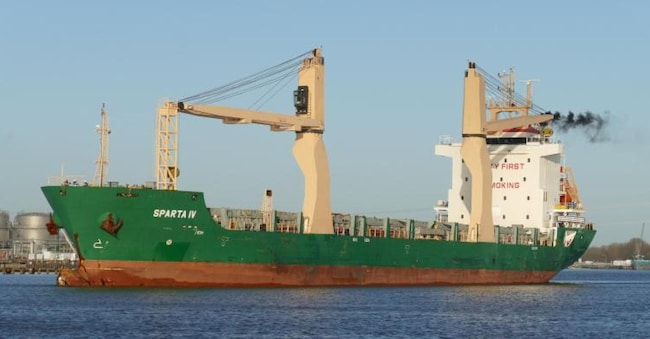
La nave russa Sparta IV in una immagine tratta dal sito Vesselfinder. Il cargo sta navigando da diverse ore su e giù per la Sardegna orientale. Secondo quanto riporta L'Unionesarda.it, l'imbarcazione fa parte della flottiglia che a metà gennaio era stata individuata nel Mediterraneo dalla Nato mentre, assieme alla Mys Zhelaniya, veniva scortata dal cacciatorpediniere della Marina russa, Severomorsk.

3' min read

Translated by AI
Versione italiana

3' min read

Translated by AI
Versione italiana

For several days now, a Russian Navy flotilla consisting of the destroyer Severomorsk, the tanker Kama and the cargo Sparta IV, have been stationed in the central Tyrrhenian Sea, off the coast of Sardinia, in international waters. The only traceable vessel (with its transponder switched on) is the Sparta IV, whose movements were reported in the Mediterranean - first off Sicily, then towards the Balearic Islands and then in front of Sardinia) by the Itamilradar website.

The flotilla continues its journey from north to south before Ogliastra, travelling at between 10 and 11 knots, and their presence in the central Tyrrhenian Sea and their unusual navigational behaviour is probably explained by their search for shelter from the prohibitive marine weather conditions in the Sardinian Channel, with rough seas and winds of between 20 and 25 knots. The same conditions are to be found towards Gibraltar: the flotilla, in fact, must cross the Strait to reach, via the Atlantic, the port of Kaliningrad, on the Baltic Sea in Russia, where it is expected on 17 February. The Kilo-class submarine Krasnodar was also initially part of the flotilla. The navigation of the Moscow assets was followed last week by the Italian Navy ship Virginio Fasan, part of Nato's Standing Maritime Group 2.

Loading...

This is not the first time that Russian ships - present in force in the Mediterranean - have bordered Italian waters. So far they have never violated territorial limits.

What are the rules to be considered in a situation like this?

The reference agreement: the United Nations Convention on the Law of the Sea

The United Nations Convention on the Law of the Sea (UNCLOS), signed in Montego Bay in 1982, is the international treaty governing maritime law.

To intervene in international waters you need the consent of the flag state

The flotilla is, as things stand, in international waters, so the rule applies that without the consent of the flag state (in this case the Russian Federation) or the presence of international crimes (such as piracy), no state - in this case Italia - can legitimately capture, hijack or exercise police powers over another's vessel on the high seas. Violations of these rules can be brought before the International Tribunal for the Law of the Sea.

La marina francese intercetta una petroliera russa: il video dei militari che salgono a bordo

Right to visit

A warship may stop and inspect a foreign ship if there is a well-founded suspicion that it is engaged in piracy, slave trade, unauthorised radio transmissions or is without nationality.

What happens if the ship enters and subsequently leaves territorial waters

A right of hot pursuit is recognised, i.e. a coastal state may pursue and stop a ship in international waters if the pursuit is initiated in its territorial waters due to a violation of its own laws. If, therefore, an element of the flotilla were to engage in this manoeuvre, this scenario could arise.

The territorial sea reaches up to a maximum of 12 nautical miles from the coast: here the coastal state exercises full sovereignty (with the exception of 'innocent passage' for foreign ships). The contiguous zone reaches up to 24 miles; here the state may exercise controls to prevent violations of its customs, tax, health or immigration laws. The exclusive economic zone reaches up to 200 miles: here the state has exclusive rights over the exploitation of natural resources (fishing, hydrocarbon extraction, wind energy). Finally, the high seas: beyond the exclusive economic zone, it is open to all states for peaceful purposes. It is not subject to the sovereignty of any state.

Maritime Rescue

There is a universal obligation to provide assistance to anyone whose life is in danger at sea, coordinated by the relevant SAR (Search and Rescue) authorities.

Monitoring from the sky

The coastal state can carry out monitoring activities from the sky when foreign naval units operate for long periods in areas of strategic interest. The flotilla's movements are constantly monitored by naval units of the Italian Navy and an Atr P-72B of the Guardia di Finanza, which took off from Pratica di Mare airport, also operated in the area.

Copyright reserved ©
Loading...

Brand connect

Loading...

Newsletter

Notizie e approfondimenti sugli avvenimenti politici, economici e finanziari.

Iscriviti