
A leisurely journey through Turkey in search of precious archaeological treasures
Sardes: Roman ruins, the houses of Birgi and the carpets of Uşak

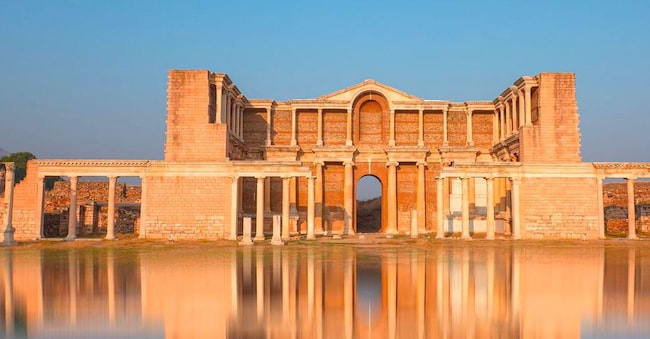
In the Gediz Valley, through which the ancient River Ermo flows, the ruins of Sardis stand as vestiges of the past. Leaving the main road to Ankara near the village of Sart, you are immediately transported back in time, all the way to the 6th century BC, to what was once the capital of the Kingdom of Lydia, a crossroads linking the Anatolian hinterland with the Aegean Sea. The immensely wealthy ruler Croesus paid out of his own pocket for the construction of the Temple of Artemis, considered one of the Seven Wonders of the World: after all, the Pattolos River was renowned for the abundance of its gold deposits. According to legend, King Midas washed himself in the very waters of this river to rid himself of the ability – eagerly sought but rather ill-fatedly bestowed as a gift – to turn everything he touched into gold, including food. It was also here that King Alyattes, Croesus’s father, devised the monetary system as we know it today. The remains of the Temple of Artemis, which was extended by the Roman emperor Antoninus Pius, the remains of the walls, what is left of the acropolis, the columns of the porticoes along the Roman road where some thirty shops have been unearthed, and the ‘House of the Bronzes’, all lead on to the discovery of the synagogue. Such, in fact, was the function of the apse-ended building, which had previously served as a basilica, featuring a beautiful mosaic floor. The gymnasium, overlooking an inner courtyard with a double loggia and standing eighteen metres high, is also splendid. Having taken in all this archaeological beauty, you can head to nearby Birgi, which stands out for the well-preserved architecture of this wooden village, where the houses are all decorated with floral and rustic motifs, particularly the 18th-century Çakırağa Konağı, whilst the Ulu Cami dates back to the 14th century and boasts columns with Roman capitals and an original minbar. In Uşak, on the other hand, one goes to admire the quality of the carpets, characterised by their very vivid colours – a tradition dating back to the reign of Suleiman the Magnificent, when master weavers from Azerbaijan began producing ‘palace’ pieces, that is, intended for the homes of dignitaries, working alongside miniaturists and decorative artists; these were so refined that they eventually came to adorn castles, churches and mosques.

