Alcoholic drinks

Spirits, distributors: changing consumption patterns are affecting sales volumes, but there are positive signs

The figures and market sentiment in the face of a highly volatile market, with the first half of the year nevertheless showing signs of recovery following the decline in 2025, which was partly caused by fears of new penalties under the Highway Code

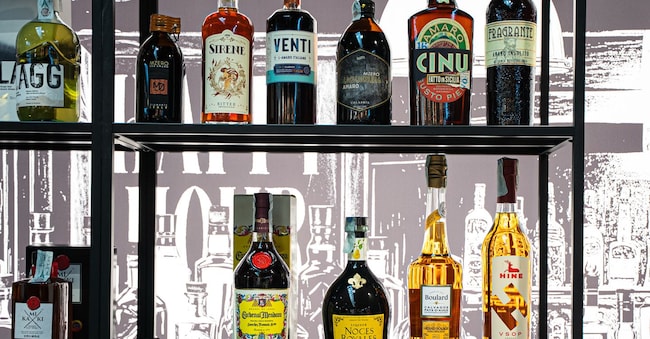
Una selezione di spirits distribuiti da Rinaldi

7' min read

Translated by AI
Versione italiana

7' min read

Translated by AI
Versione italiana

2025 drew to a close (as expected) with a mixed picture for the Italian spirits market. A profound shift in consumption patterns is underway: volumes are falling, quality is on the rise, the out-of-home channel is showing signs of fatigue, and consumers are redefining their priorities. This is the picture that emerges from the figures and insights provided by some of Italy’s independent distributors who, despite starting from different results, agree on the same interpretation of the situation. And yet – despite the start of 2025 being further weighed down by changes to the penalties under the Highway Code for drink-driving – the first half of 2026 appears to be offering more breathing space than expected.

The results for the end of 2025 vary from operator to operator, partly due to portfolio decisions. The start of 2026 is also mixed, but on a positive note.

Loading...

The focus is on new premium brands

Thus, Rinaldi – a Bologna-based company with a turnover in excess of 22 million euros – recorded a decline of less than 3 per cent at the end of 2025, but in the first half of 2026 it is holding its own in the spirits sector, whilst growing in the wine sector (particularly Champagne). Within the spirits category, performance is mixed: mid-range rum and whisky are seeing a decline, whilst agave, gin and vodka are showing positive trends. “The more traditional brands are facing greater difficulties,” observes marketing director Valentina Ursic, whilst the more modern niche segments are performing well.

With over 3 million euros in turnover from high-alcohol spirits (out of the group’s 13 million, predominantly from wine), Spirits & Colori closed the year up 5.2 per cent, and Gabriele Rondani, sales and marketing director, explains that “around 40 per cent of 2025 turnover comes from brands launched in the last two years, and this has enabled us to end the year on a positive note despite the challenging environment”. The first half of 2026 saw a trend-based rebound (the start of 2025 was affected by the new Highway Code), although the arrival of hot weather did not help: “The tourist season got off to a late start, particularly in the southern seaside resorts,” explains Rondani, “and the high temperatures have encouraged the consumption of soft drinks or low-alcohol beverages.” However, the slight growth recorded so far is at risk of being affected by costs linked to tensions in the Middle East.

Mavolo also recorded a +5% increase at the end of 2025, largely attributed to the Anthology range, a project dedicated to the exclusive selection and distribution of premium brands. “We consider this result to be particularly significant,” comments marketing manager Chiara Pigini, “because it comes against the backdrop of a challenging market, characterised by more selective consumption and end customers who are much more mindful of their spending.” This trend was confirmed by the first half of 2026.

The Genoa-based company Velier ended 2025 with a 6 per cent decline, but this figure must be viewed in context. “The first three months were tough, with changes to the Highway Code bringing everything to a standstill,” warns CEO Luca Gargano, identifying a second factor in the dynamics of the parallel market for certain key brands such as Hendrick’s and Fever Tree. The subsequent rebound is already visible; in fact, “if we look at the first half of 2026, we’re up 7%”.

Compagnia dei Caraibi, a listed company, reports a turnover of 36 million euros for 2025, compared with 56 million the previous year. General Manager Fabio Torretta is quick to clarify: “The difference is mainly due to the removal from the group’s scope of two brands that carried significant weight within the portfolio”, rather than a contraction in the target market. For 2026, consolidated revenue for the first half of the year stands at between 12.7 and 13.7 million (down by 35–39.8 per cent), with a “slightly slower start, partly due to the general geopolitical context”.

A polarised market is losing the mid-range segment

The common thread running through the landscape is polarisation. Mid-range products are losing ground across the board; high-end products and niche markets with a strong identity are holding their own or growing.

Luca Gargano places this phenomenon in a historical context, noting that ‘certainly, with the post-Covid euphoria, there was a period that was somewhat exaggerated compared to the past’. As for the decline in consumption, the owner of Velier does not entirely agree. “Original and authentic products, with genuinely natural ingredients, are not seeing this decline. People are drinking less, but better. And as well as authenticity, health benefits are also driving the choices of the more discerning consumer.”

According to Gabriele Rondani as well, “it is a market that has lost some momentum in terms of volumes, but it is not in a structural crisis. Rather, it is undergoing a transformation: less impulse buying, more careful selection and a greater focus on value”. Chiara Pigini adds the perspective of the specialist retailer: “Consumers are going out less often and choosing more carefully, favouring clear and well-positioned offerings.”

Loading...

In fact, Fabio Torretta points out that ‘the crux of the matter is not so much spending power – which does not appear to have been significantly affected – as the propensity to spend. In this context, it is more difficult for brands that are not yet well-established to position themselves, given that consumers tend to gravitate towards recognised brands and are less inclined to explore new options’.

In the premium and luxury segment, things seem to be running smoothly. “Cognac, rum, vintage whiskies or highly prestigious products are easier to sell,” observes Ursic di Rinaldi, “and even within the up-and-coming categories, it is not agave or gin as such that are standing out, but selected brands with a distinct identity”. And indeed, Gargano reels off Velier’s figures: in 2025, Macallan was up 36 per cent and Hampden up 79 per cent (+2 per cent and +35 per cent so far in 2026) “and we’ve also seen growth in blended whiskies and brandy, which are performing well. It’s the mid-range segment that’s struggling.”

Rondani points out that the segment has shrunk and become more specialised: ‘There are still consumers willing to spend, but they are better informed and less inclined to follow trends. Niche markets work when they have authenticity, credible storytelling and consistency over time. Today, it is not so much ‘premium’ as the right kind of premium that wins out.”

The aim, then, is to drive forward the ongoing pursuit of innovation within the brands, “which is why 90 per cent of our portfolio consists of small producers”, adds Torretta. Furthermore, from 2026 onwards, Compagnia dei Caraibi “has chosen to allocate targeted resources to the hospitality sector and to high-end wine bars with a select clientele”.

The crux of the matter lies in the evolution of the out-of-home sector

The out-of-home channel is the most obvious area of focus and the one with the greatest nuances. “Whilst the average spend on premium products used to be around 40 euros,” says Torretta, “today, spending in the premium segment is concentrated in the 30-euro range. Whereas in the past, the willingness to pay for a premium cocktail could reach as high as 15 euros, today it is ideally around 10 euros.” This is a trend that the manager of Compagnia dei Caraibi now considers structural, because “the impact of the decline in purchasing power has left a clear mark. It is likely that it will take several more years before we see a significant recovery.”

Gargano identifies a number of structural issues within the hospitality sector: the difficulty in finding staff capable of delivering quality, rising costs, and excessive mark-ups that discourage consumption. Yet ‘it is possible to find ways to bring pleasure rather than losses, but customer loyalty is built on consistency. There are restaurants that are always full because they keep their promises’. And indeed, “the hospitality sector works when there is a clear and recognisable offering,” echoes Rondani, “because it is no longer possible to automatically pass on price increases: the entire supply chain is called upon to strike a balance between profit margins and the affordability of prices for the end consumer.”

A year to consolidate in 2026 and the alcohol-free trend

So what does the short-term outlook hold for Italian spirits distributors? “2025 saw a setback, but the first few months of 2026 are looking promising: 4 out of 10 consumers care about their mental and physical wellbeing, which is also linked to socialising. – Rinaldi notes – Most categories are seeing an improvement in sales trends. On the consumer side, those over 60 are spending more, and are becoming increasingly selective. Finally, in challenging times, when margins are shrinking, distributors who consistently and courageously stick to their own path are rewarded: there will be significant developments in the near future.”

Spirits & Colori is also optimistic and expects “a year of gradual consolidation, with growth driven more by the quality of consumption than by volumes. Specialising in spirits is a decision that is paying off”.

Mavolo is cautious, but says, ‘We do not envisage a blind rush for volume, but rather a market in which the quality of the portfolio, the ability to analyse consumer trends and the speed of execution will make all the difference’. Indeed, Compagna dei Caraibi points to new additions to its portfolio in the non-alcoholic and low-alcohol segment, , “to attract different consumers and gradually expand the market, avoiding a static position”. Gargano concludes with a certainty: “Those who want to feel good want quality that’s worth it. The high-end segment is not affected by the general downturn.” In other words, the market is not collapsing, but is undergoing a transformation and becoming more selective.

Copyright reserved ©
Loading...

Brand connect

Loading...

Newsletter

Notizie e approfondimenti sugli avvenimenti politici, economici e finanziari.

Iscriviti