

The future of the seabed paves the way for rare-earth mining
Reports from Intesa and SDA Bocconi. Alongside cables and energy, new industrial sectors for Italian technologies are driving the transformation of ports. Against this backdrop lies the battle to redefine the management of Exclusive Economic Zones (EEZs)

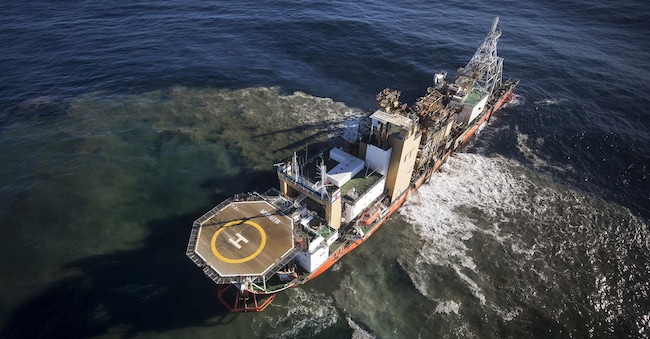
Lithium, cobalt, nickel and rare earths form the basis for the green transition and for developments in the aerospace and defence sectors. The seabed is the least explored part of the world, yet it is rich in these resources. Polymetallic nodules form slowly, much like pearls, and although new technologies now allow for their extraction and exploitation, the economic viability of the process does not currently guarantee its economic scalability. By 2060, however, 40 per cent of the demand for critical metals will come from deep-sea mines. Today, the largest known deposits of nodules are found near the Cook Islands, between Mexico and Hawaii. The seamounts falling within the EEZs (Exclusive Economic Zones) of the Pacific island states are rich in nickel, manganese and cobalt. Finally, polymetallic sulphides are found in areas near hydrothermal vents scattered across the various oceans.
From this perspective, the Mediterranean is not a direct resource. There is a complex issue of environmental protection and highly binding European regulations. The race to define Exclusive Economic Zones (EEZs) within the legal framework of UNCLOS is becoming increasingly important. However, what is crucial for Italian industry is to identify the pathways for this potential business. Leonardo, Fincantieri, Saipem have a long tradition in offshore engineering. Bedeschi, a company founded in 1908, has already worked on deep-water handling systems in Papua New Guinea. If we then include our research institutions, there are solid foundations for us to take our rightful place in the underwater raw materials supply chain.
Details of these resources and opportunities are set out in full in the two new reports from the Blue Economy Monitor, the observatory promoted by Intesa Sanpaolo and SDA Bocconi School of Management, which analyses the main transformations in the maritime economy and the contribution the sector can make to our country’s sustainable growth and competitiveness. Of course, mining represents the near future, but it is something that must already be studied and prepared for. But there are all the other sectors too: from cables and pipelines to biofarming and seaweed cultivation.
The Blue Economy
Overall, the new competition for energy, data and infrastructure security has long since shifted to the seas. And it is in the Mediterranean that a decisive battle for the competitiveness of Europe and Italia will be fought. Thanks to its geographical position and an industrial sector that is among the most advanced in subsea cabling, offshore engineering, shipbuilding and telecommunications, Italia has the opportunity to establish itself as a strategic hub between Europe, Africa and the Middle East for the energy and digital flows of the future. “The Blue Economy remains one of the country’s most promising drivers of development, capable of generating innovation, attracting talent and investment, and creating new opportunities in strategic sectors,” explains Elisa Zambito Marsala, Head of Education Ecosystem and Global Value Programmes at Intesa Sanpaolo, “and to counter the brain drain and attract skilled workers, thereby boosting the country’s competitiveness within Europe and on the international stage”. It is no longer possible today to view the underwater industrial ecosystem as an isolated environment. Whilst, from a technological perspective, it will become increasingly important to combine underwater technologies with satellite technologies, from a logistical point of view, the points of connection with the mainland are the ports.
The transformation of seaports
The Italian ports are therefore called upon to undergo a transformation to support the energy transition and tap into new industrial supply chains linked to renewable energy, electrification and decarbonisation. Although they analyse different areas, the two studies (Subsea Infrastructure and The Role of Ports) show that the sea is taking on an increasingly strategic role in the major challenges facing industrial competitiveness. “The energy transition and the development of the underwater economy are increasingly redefining the strategic role of Italian maritime infrastructure,” comments Francesco Perrini, scientific director of SDA Bocconi’s Blue Economy Monitor. “In this context, greater integration between ports, underwater networks and public policies is emerging as a key factor for energy security, economic growth and technological autonomy.” Ports serve as a litmus test for the energy transition. They are where the effects of geopolitical crises, decarbonisation policies and industrial decisions converge. Four out of every ten tonnes handled in Italian ports are fossil fuels. For this reason, when a power station stops burning coal or a refinery switches to biofuels, the financial performance of the ports also changes.


