
From Syracuse to Ragusa between archaeology, food and sea
Catania's hidden sweetness between minnows and markets

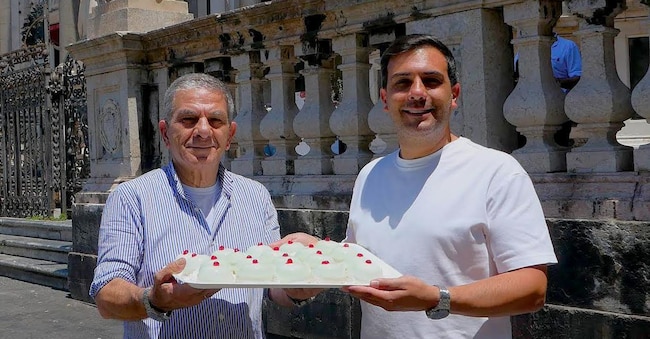
Catania is dark and joyous. Black with lava and yet colourful. If the Roman Amphitheatre in the heart of Piazza Stesicoro, dating back to the middle of the 2nd century B.C. and completely uncovered 120 years ago, has been captivating travellers retracing the routes of antiquity since its recent reopening, the Odeon on Montevergine Hill, where the acropolis of the Chalcidian colony of Katane founded in 729-728 B.C. stood, is also irresistibly attractive. Just north of the ancient theatre, there is also the 'surprise' of the Terme della Rotonda, a circular building, enclosed in a quadrilateral punctuated by a succession of arches and marble basins arranged inside large niches. From there, walk down in search of the houses inhabited by the writer Giovanni Verga and the musical composer Vincenzo Bellini, icons of Catania, now converted into a museum. Then it's back up Via dei Crociferi to admire its collection of Baroque churches to the monumental staircase of Villa Cerami, home of the Law Department. It is time for the first savoury break: the arancino from the Spinella patisserie, in front of the Villa Bellini garden, has been delighting the Catanese walking along Via Etnea for ninety years. With that load of energy and delight in your body, you are ready to enter, soul and palate, among the stalls of the A fera 'o luni in Piazza Carlo Alberto: the mosaic of cherries and apricots overturned on the tables, the red stain of freshly caught tuna still giving a tail-wagging, the shouts of the vendors to catch the customers convey all the strength and truth of this place. Less vivid, unfortunately, is the historic Fish Market, A' Piscaria, just below the delicate Fountain of Amenano tingling the water and around Porta Uzeda, due to the tendency to pander to the tastes of tourists. Better, therefore, to sit at the tables of Ristorante Vuciata to taste still traditional dishes such as fresh red prawns and gagliarde sarde a beccafico among the cheese shops that still exist in this busy area. Another oasis of peace and sweetness is represented by the Prestipino Café that celebrates its first fifty years in front of the façade of the Cathedral of Sant'Agata (it stands on the remains of the Achillian Baths) and the Fountain of the Elephant: Mario and his children Antonio and Stefania churn out minne and cannoli as delicate and beautiful as the arabesques and lace of the Palazzo dei Chierici where their workshop of wonders is housed.

