
Past and present

The historical roots of the ties between Israel and Libya

Recent rumours regarding contacts between Saddam Haftar, the general’s son, and Benjamin Netanyahu are intertwined with a forgotten chapter of the 20th century and the current geopolitical manoeuvring for control of the country. Theodor Herzl’s Zionist plans envisaged a Jewish settlement in Cyrenaica and included possible agreements with King Victor Emmanuel III of Italia

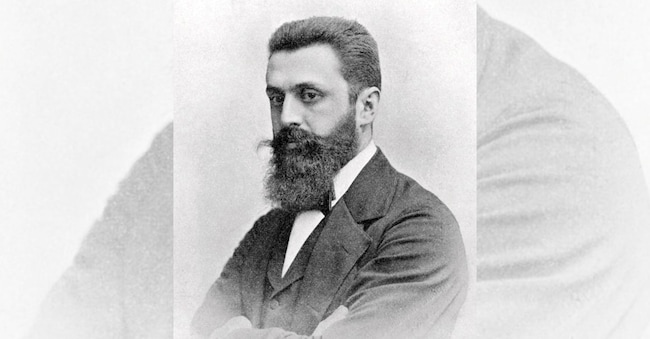
Theodor Herzl, il fondatore del movimento sionista  Reuters

6' min read

Translated by AI
Versione italiana

6' min read

Translated by AI
Versione italiana

The debate sparked by media reports on the relationship between Saddam Haftar and Israel raises an issue that goes beyond a single question: did the son of Khalifa Haftar meet the Israeli Prime Minister Benjamin Netanyahu?

Behind this episode — regardless of whether or not its details are confirmed — lies a longer history of ideas and projects that have looked towards Libya, and in particular Cyrenaica, as a land potentially capable of accommodating Jewish settlement initiatives outside Palestine.

Loading...

From a historical perspective, it is more accurate to distinguish between two phases. The first precedes the birth of Israel and is linked to the Zionist movement and Jewish organisations seeking territories in which to settle Jews. The second phase began after the creation of the State of Israel, when relations with the Israeli state became part of various regional and international considerations.

Early attempts at settlement in Libya

In the early 20th century, Theodor Herzl sought alternatives to Palestine and, in 1908, proposed to the King of Italia, Vittorio Emanuele III, the idea of settling Jews in Tripoli. The king rejected the proposal.

In that same year, 1908, the Jewish Territorial Organisation, known by the acronym ITO, sent a mission led by the British geographer and geologist John Walter Gregory to examine the possibility of establishing a Jewish settlement in ancient Cyrene, now known as Shahhat, in eastern Libya. In 1909, the mission published a report in London on the territory, agriculture, water resources, sanitary conditions and the prospects for settlement.
However, the study concluded that the establishment of a large settlement in Cyrenaica would have encountered considerable difficulties: these included limited water resources, local conditions and the attitude of the population.

Cyrenaica then returned to the centre of attention during the Second World War. After the Italian king abdicated in Rome and made his way to Alexandria in Egypt, British and American proposals for the creation of a Jewish entity or for the settlement of Jewish refugees in parts of Libya, as part of the search for solutions to the Jewish refugee crisis and the difficulties surrounding the creation of a Jewish state in Palestine.

In 1945, the Allies discussed the future of the Italian colonies and, during these deliberations, the idea arose of using part of those territories for the settlement of Jews. The proposal was subsequently shelved in the face of political and demographic complexities and the opposition of the region’s inhabitants, including the Senussi, from whose ranks the resistance fighter Omar al-Mukhtar hailed.

Historical reconstruction

The Libyan historian Mustafa Abdullah Baio, in his book The Zionist Project for the Settlement of Jews in Libya, published in March 1975, reconstructs this first attempt and documents it using archival sources. According to Baio, this was set out in detail in the Blue Book published in 1909, in which the Jewish organisation recorded its initiatives to create a Jewish national homeland under the protection of the Ottoman Sultan Abdul Hamid II, following Victor Emmanuel III’s rejection of the project.

Baio, formerly the Libyan Minister of Education during the monarchy, writes that Theodor Herzl first met prominent Libyan Jews in Constantinople in 1892, to urge them to take part in his initiative. Herzl continued to correspond with them and invited them to his organisation’s congresses held in Vienna between 1900 and 1904.

Loading...

In that final year, shortly before his death on 3 July 1904, Herzl approached Victor Emmanuel III, King of Italia, asking to be allowed to settle Jews in Tripolitania and to establish an autonomous region for them under the supervision of the Italian Crown. The king flatly rejected the request.

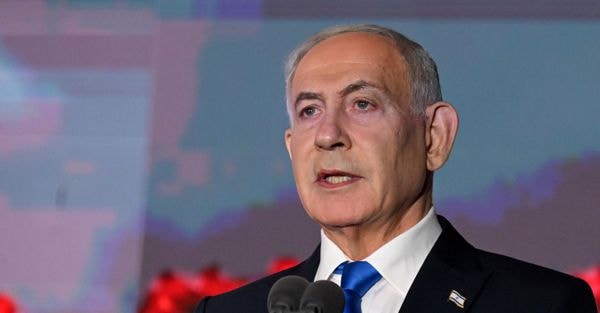
Il primo ministro israeliano Benjamin Netanyahu (EPA/DEBBIE HILL / POOL)

The importance of Cyrenaica

According to this account, the Ottoman Sultan Abdul Hamid II welcomed the idea of supporting Herzl’s plan for a Jewish settlement in Libya, after Herzl had resubmitted the proposal two years following Italia’s rejection.

According to Baio’s account, the Ottoman sultan changed the planned location of the settlement, directing it towards Cyrenaica in eastern Libya, where signs of prosperity were beginning to emerge, in addition to the strategic importance of its port on the eastern Mediterranean.

According to documents from the National Library of Israel, in 1908 the Jewish Territorial Organisation (ITO) sent a mission to Cyrenaica to assess the possibility of establishing a Jewish settlement there. The mission was led by the British geographer and geologist John Walter Gregory, who subsequently drew up a detailed report, published in London in 1909 under the title Report on the Work of the Commission Sent by the Jewish Territorial Organisation to Examine the Area Proposed for a Jewish Settlement in Cyrenaica.

The report was not merely a theoretical study. It directly examined the land, agriculture, water, engineering, sanitary conditions and the prospects for establishing a Jewish settlement. It also included an appendix on the Jews and Judaism in ancient Cyrene, now Shahhat, in the region of Gebel al-Akhdar, in eastern Libya. The catalogues of the National Library of Israel and the University of Pennsylvania Library confirm the existence of the report as a standalone historical document dating from 1909.

A French study published subsequently indicates that the mission was actively working to assess the possibility of settling Jewish refugees in Cyrenaica; the Ottoman authorities of the time are said to have shown a willingness to cooperate. Gregory concluded, however, that local conditions made the success of a Jewish settlement in Cyrenaica extremely difficult.

This highlights the importance of Cyrenaica in the history of the project. It was not merely a question of encouraging Jewish emigration to Libya, but of a broader trend within the European Jewish movement, seeking a territory capable of accommodating a large concentration of Jewish people outside Palestine.

Why Cyrenaica, of all places? The answer is, first and foremost, geographical, even before it is political. The region overlooks the Mediterranean Sea, is close to Egypt and occupies a strategic position in the eastern Mediterranean. Following the discovery of oil, it has also gained even greater economic importance.

Gaddafi’s hostility towards the project

Local conditions, actual availability and, subsequently, Gaddafi prevented the Zionist project in Libya from being carried out at that time.

Following the fall of Muammar Gaddafi in 2011, the issue re-emerged in the political debate from a different perspective, through calls by prominent figures representing Jews of Libyan origin to be allowed to return to the country, reclaim their rights and property, and participate in public life. Among the most vocal advocates has been Raffaele Luzon, president of the Union of Libyan Jews, who has continued to call for the issue of Jewish property and rights to be reopened and for Jews to be allowed to return to Libya.

More recently, the most delicate shift has taken place in relation to Israeli contacts in eastern Libya, where the leadership believes that a relationship with Israel alone is sufficient to realise their political ambitions and resolve the country’s division in their favour, without taking popular and political legitimacy into account.

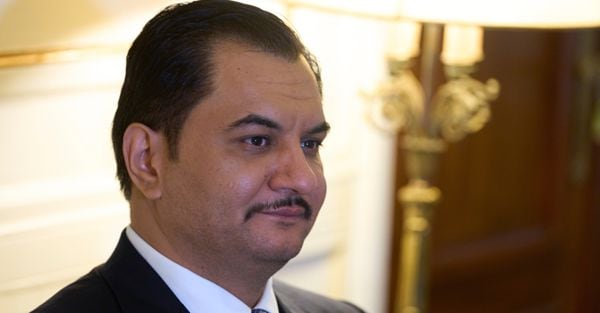
Saddam Haftar, figlio del generale Khalifa Haftar (AP Photo/Petros Giannakouris)

In 2021, the Israeli newspaper Haaretz published an investigation into confidential contacts between Saddam Haftar and Israeli officials. Subsequently, other reports spoke of a secret visit by Saddam Haftar to Israel and an offer to establish diplomatic relations in exchange for political support for the faction led by his father. The Libyan and Israeli authorities have never officially confirmed these accounts.

In January 2022, the Times of Israel published an article concerning an aircraft linked to Haftar’s camp that had landed in Israel, and previous meetings between Saddam Haftar and Israeli officials.

Then came the most recent reports, in September 2026, claiming that Saddam Haftar had met Netanyahu. This account was denied by Haftar’s supporters, whilst articles published by the Italian daily Il Foglio were based on flight tracking data and statements by the politician Mohamed Buisier, a former adviser to Khalifa Haftar.

The denial by supporters of Haftar does not, therefore, rule out the existence of a history of contacts between centres of power in eastern Libya and Israeli officials.

The issue, therefore, goes beyond Saddam Haftar. It is not merely about his possible attempt to seek Israeli support for his political ambitions, whilst neglecting his own popular and political legitimacy. The broader question is: why is Israel now a factor in the calculations of eastern Libya, and why does Cyrenaica, in particular, feature in this part of the story?

Rida Shaaban — a writer specialising in Libyan affairs

Copyright reserved ©
Loading...

Brand connect

Loading...

Newsletter

Notizie e approfondimenti sugli avvenimenti politici, economici e finanziari.

Iscriviti