
Forests, beaches and ancient cities: adventurous explorations in Serendipity Sri Lanka
The frescoes of Sigiriya, the legendary Anuradhapura and the caves of Dambulla

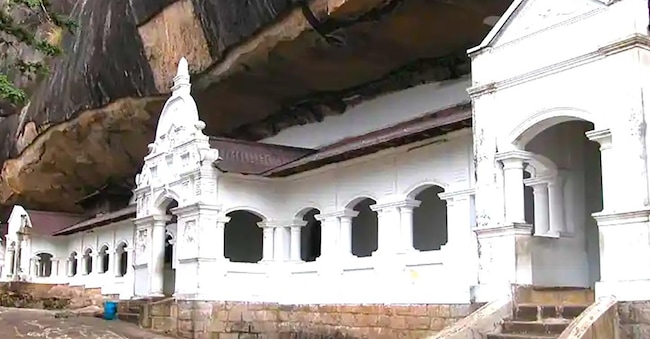
It is nicknamed the Cultural Triangle and even though it is often crowded with tourists, it offers great thrills, especially if you start your tour from the Lion Rock in Sigiriya, one of Sri Lanka's most famous historical monuments: the cycle of eighteen frescoes created during the Kasyapa Buddha period, beginning in the 9th century. The most famous of them depicts a bare-breasted woman who has been interpreted as the wife or concubine of Kasyapa himself. For the local population, it is in any case an iconographic celebration of female beauty. The archaeological and religious emblem of this land is the ancient Anuradhapura, Sri Lanka's capital for no less than 13 centuries: the remains of temples and the royal palace, the gigantic stupas, the sacred Bodhi tree, its still flamboyant gardens, water tanks and monasteries spread over an area of almost 40 square kilometres. In Dambulla, on the other hand, it is the alacrity of its markets, hives of goods and people, that amaze one as soon as one arrives there - the fruit and vegetable traders, the artisans are very kind to foreigners -, only to discover that one is also in a sacred place of pilgrimage for more than two millennia: in its rock monastery, there are five rather well-preserved shrines where Buddhist wall paintings cover an area of 2,100 metres, and as many as 157 statues are kept. The Cave Temple of Rangiri Dambulla, in fact, represents a Buddhist site inhabited by monks who live in the adjoining forests and have transformed the natural caves into a place of prayer. It manages to convey a serenity of soul and inner peace that will not fade away easily or quickly.

