

The Sharara oil pipeline in Libya has been sabotaged. Operations are set to be suspended due to ‘force majeure’
An armed group has shut off valve number 7 at the pipeline carrying crude oil from the field in the south-west of the country to the port of Zawia, causing a sharp drop in production. The National Oil Corporation (NOC) is ready to invoke the force majeure clauses. 200,000 barrels have already been lost.

Key points
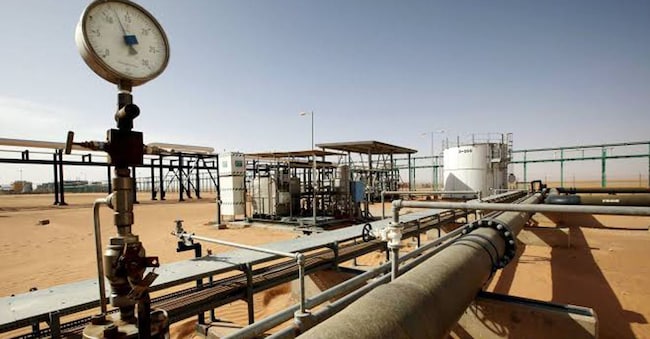
An armed group has shut off valve number 7 on the pipeline carrying crude oil from the Sharara field, in south-western Libya, to the port of Zawia, causing a sharp drop in production and prompting the National Oil Corporation (NOC) to threaten to declare ‘force majeure’ should the blockade continue. According to the NOC’s statement, the closure of the valve has caused a rise in pressure within the pipeline operated by Akakus Oil Operations, resulting in a ‘significant reduction’ in Sharara’s output. Technical sources on the ground indicate a drop in production of around 200,000 barrels per day, with output falling to 100,000–105,000 bpd compared with a normal capacity of around 300,000–340,000 bpd. The NOC stated that it had contacted the security team at the oil installations in the south-west to intervene, without success, and added that technical teams were unable to gain access to the area around valves 6 and 7.
Sharara: a strategic hub for Libyan exports and the national budget
Sharara, situated in the Murzuq Desert some 800 kilometres south of Tripoli, is one of Libya’s main oil fields and a mainstay of exports to the West. Libya relies on oil revenues for around 90 per cent of its state budget, so any prolonged disruption quickly affects tax revenue and the country’s ability to import refined fuels. The NOC has warned that, if the blockade continues, there is a risk not only of a halt to production and transport from Sharara, but also a suspension of operations at the Zawia refinery, further increasing the cost of importing refined products from abroad.
What does ‘force majeure’ mean?
‘Force majeure’ in the oil sector is a legal mechanism that exempts contracting parties from penalties and delivery obligations when unforeseeable events beyond their control prevent performance. Invoking this clause would allow the NOC to suspend, without penalty, its commitments relating to the crude oil consignments affected by the blockage, but at the same time would signal to the markets a deterioration in the operational safety of the infrastructure. The corporation has emphasised that it may be ‘forced’ to resort to this measure if the closure of the pipeline is not lifted in the near future.
A context of instability: protests, security personnel and previous closures
This incident forms part of a pattern of recurring tensions surrounding Libya’s energy infrastructure. For some time now, guards at oil installations have been demanding pay rises, amidst a wave of protests that has affected various sectors. Just a few days earlier, the NOC had reported that a group of guards had illegally shut off a valve on the main Hamada–Zawia pipeline, causing production stoppages at some smaller fields and posing risks to the Zawia refinery. In the past, Sharara and its pipelines have repeatedly been affected by disruptions linked to protests, armed actions, political disputes and technical faults, contributing to the volatility of Libyan output despite the country’s vast proven reserves. In August, the Zawia complex was hit by drone attacks, one of which caused a storage tank containing around 4.5 million litres of petrol to collapse; even then, the NOC had invoked force majeure in the event of continued hostilities.
Impact on production targets
The NOC is seeking to stabilise domestic production at around 1.5 million barrels per day, with the aim of increasing it to 1.6 million in the first phase and then to 2 million in the medium term. Achieving these targets requires regular funding, investment and, above all, the protection of oilfields, ports and pipelines from further blockades. On the market, the reduction in Libyan output was felt immediately: according to industry sources, production at Sharara has fallen by around 200,000 bpd, contributing to slight supply tightness which has supported crude oil prices in recent trading sessions.

