
Tomato waste yields beneficial antioxidant molecules
ENEA and University of Tuscia: Sun Black tomato pomace contains beneficial compounds such as anthocyanins and flavonoids in percentages ranging from 16.5 to 36.5 per cent compared to the other varieties studied

2' min read
2' min read
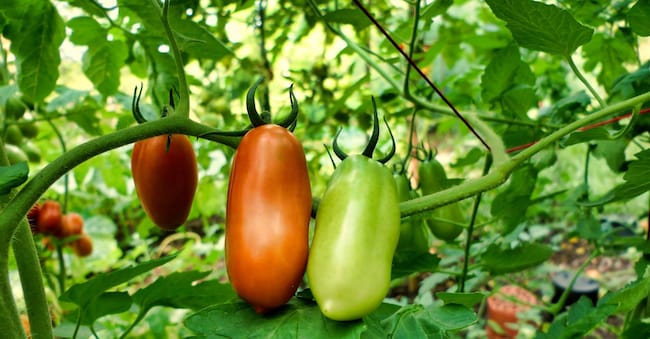
Antioxidant molecules from tomato waste. The results (published in the journal Food Chemistry) of a study carried out by the University of Tuscia with researchers from Enea for the first time "compare the different nutritional and functional properties of San Marzano tomato pomace (peel and seeds accounting for 20% of the weight) obtained from the two varieties San Marzano and Sun Black, the latter with its characteristic purple pigmentation, and the variant Colorless fruit epidermis with transparent peel.
"We have shown that it is possible to obtain a tomato powder from these waste products that is nutritionally comparable to those on the market,' stresses Maria Sulli of the ENEA Green Biotechnologies laboratory and co-author of the study together with her colleague Gianfranco Diretto and Barbara Farinon, Martina Felli, Daniele V. Savatin, Andrea Mazzucato, Nicolò Merendino and Lara Costantini of the University of Tuscia (Viterbo) - but with a high content of antioxidant bioactive molecules, such as flavonoids and anthocyanins, known to be effective in preventing the onset of serious diseases and premature ageing'.
The study shows that Sun Black tomato pomace 'revealed an abundance of beneficial compounds such as anthocyanins and, in general, flavonoids in percentages ranging from 16.5% to 36.5% compared to the other varieties studied, making it particularly promising as a functional ingredient in pasta, bread and biscuits, because it can enrich them with antioxidant molecules, dietary fibre and minerals'.
An important result, emphasise the researchers, which could make a contribution to enriching the food chain.
'The tomato powders we have obtained from tomato pomace,' argues Lara Costantini of the Laboratory of Cellular and Molecular Nutrition at the University of Tuscia and project coordinator, 'show important characteristics that could improve the nutritional and antioxidant profile of many foods on the market. We are currently working on analysing their integration in different foods and their functionality in vivo through a clinical trial'.
However, that is not all. In the study, the researchers also evaluated the possible efficacy of extracts produced from the waste against the bacterium P. syringae and the fungus F. graminearum, "known to cause damage to tomato crops". 'Considering that there is a strong need in agriculture to provide sustainable alternatives to the control of diseases caused by phytopathogens,' Sulli emphasises, 'and that phenols may also have antimicrobial and antifungal activity, we will evaluate in further studies a possible application as biopesticides of these waste products.

