The comment

Trump is mobilising his forces to force a deal out of Tehran. And the Gulf fears a new war

US military flights to the Middle East are on the rise. Meanwhile, The Donald is grappling with pressure from Congress, high energy prices and the Israeli issue. Qatar and Oman are attempting to prevent the situation from escalating. But tensions in Yemen are threatening the shipping lanes through the Strait of Hormuz and the Bab el-Mandeb Strait. The risk of a new conflict remains, even as the White House aims to negotiate from a position of strength

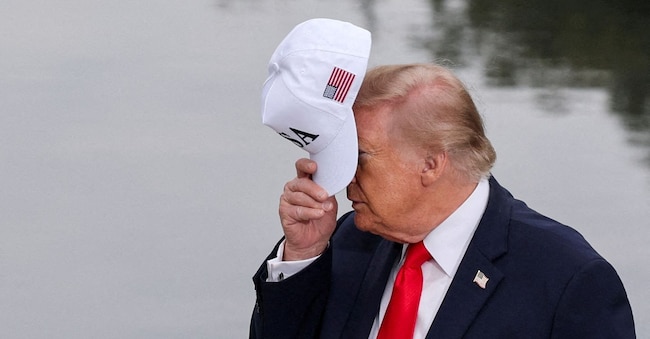
Il presidente degli Stati Uniti Donald Trump REUTERS/Umit Bektas

7' min read

Translated by AI
Versione italiana

7' min read

Translated by AI
Versione italiana

Among the US air bases in the United Kingdom , the military corridors stretching across Europe and the eastern Mediterranean and the waters of the Persian Gulf, a geopolitical landscape is taking shape that reflects the contradictions in US strategy towards Iran.

Whilst Donald Trump continues to raise the possibility of a deal with Tehran, military flight tracking data indicates an increase in the number of US transport, logistical support and resupply aircraft heading for the Middle East. This intensification coincides with the fallout from the mid-term elections, pressure on energy prices, Israeli concerns and the diplomatic efforts of the Gulf States to avert a new war.

Loading...

The key question is whether Washington is using its military capabilities to strengthen its negotiating position, or whether this mobilisation represents preparations for a new phase of the conflict.

Military manoeuvres: preparations for war or a negotiating tactic?

According to a report published on 9 November by the open-source analysis unit of Al Jazeera, 101 US transport and logistical support flights, carried out by 61 different aircraft, were recorded between 26 October and 8 November. The number of weekly flights is reported to have risen from 43 to 58, an increase of around 35 per cent.

Some British and American media outlets have also reported movements of military aircraft from Mildenhall Air Base, including KC-135s and V-22 Osprey tiltrotors, accompanied by a tightening of security measures at certain US installations in the United Kingdom. However, the reports concerning the transfer of 84 aircraft within 24 hours are not supported by sufficient data to allow for independent verification.

The increase in flights does not prove that a decision has been taken to attack Iran. Transport, resupply and reconnaissance may serve different purposes: to strengthen operational readiness, redeploy resources or support the defence posture. However, the political message remains: Washington intends to keep all military options open during the negotiations.

This strategy involves significant risks. The higher the level of readiness, the greater the likelihood that an incident or an error of judgement will trigger an unforeseen escalation.

The US elections are changing Trump’s calculations

This military mobilisation should also be viewed in the context of the mid-term elections on 3 November. According to the results reported in the analyses considered, the Democrats are said to have gained control of both Houses of Congress, whose new term will begin on 3 January 2027.

Trump would retain his executive and military powers, but would face more stringent parliamentary scrutiny over defence spending, sanctions and foreign policy. A new operation against Tehran could therefore raise questions about the costs, duration and objectives of the conflict.

In this context, the energy issue takes on particular significance. American voters are directly feeling the effects of rising fuel, transport and consumer goods prices. A crisis in the Gulf would therefore also become a matter of domestic politics. Concerns about Iran’s nuclear programme and the security of allies cut across both parties, but a Congress controlled by the opposition could restrict the White House’s room for manoeuvre.

Loading...

Oil and petrol: the domestic cost of the crisis

According to market data cited in the available reports, Brent crude fell to $92.57 per barrel on 9 November and to $91.49 the following day, against a backdrop of growing optimism that a further escalation could be avoided.

At the same time, figures from the American Automobile Association show that the average price of regular petrol in the United States was around $3.94 per gallon on 11 November, compared with $3.07 a year earlier.

A rise in oil prices is passed on to transport, logistics and industrial production costs. A crisis in the Strait of Hormuz could trigger a further surge in prices at the pump, fuelling inflationary pressures. For Washington, an agreement guaranteeing the safety of shipping would therefore have economic and political value, as well as diplomatic significance.

Israel: differing priorities between Washington and Tel Aviv

Israel remains a key player in the calculations surrounding a possible escalation. In early November, some American media outlets reported on alleged pressure from Benjamin Netanyahu on Trump to resume operations against Tehran. The Israeli fear is that an agreement could ease sanctions without imposing sufficient limits on Iran’s nuclear and missile capabilities.

There have also been reports of contact between the two leaders on 31 October, but the lack of a full official account calls for caution.

Washington must strike a balance between Israeli security and the protection of its own forces, the stability of energy markets and relations with the Gulf States. Israel fears that a détente would allow Iran to rebuild its military capabilities, whilst the United States must consider the regional and international consequences of a new conflict.

A change in Israel’s leadership would not necessarily lead to a review of its security doctrine: concerns about Iran’s nuclear programme and missile arsenal are deeply ingrained in the country’s strategic framework.

The Gulf: diplomacy as a strategic necessity

For the Gulf States, a full-scale war would pose a direct threat to national security and economic stability. The presence of military bases, oil facilities, ports and strategic infrastructure makes it difficult to imagine that a conflict between the United States and Iran could remain confined to the two parties involved.

In this context, the diplomatic initiatives by Qatar and Oman take on particular significance. Reports circulating between 9 and 10 November indicate that contacts between Doha and Washington are continuing with a view to bridging the differences, although no final agreement has been announced. Muscat in turn retains an important role thanks to its relations with both capitals and its geographical position, which is directly linked to the security of Hormuz.

Saudi Arabia, the United Arab Emirates, Kuwait, Bahrain and Iraq share a common interest in protecting energy infrastructure, shipping and investments. The main obstacle to mediation remains the sequence of mutual commitments: Washington is demanding verifiable guarantees regarding Iran’s nuclear programme and regional security, whilst Tehran is insisting on the easing of sanctions and on economic and security guarantees.

Yemen and Bab el-Mandeb: a front that should not be underestimated

Yemen is one of the most sensitive issues for the security of Saudi Arabia, the Red Sea and international shipping. According to reports published on 10 November, the coalition led by Riyadh is said to have intercepted missiles and drones launched by the Houthis towards certain Saudi areas, including Riyadh and the Eastern Province.

The group has claimed responsibility for attacks on King Khalid International Airport and an oil facility in Abqaiq. However, these claims do not constitute independent confirmation that the stated objectives were achieved or of the extent of the damage.

The combination of tensions in Bab el-Mandeb and the Strait of Hormuz could have significant consequences for trade. These two waterways are vital arteries for the international transport of energy and goods: a simultaneous threat would lead to higher insurance and logistical costs, as well as possible diversions of shipping routes.

The Yemeni crisis, however, cannot be reduced to the rivalry between Washington and Tehran. The conflict is also linked to internal competition for power and control over resources. An agreement between the United States and Iran might ease some tensions, but it would not resolve the root causes of the war. For Riyadh, therefore, security in Bab el-Mandeb also requires a political process capable of rebuilding Yemen’s institutions.

Europe: defence preparedness and energy risks

European capitals are watching developments in the US with concern, particularly regarding the possible economic consequences. A prolonged disruption to shipping through the Strait of Hormuz and the Bab el-Mandeb Strait would affect energy prices, supply chains and industrial competitiveness.

In October, the United Kingdom and a number of partners issued a statement on the security threats associated with Iran. Furthermore, during the year, the European Union took measures to strengthen monitoring and the exchange of information on maritime security and critical infrastructure. France had announced the deployment of air defence systems in support of its partners in the Middle East.

A distinction must be drawn between defensive preparations and participation in offensive operations. The transit of American aircraft through European bases does not automatically imply the host countries’ involvement in any potential attack. Europe’s priority remains to limit the impact of a crisis that could disrupt trade and exacerbate economic pressures.

Three scenarios for the future of the debate

The interplay between military mobilisation, economic pressure and diplomatic initiatives leaves three possible outcomes on the table. The first is a provisional de-escalation agreement. Indirect contacts could lead to an agreement providing for the easing of certain economic restrictions and greater guarantees for shipping, in exchange for verifiable Iranian commitments regarding its nuclear programme and maritime security.

The second scenario is the continuation of a state of neither war nor peace . The United States would maintain a significant military presence, whilst sanctions, pressure and mutual threats would continue without escalating into a full-scale conflict. A situation of constant tension, with mounting costs for Iran, neighbouring countries and international markets.

The third is the failure of mediation, followed by a further escalation . A military incident, an attack on strategic infrastructure or an error of judgement could trigger a wider exchange of fire, involving energy facilities, military bases and trade routes.

Between military power and the limits of politics

Developments in November highlight the difficulty of the US strategy: maintaining the option of using force without jeopardising the diplomatic process. Trump must contend with a new balance of power in Congress and with the domestic cost of the energy crisis. Israel continues to regard Iran as a strategic threat, whilst the Gulf monarchies are seeking to avoid a conflict that would directly impact their economies. Furthermore, Yemen points out that the security of maritime routes also depends on the political stability of the countries affected by regional crises.

The US mobilisation does not indicate that a new war is imminent, but it confirms Washington’s determination to negotiate from a position of strength, whilst keeping the military option open. The ability to start a conflict, however, is not the same as the ability to control its course or determine its outcome.

The key question is whether Washington, Tehran and the regional capitals will succeed in transforming deterrence into lasting security agreements. A new war would have military, economic and political consequences that none of the parties could control with any certainty.

Arhab Mohamed Al Sarhi, President of the Yemeni-Italian Friendship Association

Copyright reserved ©
Loading...

Brand connect

Loading...

Newsletter

Notizie e approfondimenti sugli avvenimenti politici, economici e finanziari.

Iscriviti