

Turkish firm Aselsan’s financial results: revenue up 25 per cent and profit margins of half a billion euros
Ankara’s leading defence firm has closed the half-year with revenues of 88.5 billion lire. A thousand new recruits to capitalise on the momentum from the latest NATO summit
by 24Ore NextMed
 Aggiungi Il Sole 24 Ore
ai preferiti su Google
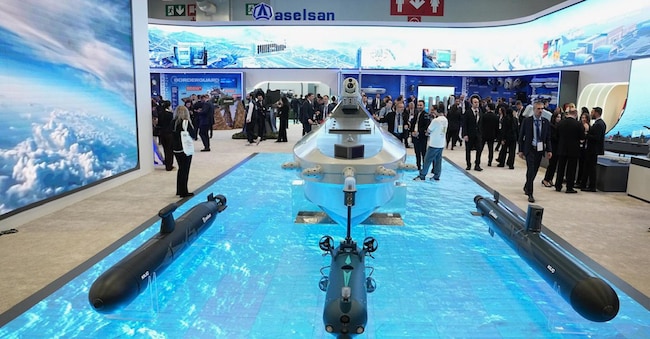
The Turkish defence sector continues its expansion. Aselsan closed the first half of 2026 with very solid financial results, confirming a sustained growth trajectory at both the operational and strategic levels. The company, recognised as Turkey’s most valuable firm, recorded revenues of 88.5 billion Turkish lira (1.6 billion euros), up 25 per cent compared with the same period last year. This growth was driven primarily by high-tech sectors, including air defence, radar, electronic warfare, naval systems, electro-optics, guided munitions and urban security solutions supported by artificial intelligence. Another key figure relates to new contracts signed during the half-year, which totalled 4.9 billion dollars, representing a 72 per cent increase. This rise contributed to the expansion of the order book, which grew by 45 per cent to 23.2 billion dollars. The order backlog therefore represents one of the most important indicators of the company’s industrial and commercial strength, as well as of the market’s confidence in its technologies. In terms of profitability, Aselsan has improved its margins. The EBITDA margin grew by 120 basis points to 26.3 per cent, whilst the overall margin rose by 31 per cent to 23.2 billion Turkish lira (491 million euros).
In the first half of 2026, the company increased its investment in expanding production capacity by 195 per cent, bringing it to $323 million. At the same time, expenditure on research and development rose by 41 per cent to $804 million. These funds were channelled into areas considered strategic and characterised by high barriers to entry, such as LEO satellite technologies, quantum computing, underwater systems, propulsion systems, microelectronics, laser technologies and long-range guided munitions. The company has also commissioned new production and testing centres covering a total area of 17,360 square metres, dedicated in particular to smart munitions, air defence and underwater systems, with an investment of $40 million. The robotics and automation infrastructure on the production lines for air defence and naval systems has also been significantly strengthened. According to management, these measures have increased delivery capacity, production speed and the overall quality of industrial processes. In six months, 19 new robotic automation lines have also been set up, whilst the Oğulbey site is preparing to commence its first production activities.
From a financial perspective, Aselsan emphasises that it has maintained strict discipline even during a period of very heavy investment. Operating cash flow for the half-year reached 15.2 billion Turkish lira. Financial liabilities account for 13.3 per cent of total assets, whilst the equity ratio stands at 56 per cent, a level above the sector average. Total assets grew by 8 per cent and equity by 4 per cent, confirming the robustness of the balance sheet structure. Furthermore, trade payables fell by 17 per cent compared with the end of the previous year. CEO Ahmet Akyol emphasises that, ‘following the all-time high achieved in 2025, the first half of 2026 demonstrates a further capacity for acceleration’. According to Akyol, the growth in the order book to over 20 billion dollars in 2025 paves the way for a possible reach of 30 billion in subsequent years.
As regards the civil sector, it is worth noting the new phase of the Halkalı–Istanbul Airport metro line, which is equipped with the company’s signalling technology, and the first use of the Lifeline heart-lung machine in an open-heart surgery procedure. Overall, 1,000 new employees were recruited, with a significant proportion of staff coming from abroad. Globally, Aselsan reports growing international interest in its technologies, particularly in light of the priorities that emerged at the summitNATO summit in Ankara, where integrated air defence, radar and electronic warfare have taken on a central role.

