The opinion

Ukraine, Cavo Dragone (NATO): ‘Kyiv is turning the tide of the war’

The chairman of the NATO Military Committee confirms Ukraine’s progress and emphasises the importance of adapting defence to new threats and technologies

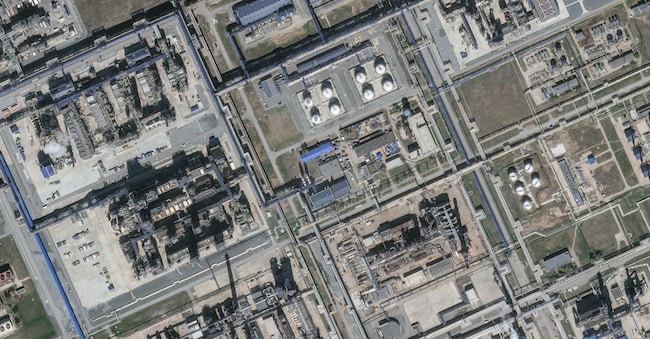
L raffineria russa di Omsk colpita da un drone ucraino via REUTERS

5' min read

Translated by AI
Versione italiana

5' min read

Translated by AI
Versione italiana

Looking at the battlefield, Western capitals are increasingly convinced that Ukraine is turning the tide of the war. Admiral Giuseppe Cavo Dragone, the current chairman of NATO’s Military Committee , agrees, according to a statement he made in an interview with the Kyiv Independent.

Vertice Nato, Zelensky: "Nessuno come noi contro droni, adesione ad Alleanza sarebbe naturale"

“I agree with this assessment because I have information provided by NATO headquarters , so that is what we are seeing,” he says, emphasising that Kyiv is “gaining, not losing” ground and that Moscow’s “frustration” may lie behind its “strong reaction”.

Loading...

It is difficult, however, to define what a victory for Ukraine might look like, he continues: “I really cannot imagine something like the mere reconquest of territory by Ukraine or the surrender of Russia. It is something we must consider with great, great caution”.

The first objective of NATO is to achieve a ceasefire so that the parties can sit down at the negotiating table and begin discussing a lasting peace for Ukraine, says the former Italian Chief of the General Staff.

At the same time, the Alliance is receiving a “large amount of information” relating to the conduct of modern warfare through the Joint Analysis, Training and Education Centre (JATEC) in Poland , which it also uses to “co-ordinate the training” of NATO personnel.

“This is something very, very valuable to us,” explains Cavo Dragone, emphasising that the use of drones and mass production are “a problem” for the allies, “along with electronic warfare and speed: speed in adapting, speed in utilising all innovation and in having that innovation available on the ground”.

These are lessons that NATO is learning from the Ukrainians, he adds. When asked whether these lessons might prove useful in a potential future conflict between NATO and Russia, the admiral once again emphasises the importance of studying modern warfare, but adds that the Alliance’s deterrence “must look to the future to try to understand how the threat will evolve.”

“NATO faces two main threats: Russia in the conventional domain and terrorist groups in the non-conventional domain,” he explains, “and it is therefore necessary to try to understand how these threats might evolve and adapt accordingly. In this regard, ‘the insights gained from the Ukrainian theatre are invaluable’.”

According to Cavo Dragone, the scenario envisaged by various Western intelligence agencies – namely that Russia might be preparing some sort of hostile operation on the territory of the Baltic states or Poland – is “realistic insofar as we regard Russia as a threat. It is a threat because Russia could make this sort of move. But it is also something for which we must be prepared, and we must be ready to inflict far greater damage on them than the benefit they might derive from such a decision.”

“And that’s what we’re doing,” he says, emphasising that if Moscow were to attack, it would end up losing “much, much more” than it could gain, “and we’re ready”.

Vertice Nato, Zelensky: "Nessuno come noi contro droni, adesione ad Alleanza sarebbe naturale"

As the Ukrainian newspaper *Kyiv Independent* reports, during joint exercises, Ukrainian drone operators defeated NATO forces: a sign that Russia itself might be capable of doing the same.

Cavo Dragone points out that Moscow is likely to replenish its stocks and recruit more personnel, but it also has “a great deal of experience” which it will “guard jealously”. Conversely, the Alliance is also gaining insights into how the Russians fight from its Ukrainian partners: a factor that would “balance the situation”, he explains.

Meanwhile, the allies are already adjusting their future capability objectives “to strike the right balance between traditional conventional weapons and new, technologically advanced weapons, as well as cost-effective, ‘good enough’ weapons that can be used in this type of theatre”.

The rise in NATO military spending

As regards the achievement of the target of spending 5 per cent of GDP, the chairman of NATO’s Military Committee states that the allied nations are “moving in the right direction”, whilst pointing out that 2026 is the first of the ten-year period available to reach that figure, divided into 3.5 per cent for core defence requirements and 1.5 per cent for broader security-related expenditure.

“The industry is also changing significantly to meet our requirements,” he continues, acknowledging that “more needs to be done” in terms of the speed of procurement. “We’re also making good progress on requirements shared across several countries”, a factor that ensures economies of scale and cost reductions, he continues: “I think we should be satisfied.”

As regards personnel, however, Cavo Dragone acknowledges that this could be a ‘bottleneck’, but that the Alliance has the ‘tools to try to avoid it’.

The 5 per cent of GDP allocated to personnel “will be a driving force in transforming military life in a way that makes it more attractive”, although the strategy works better in some countries than in others. More and more NATO countries are moving in the right direction, between conscription and reserve forces, “but more needs to be done”, he stresses.

Finally, with regard to replenishing the stocks used in Ukraine, the admiral emphasises the value of investing in Ukrainian industry, “which, quite frankly, has fewer restrictions than ours” in terms of certification. “This is a lengthy process that we need to sort out. But still, we must help build up Ukraine, set up joint ventures with the Ukrainians, because they are now also security suppliers. It sounds strange, but that’s how it is. I think we will support them as best we can, for as long as it takes.”

As regards the reduction in US forces stationed in Europe, the chairman of NATO’s Military Committee believes it will be a “smooth transition” if carried out “in a sensible way, as we should do and as we are planning to do”.

The allies recognise that the United States must “divert some of its attention, some of its power and some of its energy elsewhere”, given the “multi-theatre conflict scenario we expect in the near future. “So we are moving in that direction, but in coordination with our allies”, so that they can “fill the gap that the United States might leave. And this will be a coordinated process that we will manage together”.

In terms of the most critical capability gaps that would arise following a US withdrawal, Cavo Dragone points to strategic airlift and deep precision strike capabilities. “And we are working on all of these, of course: precision strikes, electronic warfare, and intelligence, surveillance and reconnaissance,” he says.

“These are valuable capabilities that the United States is providing to NATO. If they were to withdraw them, we would respond accordingly. But these are the most critical ones. And we are already working to ensure we can fill gaps of this kind.”

Copyright reserved ©
Loading...

Brand connect

Loading...

Newsletter

Notizie e approfondimenti sugli avvenimenti politici, economici e finanziari.

Iscriviti