
Cittadinanzattiva

Waiting lists: one year for chest CT and almost two for colonoscopy

16,854 citizens' reports collected: 47.8% do not concern the quality of care but the very possibility to access it. Priorities for relaunching the SSN

4' min read

Translated by AI
Versione italiana

4' min read

Translated by AI
Versione italiana

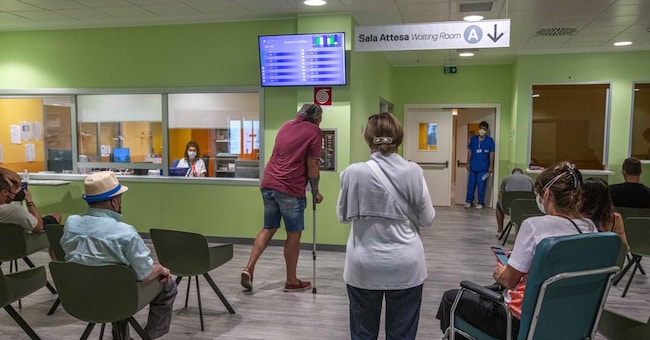
One out of every two citizens has difficulty accessing healthcare services: waiting lists for diagnostic examinations, first specialist visits, and surgery often exceed the expected time by months, and today represent the most serious and cross-cutting criticality of the National Health Service. An example? People wait up to 360 days for a chest CT scan, 540 days for an MRI scan of the brain and for an eye examination, and almost two years (up to 720 days) for a colonoscopy.

First specialist visits are no exception: waiting times are over 400/500.

Loading...

These are the data from the Civic Report 2025, which collects 16,854 reports from citizens to Cittadinanzattiva's information and protection services. Well, almost half of these reports (47.8%) do not concern the quality of care, but the very possibility to access it.

Criticalities detected by the Agenas platform

The Agenas national platform on waiting lists also shows significant criticalities: only 40.6 per cent of diagnostic services and only 34.5 per cent of specialist visits are accepted by the citizen at the first availability proposed by the cup, a sign that in many cases the proposed date does not meet the needs or the facility is too far away; still, only 4 out of 10 pre-list bookings are delivered on time. Compliance with maximum times, in general, is only guaranteed for about half of the services.

In the urgent priority band, services such as colonoscopy exceed, for one out of four patients, 105 days against a limit of 72 hours; in the D band (Deferable, within 60 days) the maximum times are far exceeded and reach up to 147 days for mammography and 177 days for dermatological examinations. The same for the programmable band (120-day limit) where 357 days are recorded for colonoscopy and 260 for breast diagnostics.

deficits in other areas of care

In addition to the major issue of access to services citizens complain of shortcomings in proximity care (reported as problematic in 17.9% of cases). Citizens denounce, in particular, the relationship with family doctors and paediatricians of free choice (58.7%), difficulties in accessing RSAs and long-term care (10%), as well as obstacle paths for mental health (9.8%), home care (7.8%) and hospital-territory connection (4.8%).

In hospital care (11.8% of total reports), the emergency-emergency and emergency room sector represents the main criticality (78.1%), followed by admissions (17.6%) and discharges (4.2%). With regard to social security assistance (5.7% of total cases), most reports concern invalidity and accompaniment procedures (92%), and citizens complain of long delays, bureaucratic complexities and increased demand.

Despite a decrease in the number of reports compared to previous years, the issue of quality of care remains central, in particular the issue of safety of care (4.8% of total reports), with the main reports concerning alleged medical errors (69.1%), obsolete machinery (15.7%), sanitary conditions (8.8%) and risk of infection (6.4%).

There are also fewer reports on prevention (2.3% of the total), where the greatest inconveniences concern ordinary vaccinations (35.8%), mammography screening (25.8%), anti-covirus vaccinations (16.8%), cervical screening (13.4%) and colorectal screening (8.2%). Finally, on the subject of tickets and private expenditure (2.3% of the total), citizens report high financial burdens for necessary private services (74.5%) and tickets considered too high (25.5%).

Chronicity and rare diseases: treatment becomes a 'luxury'

The Report on Chronicity Policies 2025 highlights the main difficulties for chronic and rare patients: to the multiple-choice question on the most critical issues, 83.6% of patients report excessive waiting times, while more than 55% state that they have foregone at least one visit or examination in the last 12 months due to unavailability of the service in the NHS. 85.9% have incurred out-of-pocket expenses, often for drugs, supplements and specialist visits. In many cases, taking care of chronic conditions becomes unsustainable for those living in fragile economic conditions.

Priorities for a strong and efficient SSN

"Our National Health Service remains the most effective antidote for overcoming inequalities and guaranteeing health for all and everyone," emphasises Anna Lisa Mandorino, secretary general of Cittadinanzattiva. We want to put health and the construction of public health at the centre of a debate in which citizens are the protagonists, with their rights and responsibilities; we want to counteract resignation or the risk of a self-fulfilling prophecy - that the illness of the National Health Service is so serious that letting it die makes no difference - with the power of autonomous initiative that article 118 of the Constitution recognises, and to promote a season of debate with and among citizens, from which to propose a civic agenda on health and the National Health Service".

These are the priorities indicated by Cittadinanzattiva:

- adopt a new National Health Plan, absent since 2008;

- guarantee the 2017 LEAs in a uniform manner throughout the territory and provide for their constant revision;

- speed up the implementation of Ministerial Decree 77, with particular reference to the construction of community houses and hospitals;

- make the legislation on waiting lists fully operational, with particular regard to the governance of agendas, aspects of transparency and monitoring of data and uniformity of procedures across the territory;

- investing in digital infrastructure and data interconnection and enhancing the relevant skills of citizens and professionals;

- investing in the health personnel, not only in terms of resource units but also in terms of training and incentives for certain categories, such as emergency-urgency;

- Strengthening prevention, from the health literacy of citizens to the offer and adherence to screening and vaccination campaigns.

Copyright reserved ©
Loading...

Brand connect

Loading...

Newsletter

Notizie e approfondimenti sugli avvenimenti politici, economici e finanziari.

Iscriviti