
Postcards from Vietnam amid young enthusiasm and ancient traditions
Hanoi frenetic and delabre between colonial palaces and street food

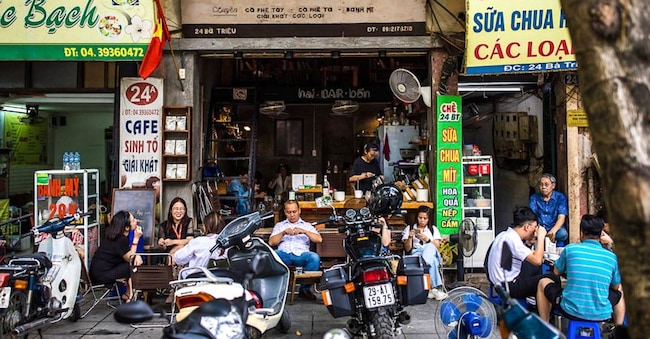
Whether hectic with its cafés, motorbikes and street food stalls, or delabre by virtue of its tumbling, decaying colonial buildings, on a trip to Vietnam you cannot overlook Hanoi. The more than thousand-year-old capital of Vietnam never disappoints, and in particular its 15th-century Old Quarter where, in street kitchens at all hours, star anise phở broth and traditional bún chả or rice noodles with pork vegetables are prepared. In particular, this intricate labyrinth should only be discovered by riding a moped in order to be pervaded by the scent of incense coming from the many small temples, vainly trying to catch the clangour of the blacksmiths' hammers mingling with the call of the fruit peddlers. Very interesting, to take part in the local art scene, is to cross the threshold of the Museum of Fine Arts rich in Cham works, while the Manzi Art Space and the Art Vietnam Gallery allow one to perceive more contemporary influences. The Hoa Lo Prisons built during the French colonial era and now transformed into a dutiful museum in honour of Vietnamese revolutionaries and political dissidents, as well as the Ho Chi Minh Mausoleum are equally unmissable destinations. And certainly having an aperitif while almost being grazed by train convoys along Hanoi Train Street can be electrifying. But it will be Hoan Kiem Lake that offers the last and most truthful postcard of this country in transformation: its turtle tower, Tháp Rùa, juts out into the water between the vibrant and colourful avenues of Hang Khay, Le Thai To and Dinh Tien Hoang. Here, past and future brush against each other, again and again in Vietnam.

