

Morocco: Mohammed VI prepares for the post-MINURSO era – security and development at the heart of the strategy
The monarch reaffirms his commitment to the ceasefire and entrusts the Ministry of the Interior with coordinating the withdrawal of the UN mission. Rabat’s priorities are the protection of national sovereignty and the continuation of projects in the southern provinces. The Russian veto has become an international issue. Rosato: ‘Italia must not underestimate the geopolitical implications of this, nor ignore the risk that the Maghreb could become yet another battleground for international powers.’

Key points
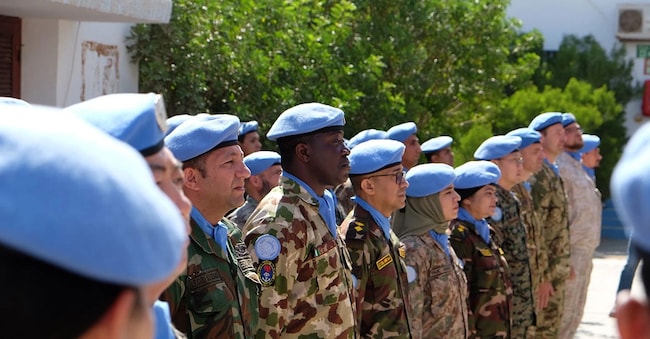
National security, continuity of investment and the orderly management of the withdrawal of the United Nations mission. These are the guidelines set out by King Mohammed VI at the working meeting he chaired on 4 November at the Royal Palace in Rabat. According to a statement from the Royal Cabinet, the meeting focused on the phase following the conclusion of the activities of MINURSO, after the UN Security Council failed to renew its mandate at its meeting on 30 October 2026.
Project security and continuity
The sovereign highlighted three priorities: respect for the territorial integrity of the Kingdom, the safeguarding of national security and the protection of public peace, with particular attention to the population of the southern provinces. The instructions issued to institutional and military leaders call for the firm and vigilant implementation of these measures, in accordance with their respective areas of responsibility. The issue of security goes hand in hand with that of development. Rabat intends to ensure the continuation of the programme for the southern provinces and related infrastructure projects, consolidating national consensus and monitoring diplomatic developments regarding the Sahara issue. The documents do not indicate any new allocations of funds, nor any changes to the timetable for the interventions: the emphasis is on the continuity of the initiatives already underway.
The meeting was attended by Fatima Ezzahra El Mansouri, referred to in the press release as head of government, the royal adviser Fouad Ali El Himma, the Minister of the Interior Abdelouafi Laftit and Lieutenant General Mohammed Berrid, Inspector General of the Royal Armed Forces and Commander of the Southern Zone.
Co-ordinated withdrawal and confirmation of the ceasefire
At an operational level, Mohammed VI has entrusted the Coordination Office with MINURSO – which reports to the Ministry of the Interior – with the task of overseeing the mission’s winding-up and withdrawal procedures. The stated aim is to ensure a smooth and orderly process, whilst maintaining a cooperative relationship with the United Nations. The statement does not specify the timing or procedures for the individual operations.
The monarch also reiterated that Morocco’s commitment to respecting the ceasefire will remain unchanged even after the end of the mandate. This confirmation was accompanied by a critical assessment of the mission’s work: according to the Royal Cabinet, MINURSO has on several occasions failed to monitor compliance with the truce and to ascertain the consequences of violations. Furthermore, Rabat considers that the context in which the mission was established and the functions originally assigned to it are now obsolete.

