
Spring experiences in the Terra del Roero between nature and urban wineries
Rocche del Roero, between geology and old mysteries

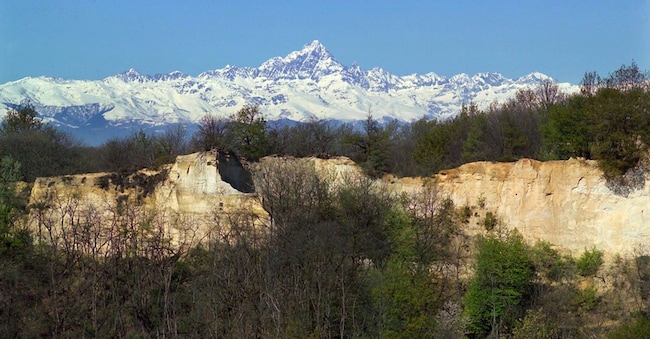
Those who know the Langhe well know that dividing its hills from those of the Roero is the course of the Tanaro river and that the two territories, although very close, are very different: characterised by monocultures of vines and hazelnut groves the first, wilder and with a strong presence of woods and meadows the second. However, there is one element that makes the real difference in terms of natural landscape and that is the characteristic canyons called the 'Rocche del Roero'. This is a unique and fascinating geological phenomenon that can be admired from various panoramic balconies for about 11 km between Bra and Cisterna d'Asti and originated from the withdrawal of sea water and the so-called 'capture of the Tanaro', i.e. a deviation of the river's course that occurred about 250 million years ago. The scenery that presents itself to visitors' eyes (the area can also be explored on foot or by bicycle with the activities of the Rocche Ecomuseum) is a set of stratifications, sheer cliffs and pinnacles of sand in all shades of ochre that emerge amidst the dark green of a rich vegetation. Glimpses of rare beauty embellished by the legends of the hermits who are said to have inhabited this impervious landscape, and made even more fascinating by the story of the witch of Pocapaglia, a small municipality leaning against the first enormous rock, with its castle built by the Falletti family and the Romanesque apse of San Giorgio: in this small village just outside Bra, about 300 years ago, a poor Barolo woman accused of witchcraft and passed into history as the Masca Micilina, was tried, hanged and burned as a 'witch'. Her story inspired a tale by Italo Calvino and is an integral part of the history of these hills and its vineyards.

