
Ferrari Luce: 10 things you need to know to get to know all the secrets of the Maranello electric car
Ferrari Battery light and autonomy

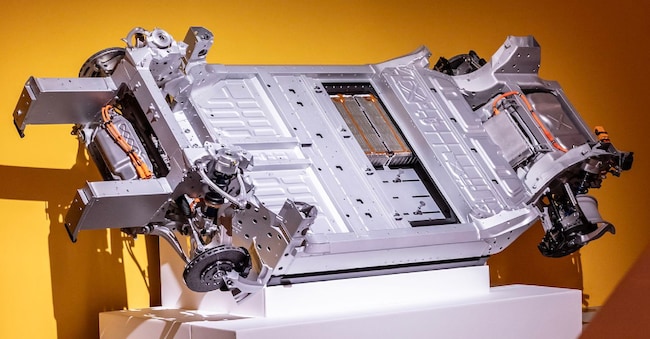
The battery of the Ferrari Luce is one of the structural elements of the project. The high-voltage pack operates at 800 volts and has a gross capacity of 122 kWh. It consists of 210 cells in series, organised in 15 modules of 14 cells. Rapid recharging is up to 350 kW and a range of more than 530 kilometres, with type approval in progress. The battery is designed and built in Maranello and is conceived as an integrated element of the car, not as a simple component placed in the floorpan. Its position, low and central, contributes to the reduction of the centre of gravity, quantified at 95 millimetres less than the Ferrari Purosangue. The yaw moment of inertia is also reduced by 15 per cent compared to the same Purosangue. These figures, in terms of perceived behaviour in changes of direction, translate into an effect equivalent to a car weighing around 400 kilograms less than its actual weight. The battery also works together with the body and chassis as part of a structural system. Thermal management plays a central role. The system was designed from scratch and is based on three architectures related to coolant, water and air. The water circuit has different temperature levels, for 800 volt battery and auxiliaries, for inverters, axles and active suspension, and for the passenger compartment. Active grilles manage air flows to the radiant masses by balancing drag and electrical consumption of pumps and compressor. In cold climates, the climate control system automatically mixes outside air and recirculated air to reduce heat exchanger consumption and improve range. The software controls valves and pumps, manages warm-up, fast recharging, battery and cabin preconditioning during recharging and even an immediate remote preconditioning function. Regeneration contributes significantly to efficiency. The eCrb system utilises a battery capable of absorbing up to 500 kW and four motors that can regenerate up to 0.68 g, a value that covers almost all braking in road use. The electric contribution to braking increases by 50 per cent compared to previous Ferrari hybrids and brings benefits indicated in a 20 per cent increase in range on mountain roads and 5 per cent in motorway traffic situations.

