
Art and history, grape varieties and cycling: experiences to enjoy in the Prosecco region
In Possagno, following in the footsteps of Antonio Canova

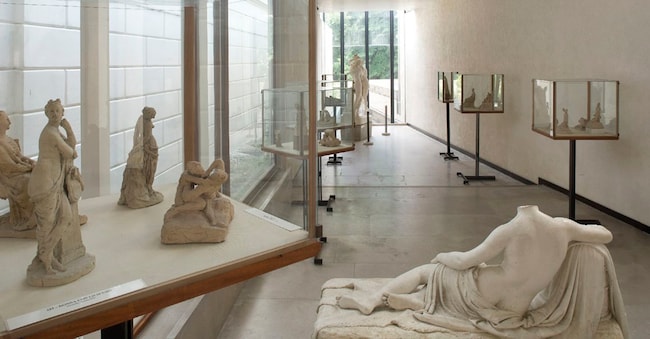
Just a few kilometres from Asolo, Possagno boasts a heritage entirely linked to Antonio Canova, who was born here in 1757 and went on to become one of the leading figures of European Neoclassicism. The Gypsotheca Museum is the complex that brings together the sculptor’s birthplace and the extensive collection of almost all the preparatory plaster models (Amor and Psyche, perhaps the most famous, is on display at the Metropolitan Museum in New York) of the 170 marble sculptures he created during his career. The guided tour helps visitors to understand the techniques, materials, preparatory studies and the work of the craftsmen, as well as to grasp the creative process that preceded the final version of the sculpture. Standing before *The Graces*, for example, one can observe at close quarters the complexity of the composition and the carefully studied interplay between arms and faces. The architecture of the Gypsotheca is an integral part of the visit: the nineteenth-century wing, inaugurated in 1840 with the plaster casts recovered by Canova’s half-brother, was the first public museum in the Veneto region, whilst in 1957 the Venetian architect and designer Carlo Scarpa designed the new extension, characterised by the use of overhead lighting to showcase the works. The Canova trail continues, a few hundred metres from the museum, with the Canovian Temple, designed by the artist himself as a gift to the community of Possagno. This majestic neoclassical building still dominates the valley today and combines elements reminiscent of the Greek Parthenon, the Roman Pantheon and the apse of a Christian altar, in an architectural synthesis that reflects the culture of Canova, whose remains are interred here.
https://www.tempiocanoviano.it/
https://www.museocanova.it/

