
Trento and its surroundings to discover in seven stages
The ancient heart

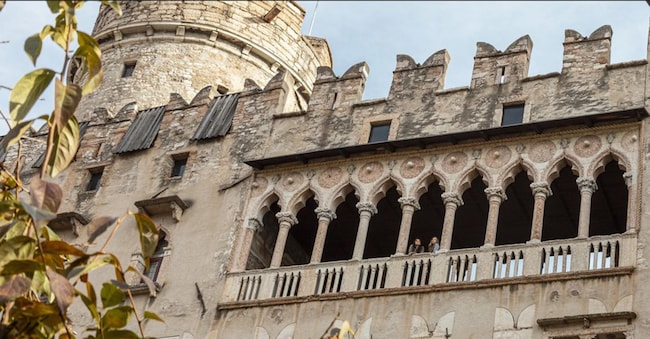
The old town centre still retains its Roman layout, but then it is a continuum of frescoed Renaissance palaces, cobbled streets and churches gathered between one square and another. In just a few minutes, one passes from the narrowest alleys to wide, open spaces, where museums, theatres and university buildings can be found. In the heart of the city is the beautiful Piazza Duomo with the beautiful St. Vigil Cathedral, with its light stone façade and grand staircase. Inside, the cosy ambience is permeated by light filtered through the stained-glass windows and contains numerous reminders of the Council of Trent, an event that profoundly marked the city's history. Outside, the square composes a harmonious ensemble of architecture and symbols: the Neptune Fountain, the Praetorian Palace with its tower, the houses with painted facades. And then there is the famous Buonconsiglio Castle, for centuries the residence of the bishops, with its medieval towers, Renaissance loggias, and frescoes depicting scenes of daily life and solemn moments. But there is an underground Trento (the archaeological site of Tridentum) that narrates the Roman origin of Trento through pavements, streets and remains of buildings, restoring continuity between the ancient layout and the city of today. One of the main sites that make up the Tridentum itinerary is the S.A.S. - Spazio Archeologico Sotterraneo del Sas (Underground Archaeological Space of the Sas), located under Piazza Cesare Battisti and the historic Teatro Sociale: 1,700 square metres of a large sector of the ancient Roman city brought to light during excavations between 1990 and 2000 during the restoration and expansion of the theatre.

