
Federician Apulia: a blend of history and tradition, nature and good food
Trani, a crossroads of culture and religion

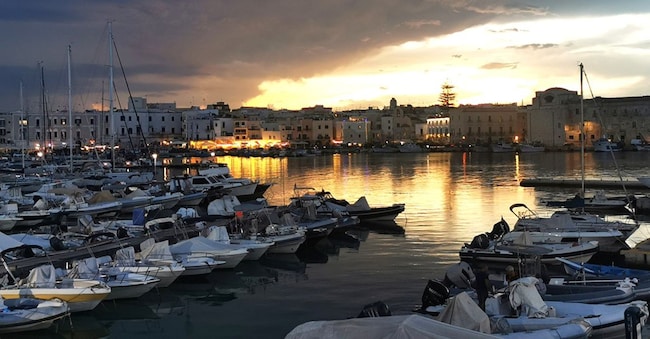
Trani, the ‘city of white stone’ with its historic centre clustered by the sea, is the ideal base for a journey into the heart of Frederick’s Apulia. Also known for its “Maritime Statutes”, enacted in 1063 and considered the oldest maritime code in the Mediterranean, it attracts literature lovers every year to the squares around the city’s harbour for the “Dialoghi di Trani”. With the 25th edition having just concluded (held from 11 to 26 September), it is already time to look ahead to the 2027 edition, when Trani will be a destination on the “Route des Normands”, a Europe-wide cultural and tourist route designed to permanently link the cities and regions that preserve traces of the Norman people’s passage. Trani’s origins, however, date back to Roman times (according to legend, it was founded by Turenum, son of Diomedes), whilst the splendid little Church of All Saints – once home to the Knights Templar – bears witness to the period of great dynamism during the time of the Lombards and the Crusades. The local white stone (calcarenite), meanwhile, reflects the austere Apulian Romanesque style that characterises all the religious buildings erected between the 10th and 12th centuries, and forms the foundation the nearby Swabian castle (chosen by Manfredi, son of Frederick II, for the celebration of his marriage to Helena of Epirus, an event commemorated in summer with a re-enactment that recreates the medieval atmosphere of the time) and Castel del Monte.
https://www.discoverpugliafedericiana.it/it

